Field notes · Look · Try · Compare
Making a portrait in a doorway
Explore a comfortable position, the doorway around it, and a little of the surrounding room.
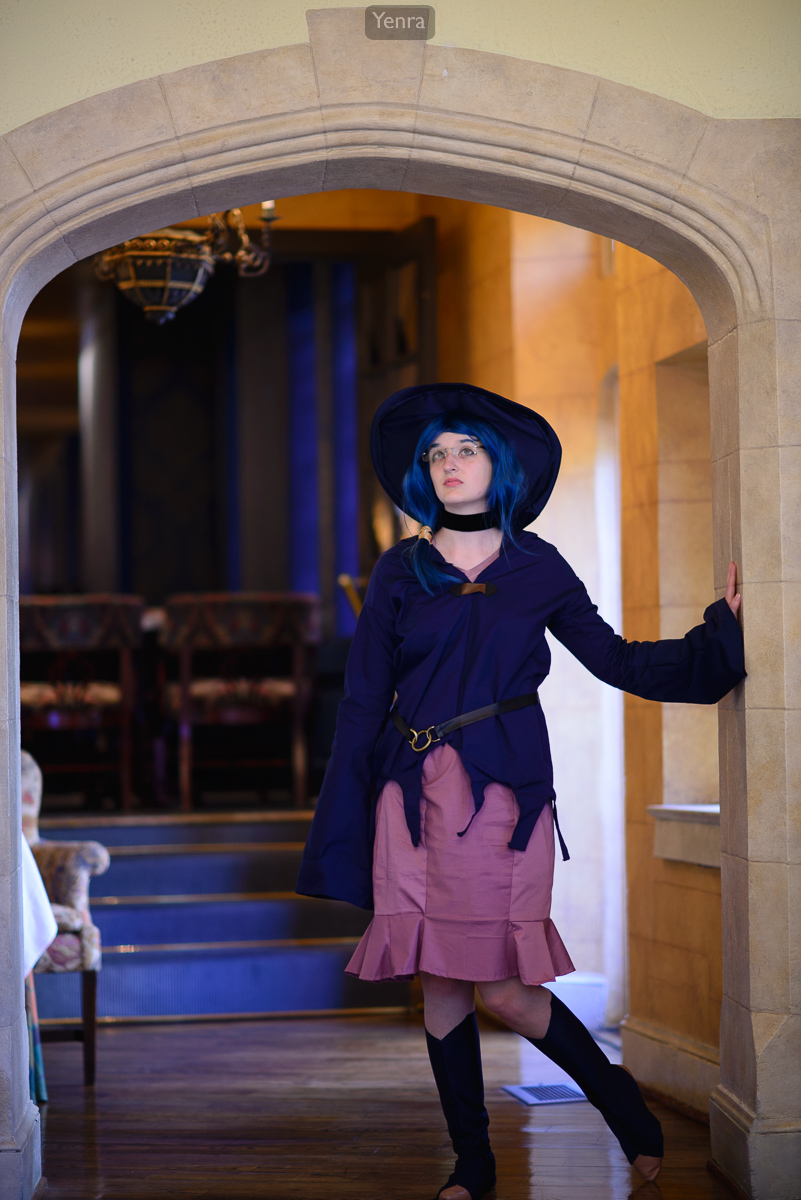
Ursula Callistis, Little Witch Academia · Photograph: Yenra · Credit: The Red Dragon
Captured: 2017:08:13 11:24:56
A doorway gives a portrait a place to begin. Its edges can surround a model, offer a point of contact, or connect the portrait to a room beyond. Work together to find a comfortable position, then explore how the person and opening share the frame.
Include the shape of the opening
In this Ursula Callistis portrait, the stone arch curves above The Red Dragon's blue hat. One hand rests against the doorway, and the room remains visible behind. The opening provides a large surrounding shape while smaller details keep the setting present.
Begin by looking at the doorway and the space around it. Decide how much of its shape you would enjoy including. A curved arch offers one possibility; an ordinary rectangular doorway can give you useful edges to explore too.
Invite a willing model to choose a comfortable starting position within or beside the opening. Choose a place where the passage can remain clear for others. Make a first portrait with enough space around the model to see how the opening contributes.
Let the model choose a position
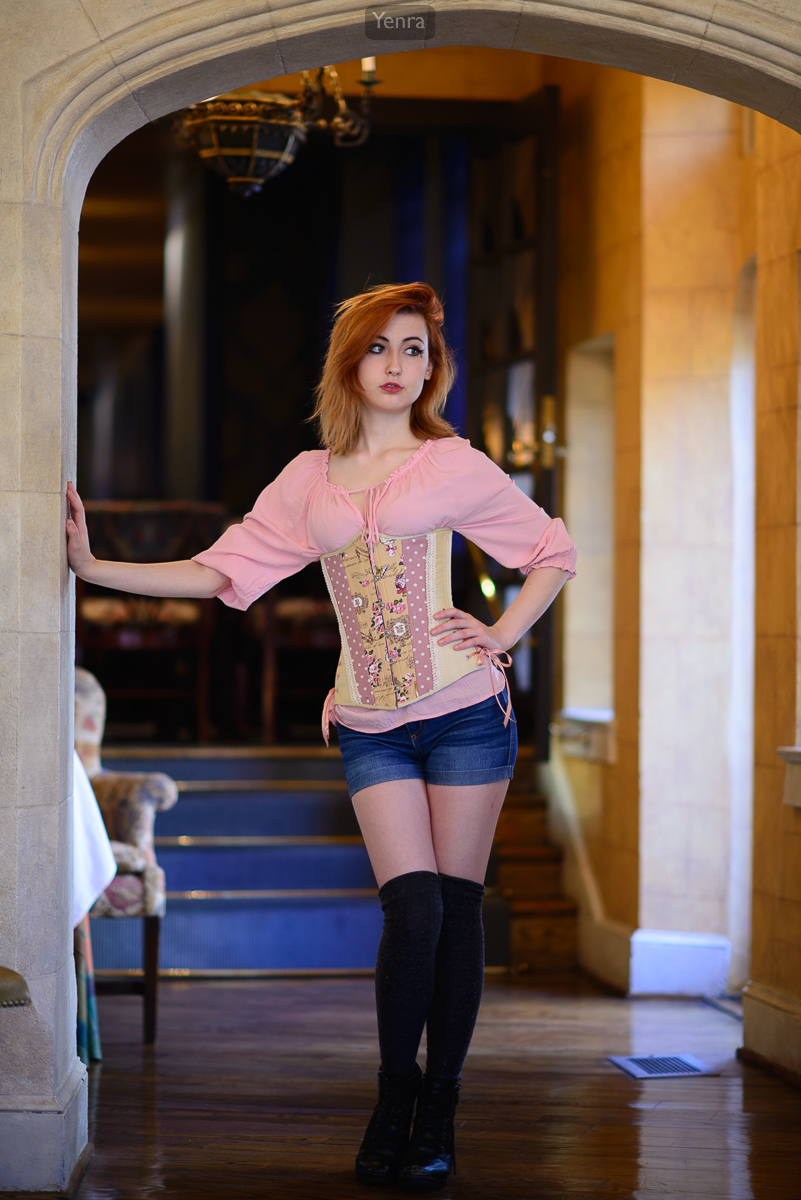
New Corset · Photograph: Yenra · Credit: Gillian Foxglove
Captured: 2017:08:13 11:29:43
Gillian Foxglove stands within the arch in a pink blouse and corset, with one hand at the doorway's edge and the other at the hip. The arm connects the figure to the stone, and the gaze leads across the open area beside the face.
A doorway gives you several relationships to notice: distance from an edge, space above the head, the direction of a gaze, and the background visible around the person. Let your model help decide which of these they would enjoy changing.
Try one small variation at a time. Your model might choose a different position or gaze while you keep similar framing. Then you can try a closer or wider view. Touching the doorway is optional; a comfortable position nearby can be equally useful to explore.
Share a photograph during the session if your model would like to see it. Ask what they enjoy about the arrangement and whether there is another variation they would like to try. Their observations can give the next picture a clear starting point.
Decide how much of the room to include
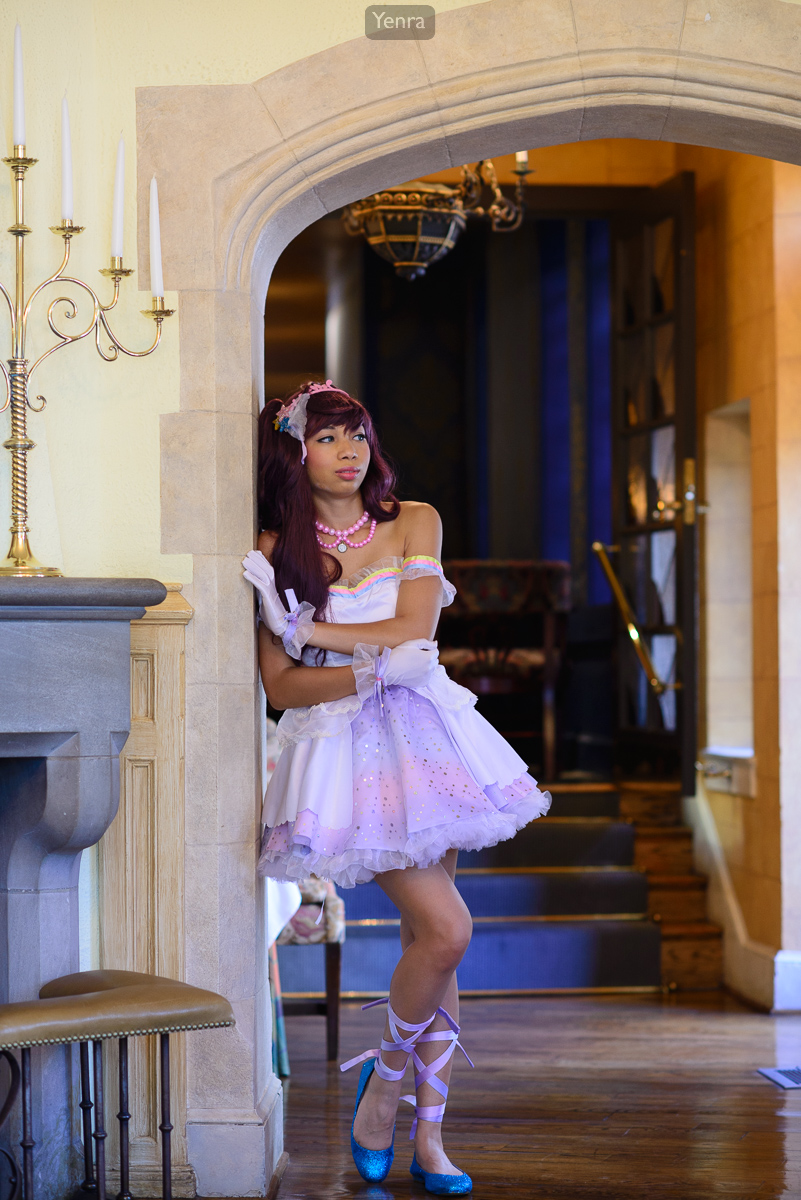
Shiki Ichinose, Idolmaster · Photograph: Yenra · Credit: Rose Monroe
Captured: 2017:08:13 11:32:18
This Shiki Ichinose portrait of Rose Monroe includes a fireplace, candelabrum, and stool to the left of the doorway. Those objects add shapes around the figure and connect the arch with more of the room. The model's position near one side leaves the opening visible behind.
Compare the surrounding space in the three portraits. Each frame gives the doorway and neighboring room a different share of the picture. These are separate archive examples, with different models and gestures, that offer possibilities to study.
For your own portrait, try a view that includes a little more of the setting. Look around all four edges before making the photograph. Then compare it with a closer view and ask what each version contributes.
Review the pictures together and keep one observation about the person, opening, and room. A familiar doorway can become a place to return to with another small idea.
Look back with curiosity.
- How much of the doorway helps the portrait feel situated?
- What changes when the model is nearer an edge?
- Which variation would your model like to try next?
Keep exploring
Finding frames within a photograph · Giving a portrait a sense of place · Planning a portrait together
Browse the complete Otakon 2017 gallery.