Field notes · Look · Try · Compare
Making a portrait beside a railing
Explore resting hands, a line through the picture, and wider or closer views.
A railing can become part of a portrait: somewhere to rest a hand, a line across the picture, or a foreground shape beside a face. Start with a position your partner enjoys, then explore how a small change in the view brings different things forward.
Give a hand somewhere to rest.

Woman Outdoors · Photograph: Yenra
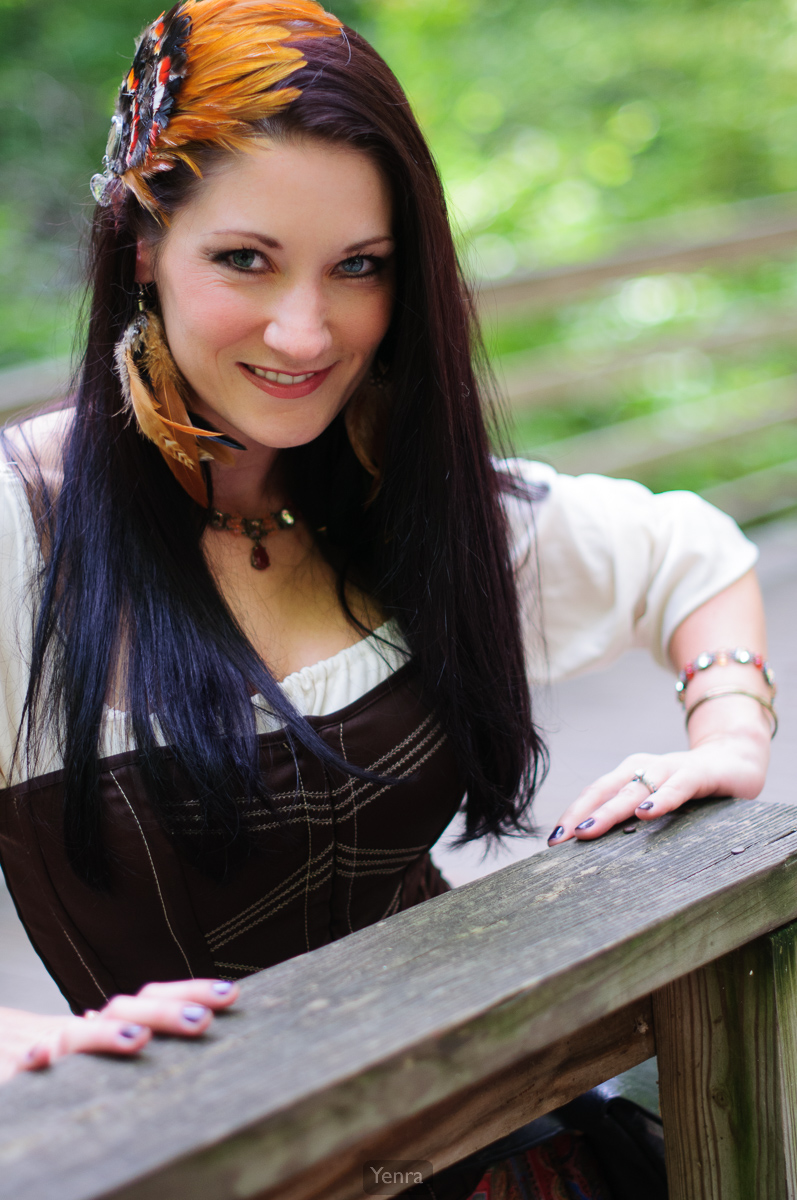
Elegant Woman in Outdoor Setting · Photograph: Yenra
In the broader portrait, one forearm rests on the diagonal wooden railing while the other hand is near the hair. The rail carries your eye through the lower part of the frame. Follow it toward the arm and face, then notice the background around them.
The closer view includes hands along the same visible railing, with a hand entering near the lower-left edge. More of the frame belongs to the face, hands, and wood. Compare what each view includes and which relationships catch your eye.
Follow the rail through the picture.
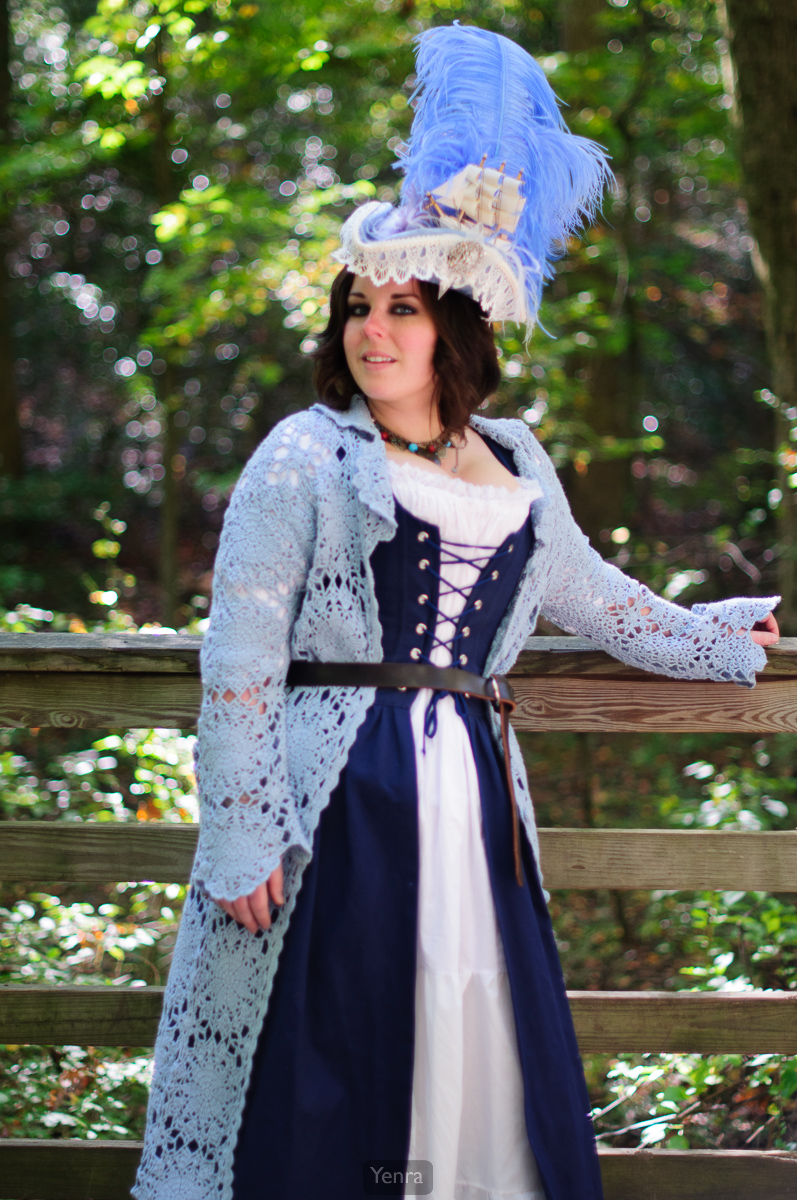
Elegant Lady in Blue Dress · Photograph: Yenra
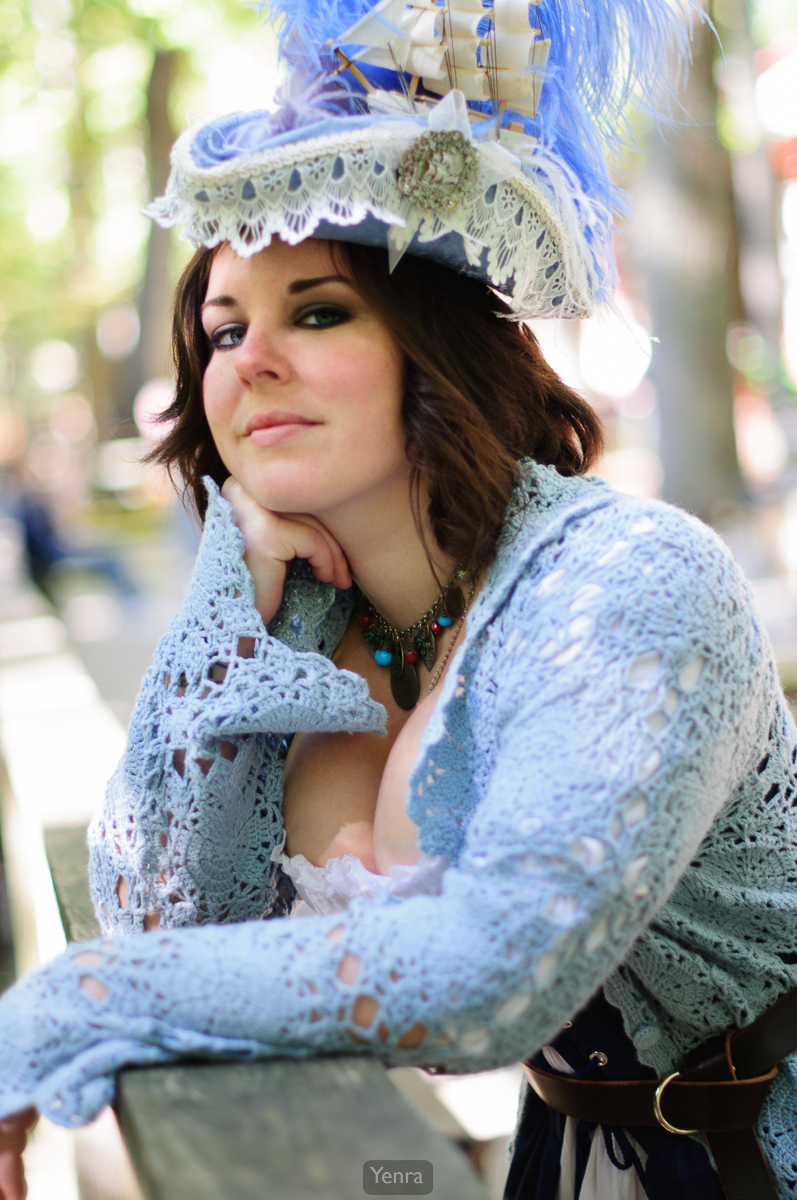
Portrait resting a chin on one hand · Photograph: Yenra
A horizontal rail runs behind the resting hand in the broader blue-and-white portrait. The tall feathered hat and more of the clothing remain visible. In the closer portrait, the chin rests on one hand, the other forearm lies along the rail, and blue openwork fabric fills part of the lower frame.
The rail has a different place in each arrangement. Look at where it enters the picture, how it meets an arm, and how much attention it receives. These observations describe the photographs; your own session can begin with whatever resting position feels easy to your partner.
Try a wider and a closer view.
Once you have a starting portrait, move your camera a little closer or change its angle while your partner keeps a comfortable position. Compare the face, hands, railing, and background together. A wider view can bring more of the setting into the picture; a closer one can give a small gesture more room to be noticed.
Look back with curiosity.
- Where does the railing lead your eye?
- What do the wider and closer views each bring forward?
- Which variation would you and your partner like to try next?
Continue with Exploring hand gestures in a portrait, Exploring portrait framing, Following lines through a photograph, or Exploring seated portraits.
Browse all 121 photographs from September 29 → · Explore all 98 photographs from October 13 · Take the railing-portrait experiment with you →