Field notes · Look · Try · Compare
Exploring vertical and horizontal compositions
Try two picture shapes and discover what each gives room to grow.
Turning a camera or phone gives you another shape to compose within. A vertical photograph can offer room above and below a subject; a horizontal photograph can open space beside it. Either can hold a portrait, a place, or a small detail. Try both and see what becomes interesting.
Make room across the picture, or let the picture rise.
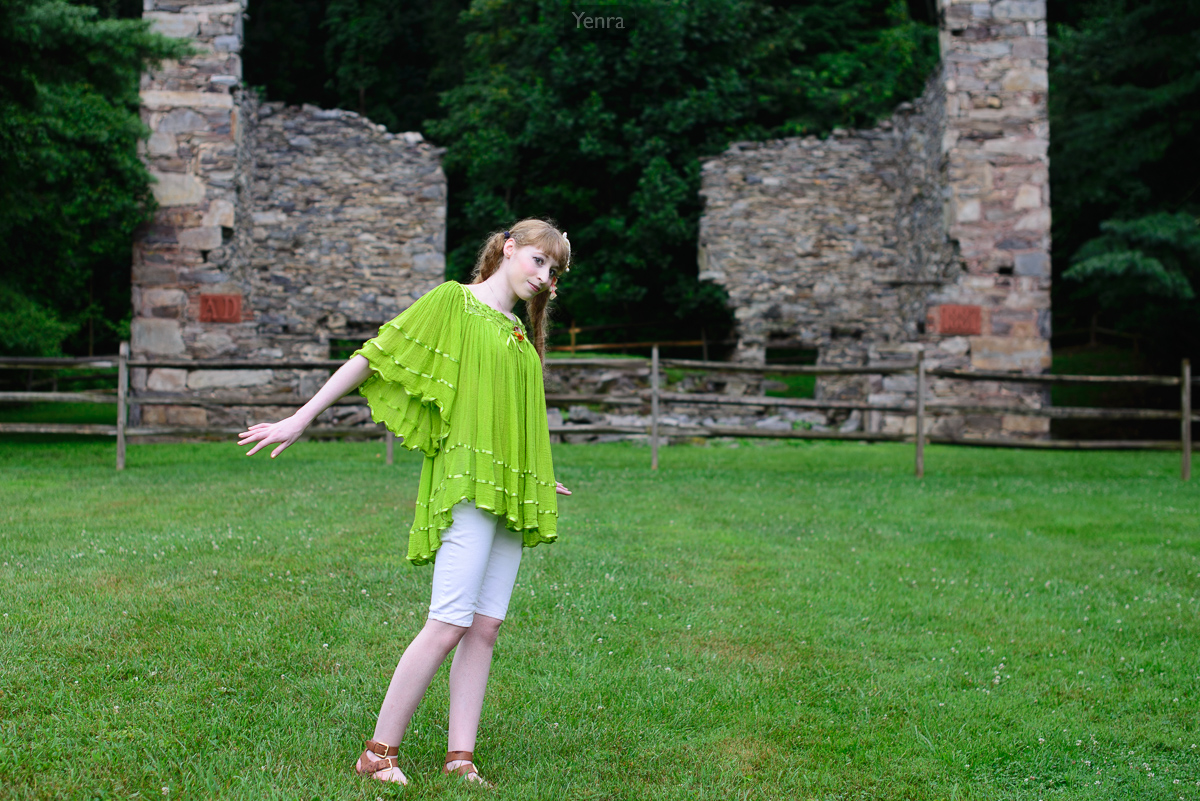
Woman posing in front of old stone structure · Photograph: Yenra
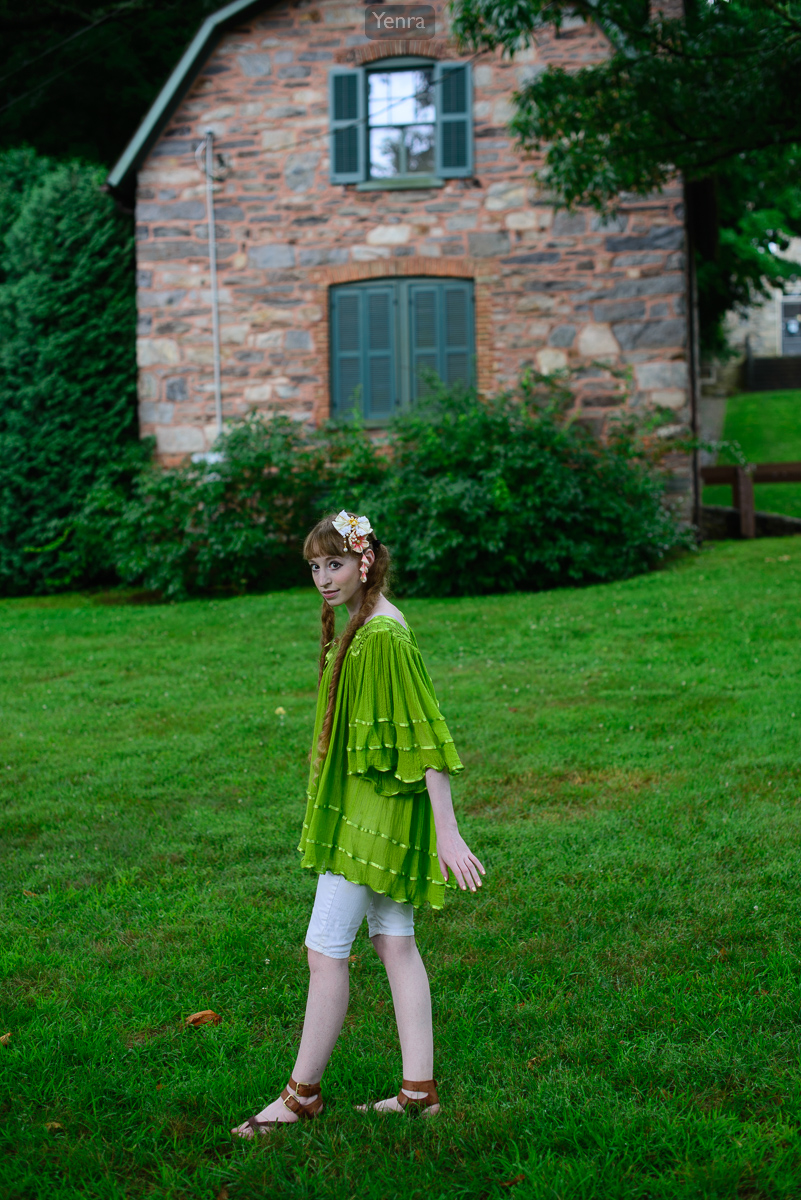
Girl in Green Top Stands in Front of Stone Building · Photograph: Yenra
In the horizontal photograph, the outstretched arms, grass, and wall occupy space across the frame. The vertical photograph gives the tall building more room above the person. Look at the edges as well as the subject: they help you see what each picture invites you to include.
These photographs also differ in position, pose, and surroundings. They offer two examples to learn from. For your own comparison, staying near one viewpoint can make the effect of the picture shape easier to explore.
Follow the space that interests you.
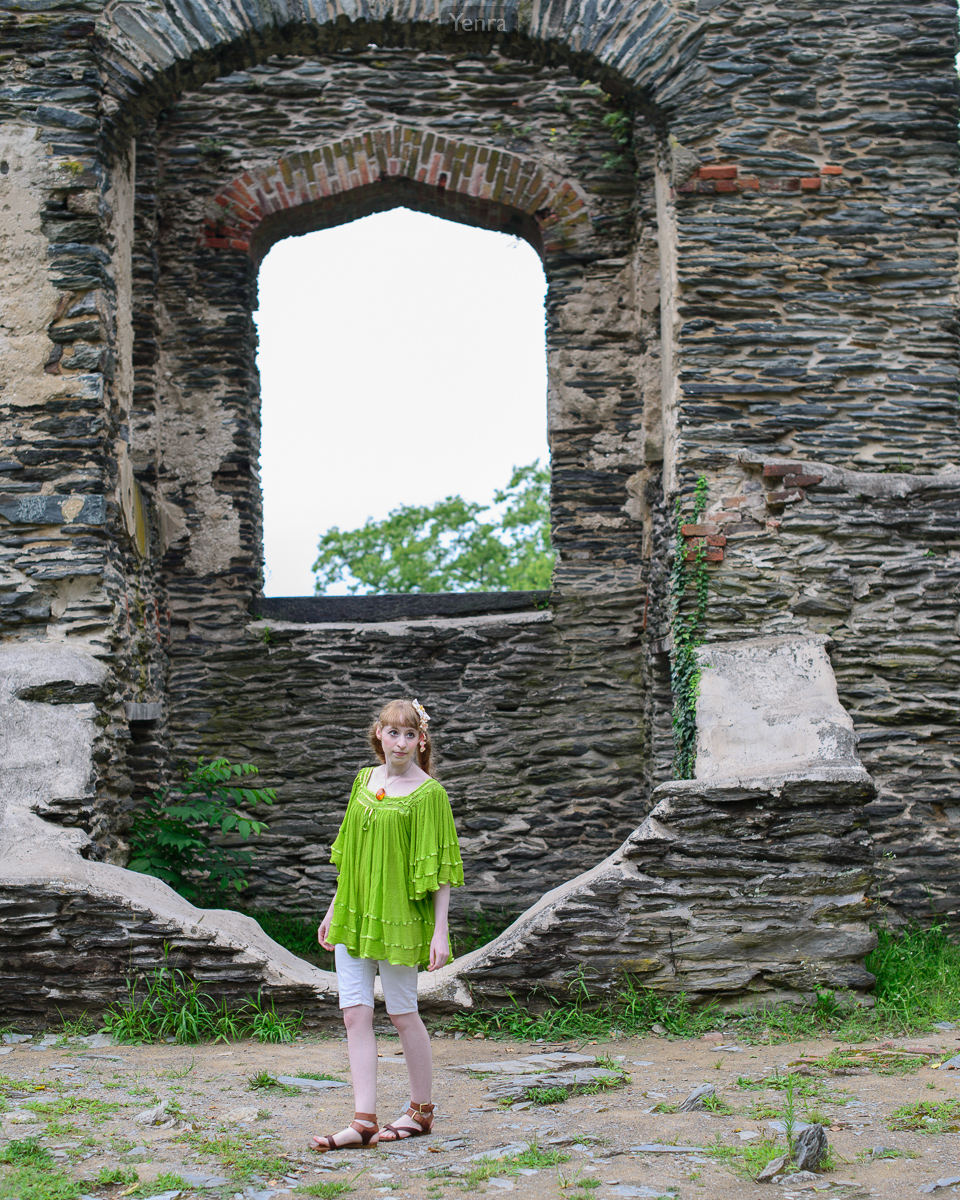
Girl Standing in Front of Old Stone Wall · Photograph: Yenra
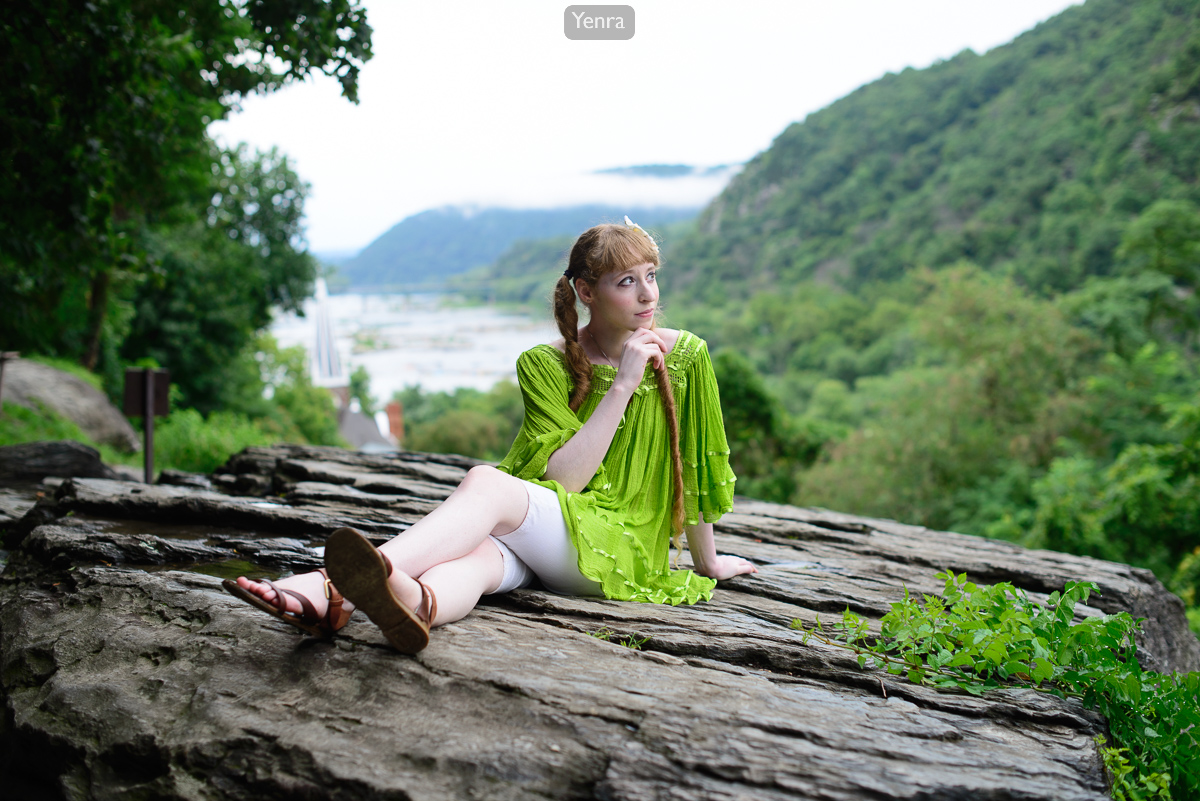
Woman in Green Blouse Overlooking Valley · Photograph: Yenra
The arch rises above a small figure in the vertical frame. In the horizontal view, the valley and hills stretch beside and behind the seated person. You might follow the height of an opening, the length of a view, or a gesture that travels across the image.
Let the subject suggest possibilities, then try a shape you are less accustomed to using. A vertical view of a wide place might reveal one interesting relationship; a horizontal close portrait might make room for a hand, a color, or a quiet area beside the face.
Compare what each shape gives you.
- What did each shape make room for?
- Which edges changed your attention?
- What would you include differently in another pair?
Continue with Exploring portrait framing to try wider and closer views, or Making space around a subject to explore the room within the picture.
Browse all 74 Woods and Ruins in July photographs → · Save an experiment in the practice notebook →