Field notes · Look · Try · Compare
Connecting stage photographs with a posed portrait
Give a posed portrait, a wider stage view and a closer performance frame distinct jobs in a small event selection.
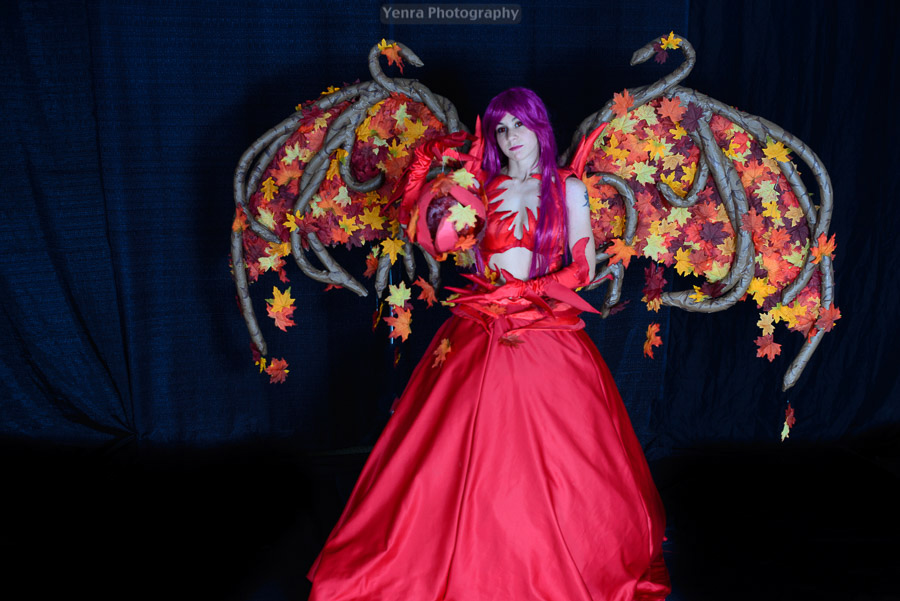
Leaf-covered wings: posed portrait · Photograph: Yenra
Captured: 2014:11:08 18:56:00
A posed portrait and a stage photograph can contribute different kinds of detail to an event collection. One offers a sustained look at a costume and expression. Another shows the costume within a performance space, with gestures, equipment and surroundings joining the picture.
This is a new editorial selection of three existing Nekocon 2014 photographs. Purple hair, red clothing and leaf-covered wing structures provide visible connections. Each photograph keeps its own source link and capture record, so the small selection remains connected to the full archive.
Introduce the costume in a posed portrait
The portrait shows a red dress and large branch-shaped wings filled with autumn-colored leaves. The dark backdrop gives the leaves, curved structures and face room to be seen. A red-gloved hand rests near the wing on the left side of the picture.
Begin your own selection by naming what a portrait contributes. It might show an expression, the arrangement of a costume or a detail that is less easy to see in a wider event photograph. That contribution can be specific and modest.
Look for a connection you can support when choosing the next image. Here, the red clothing, purple hair and distinctive leaf-covered structures give us details to follow onto the stage.
Show its place on the stage
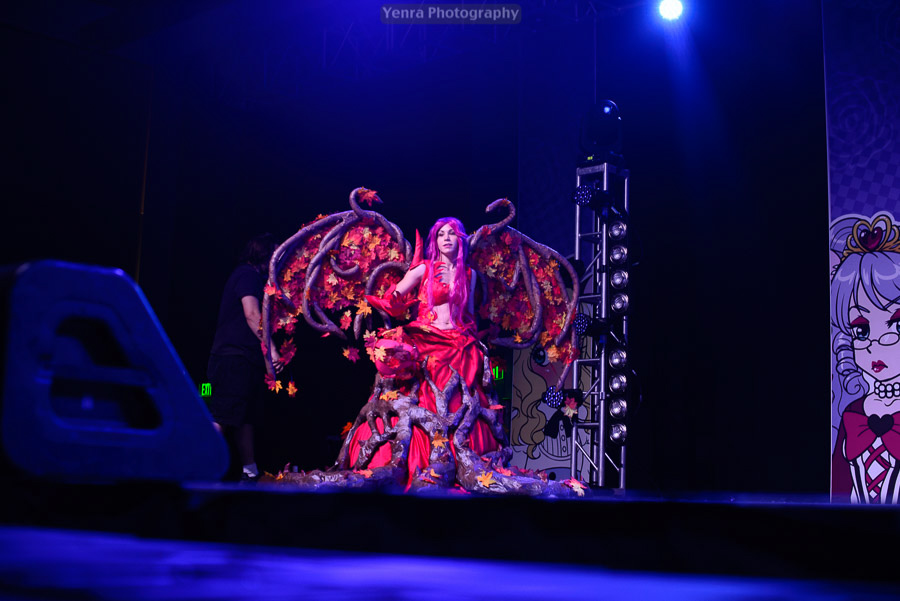
Leaf-covered wings: wider stage view · Photograph: Yenra
Captured: 2014:11:08 20:03:08
The wider stage view includes a speaker in the foreground, a light tower and event banners. More branch-like structure is visible around the lower part of the costume. The surroundings give this photograph a different role from the posed portrait.
A wider event frame can help someone understand the space in which a moment was photographed. Stage edges, equipment and nearby figures may contribute useful context. Ask what they add to this selection, rather than assuming the most isolated picture is always the one to keep.
A factual caption can identify the source event and describe the stage view. The visible connection is enough to begin a sequence; there is no need to invent a rehearsal, backstage preparation or a story about how the costume was assembled.
Bring the stage view closer
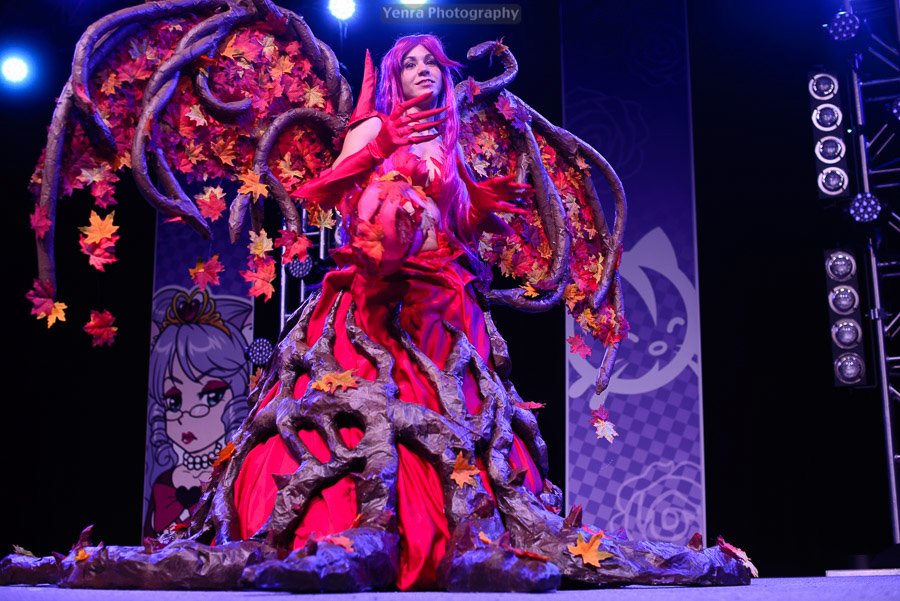
Leaf-covered wings: closer stage view · Photograph: Yenra
Captured: 2014:11:08 20:03:17
The closer stage photograph gives more room to the face, a red-gloved gesture, leaves and branch-like forms. Parts of the lights and banners remain visible around them. It brings another part of the performance setting into view.
Compare its contribution with the wider stage frame. The speaker and broad stage space are less prominent, while the costume and hand gesture occupy more of the picture. These differences can give you a reason to keep both.
Then imagine the small selection with only the portrait and wider stage view. What becomes clearer when the closer image returns? You might value its expression or details, or prefer a shorter pair. Let the contribution guide the choice.
Keep a small collection note
- Posed portrait: introduce the costume, expression and leaf-covered wings.
- Wider stage view: give the costume a place within the performance setting.
- Closer stage view: explore a gesture and more of the visible detail.
Give each photograph a clear job
The portrait's recorded time precedes the stage photographs, but that does not turn the selection into a preparation story. We can connect what is visible while allowing the archive to keep its own records and unanswered questions.
Use current names and credits where they are supplied, and keep the fuller gallery within reach. For your own collection, choose pictures you are comfortable sharing and write a sentence about each one's contribution. A small selection can offer both a closer look and a sense of the event around it.
Look back with curiosity.
- What does each photograph contribute?
- Does the closer stage view add something you value?
- Which captions keep the connections clear?
Keep exploring
Photographing gestures on stage · Building a portrait story across two settings · Choosing variety for an event gallery
Browse the complete Nekocon 2014 gallery.