Field notes · Look · Try · Compare
Building a portrait story across two settings
Connect woodland and waterside portraits through color, clothing, and gesture.
A change of setting can give a short portrait story a new direction. Trees and a wooden path offer one kind of space; open water and sky offer another. Clothing, color, and gesture can help the viewer stay connected to the person as the surroundings change.
Introduce the first setting
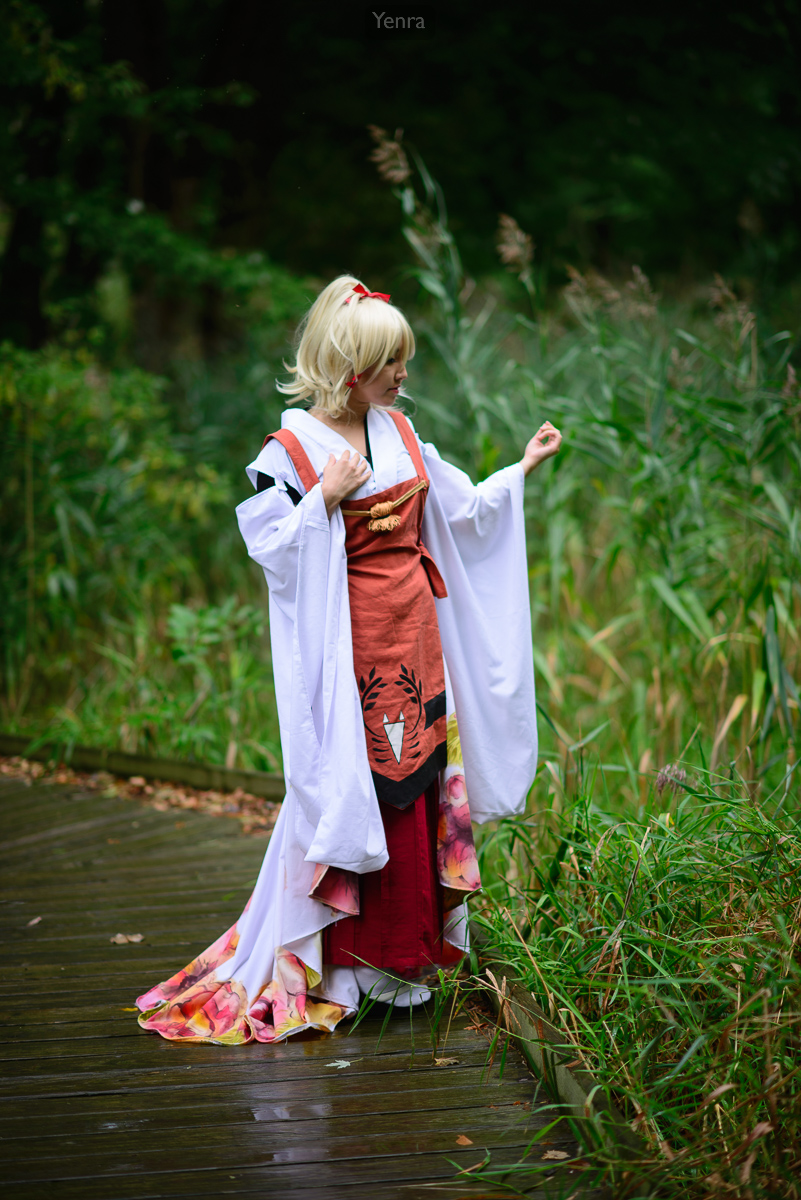
Uka, Inari Kon Kon Koi Iroha · Photograph: Yenra · Credit: Minjee Kay Cosplay
Captured: 2016:09:10 18:59:35
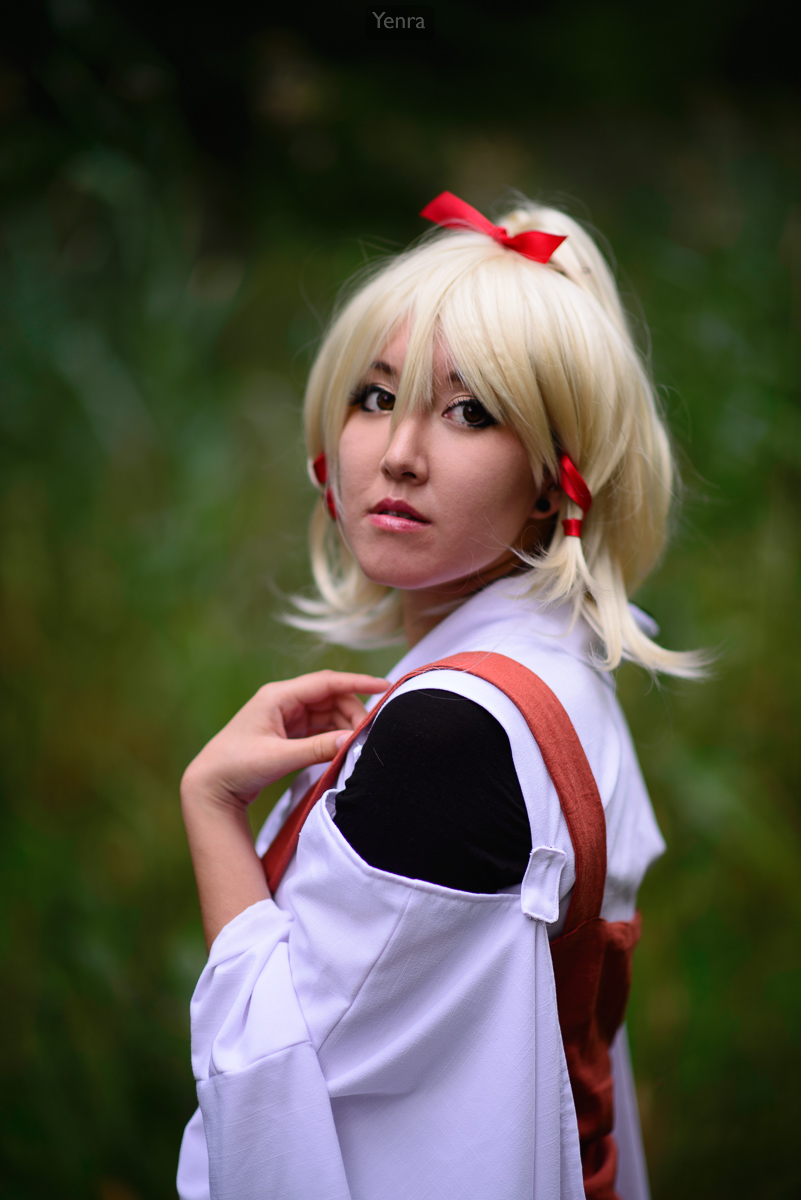
Uka, Inari Kon Kon Koi Iroha · Photograph: Yenra · Credit: Minjee Kay Cosplay
Captured: 2016:09:10 19:01:05
The first photograph includes a wooden path, tall grasses, and dark foliage around the full figure. The white sleeves and floral fabric occupy a clear place within those surroundings. The closer view keeps the white and red clothing while bringing attention to the face and the turn over the shoulder.
Together, the pictures offer context and a closer encounter. Start your own selection by asking what you want someone to know about the first place. A wider view can introduce it, while a closer photograph may carry a small color or shape from that introduction.
Carry a visual connection
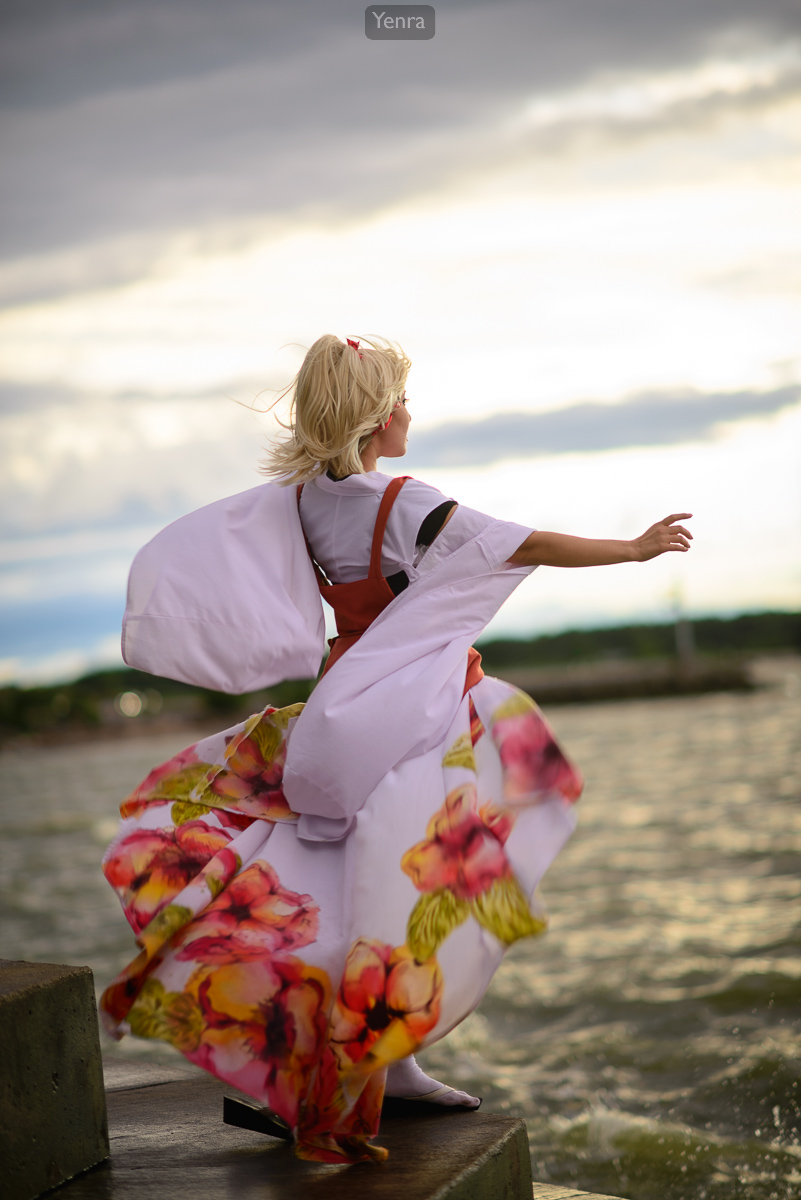
Uka, Inari Kon Kon Koi Iroha · Photograph: Yenra · Credit: Minjee Kay Cosplay
Captured: 2016:09:10 19:54:41
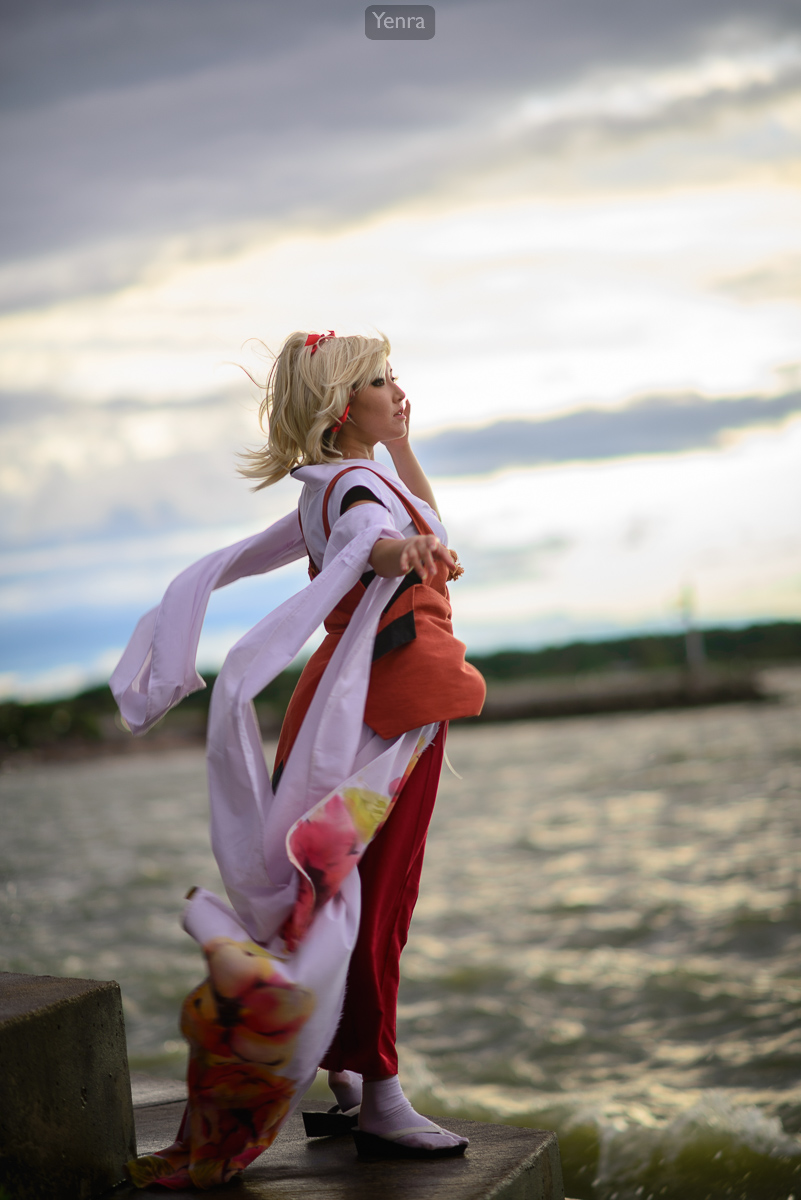
Uka, Inari Kon Kon Koi Iroha · Photograph: Yenra · Credit: Minjee Kay Cosplay
Captured: 2016:09:10 19:54:47
In the second setting, foliage gives way to open water and a bright, clouded sky. The white-and-red clothing continues through both pictures, and extended arms connect their gestures. The first waterside view faces away from the camera; the next brings the face back into view.
Follow one connection across the four photographs. You might choose the white fabric, the red clothing, or the direction of an arm. Then look at what changes around that connection. A small story can hold both continuity and variety.
Give the second setting a purpose
The two waterside pictures are close variations. Try imagining the sequence ending with the view facing away, then with the turn toward the camera. Each offers a different final impression. Keeping both may make the turn more noticeable; keeping one may give the shorter sequence a clearer finish.
Ask what the second place adds. Does it open the space around the person, introduce another color, or give a gesture a different background? You can choose a new setting for the contribution you enjoy, even if it is only a short distance from the first.
Work with pictures you already have, or choose two comfortable spots with a willing partner. Review the selection together and save the alternatives alongside it. The aim is a short sequence whose connections you can describe and whose changes give you a reason to keep looking.
Look back with curiosity.
- What carries the connection from one setting to the next?
- What does the second place add to the story?
- Would one or both final photographs help your small sequence?
Keep exploring
Building a three picture portrait study · Connecting photographs from different days · Trying two orders for a photo sequence
Browse the complete Midoricon 2016 gallery.