Field notes · Look · Try · Compare
Choosing an opening photograph
Try different beginnings for a small set and discover what each invites a viewer to notice.
An opening photograph offers a first invitation into a set. It might introduce a place, bring us close to people, show an activity, or leave us curious about a detail. Trying a few beginnings can help you discover what you would like a viewer to notice first.
Begin outside or invite us in.
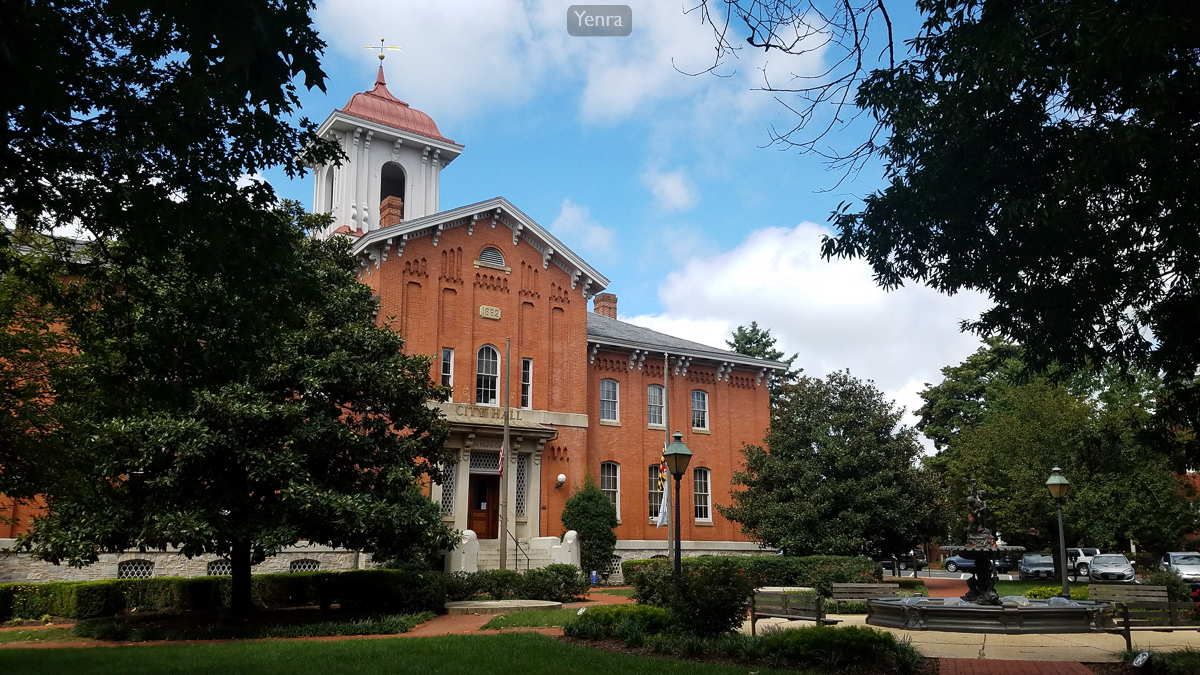
Frederick City Hall · Photograph: Yenra
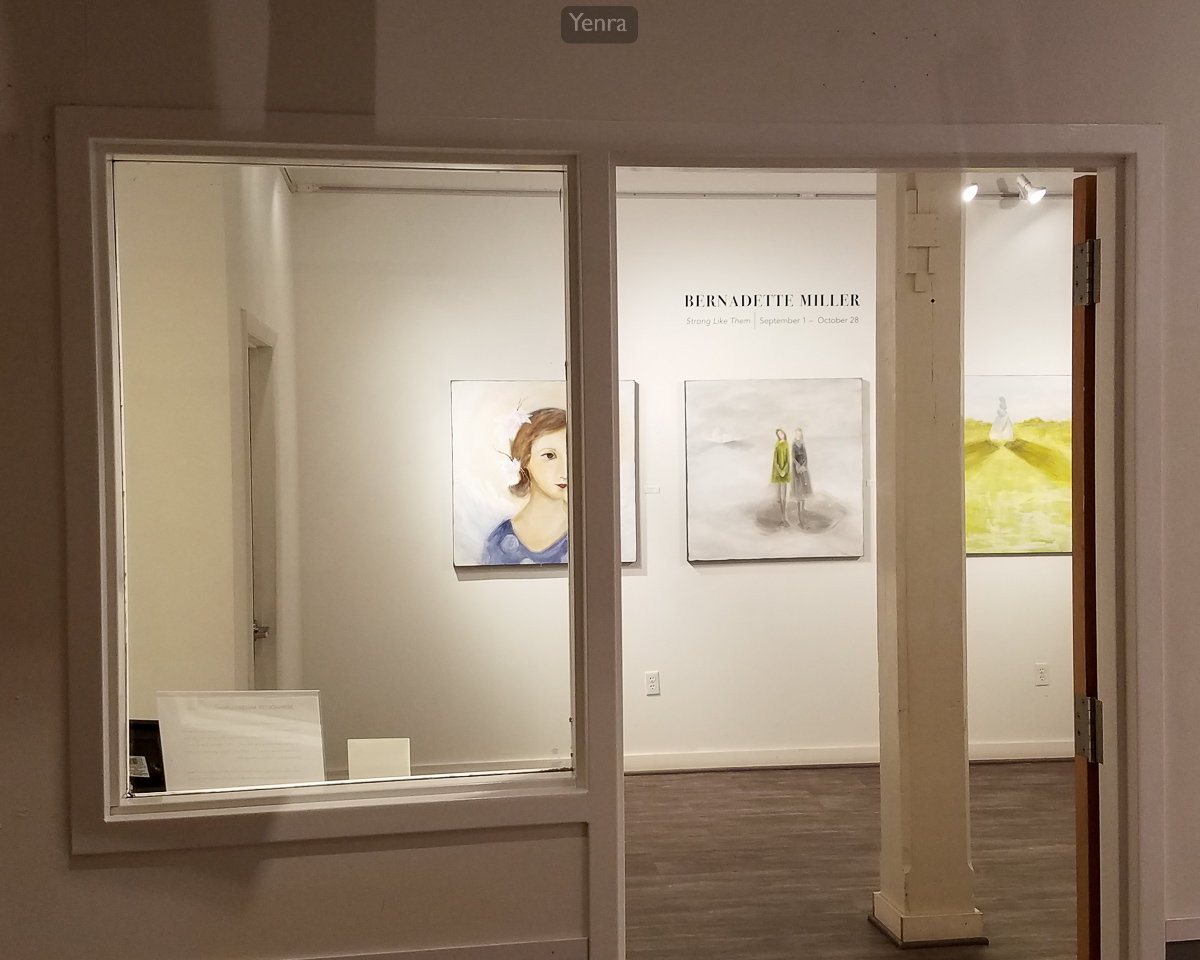
An open doorway into an art display · Photograph: Yenra
Trees, a garden, a fountain, and the City Hall tower give the first photograph several clues about the surroundings. As an opening, a wider view can orient a viewer before closer photographs follow.
The open doorway brings us closer to an art display. Beginning here could invite a viewer to step inside before discovering the wider street. Try imagining each photograph at the start of a small set and notice what you become curious about.
Begin with a detail or a pattern.
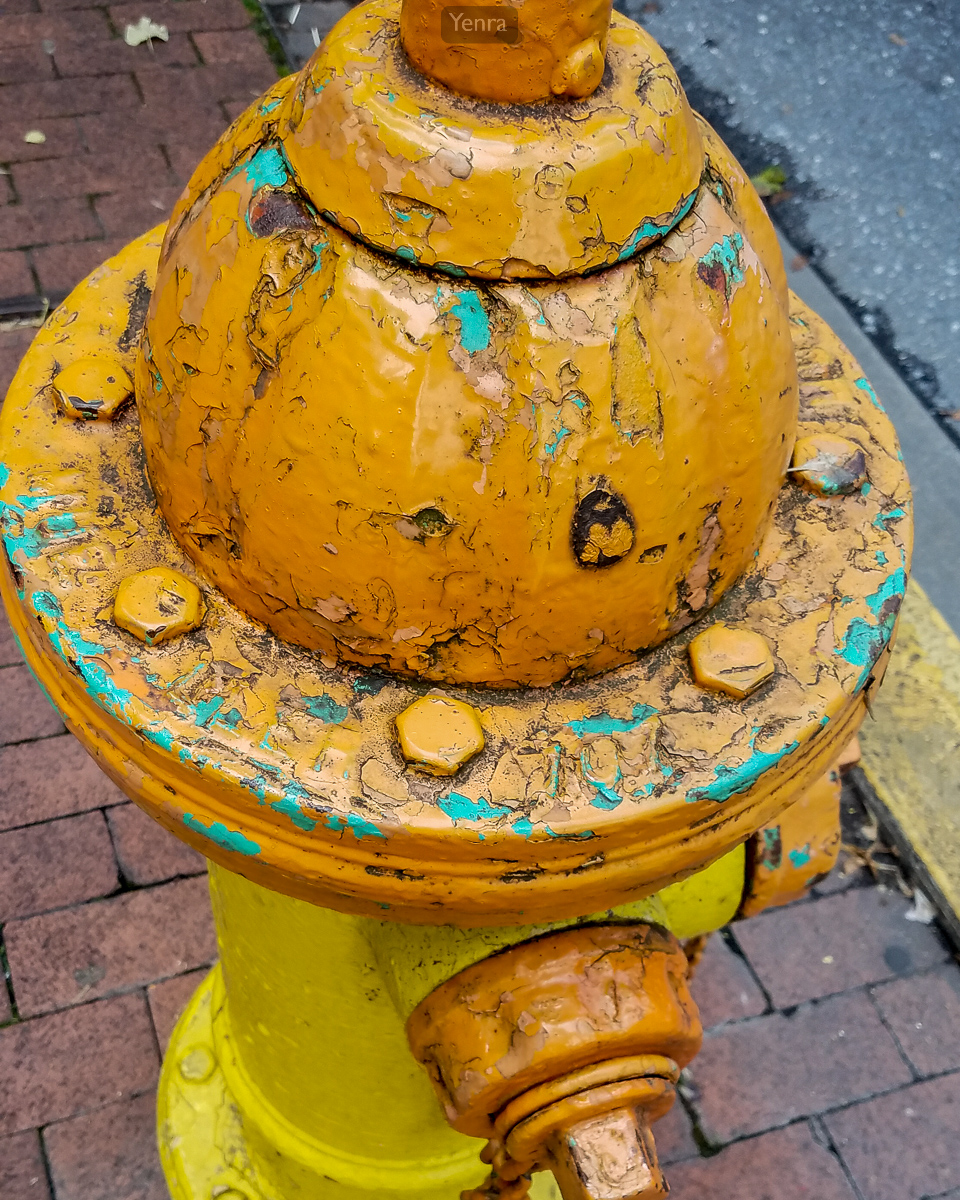
Layers of paint on a yellow hydrant · Photograph: Yenra
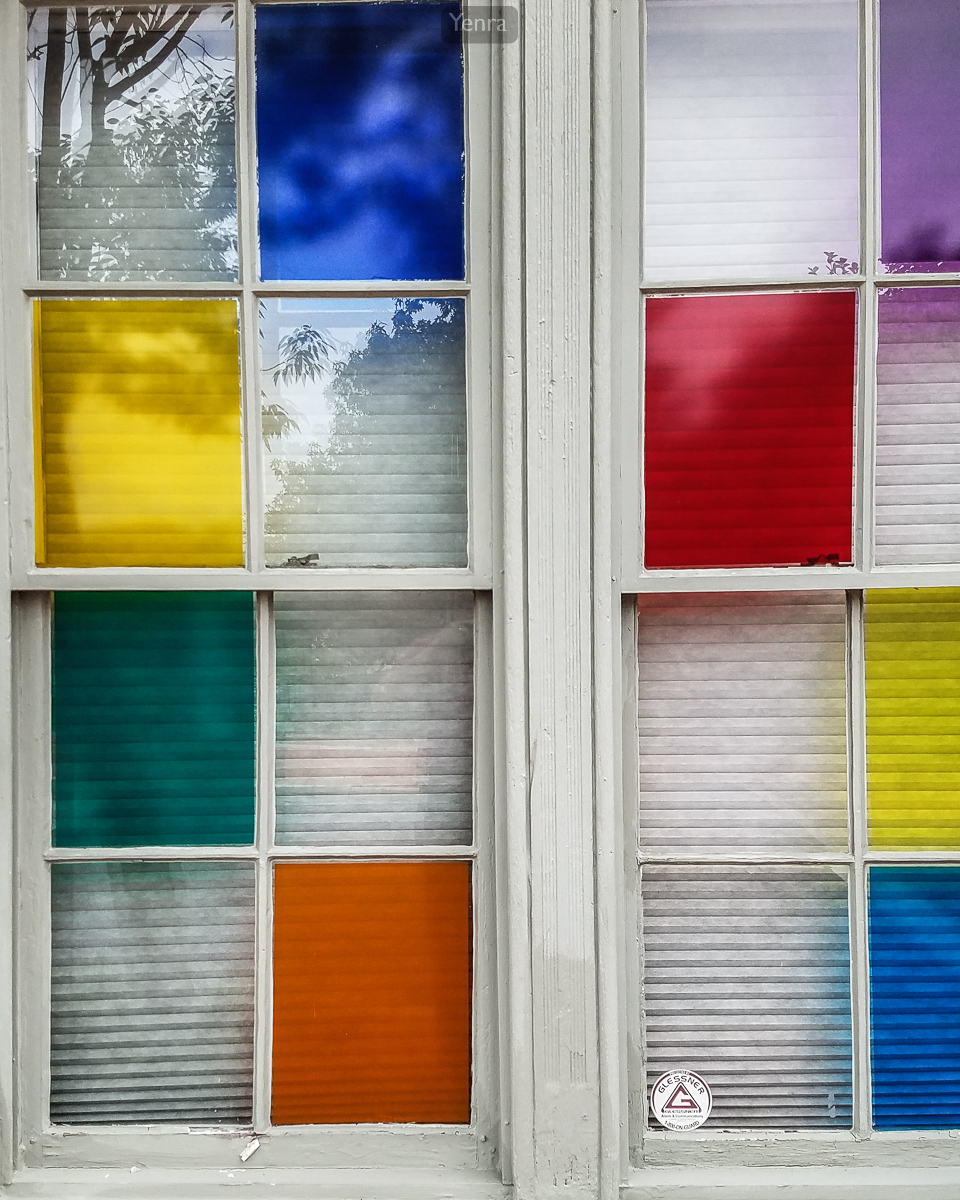
Colored panes and reflections · Photograph: Yenra
Chipped paint on a yellow hydrant offers a small detail before revealing the surrounding street. Beginning close can invite a viewer to look for other textures and traces of use in the photographs that follow.
Colored window panes introduce a rhythm of rectangles and reflections. An opening like this can invite us to follow repeated colors or shapes through the set. The next photograph might echo the pattern or open out into a wider view.
These four possibilities sit alongside the archive's original sequence. When arranging your own small selection, let the opening support the photographs that follow. You can change the beginning several times before choosing the invitation that feels right for this set.
Look back with curiosity.
- What does each possible opening introduce first?
- What does it make you curious to see next?
- Which beginning feels most connected to the rest of this set?
Continue with Choosing photographs for a small set, Building a small photo story, or Writing captions that invite a closer look.
Browse Frederick 2018 → · Take the opening experiment with you →