Field notes · Look · Try · Compare
Noticing water patterns in a photograph
Follow bright lines, ripples and splashes, and notice how water becomes part of a portrait.

Shirahoshi, One Piece · Photograph: Yenra · Credit: Becky Taka Cosplay
Captured: 2014:06:07 18:29:00
Water can bring a second set of shapes into a portrait: fine bright lines, broad ripples or the irregular edge of a splash. Taking a moment to follow those shapes can reveal something new in a photograph you already enjoy.
These three Colossalcon 2014 photographs offer different people, arrangements and water patterns to explore. Begin with what is visible, then notice how each pattern belongs in the whole picture. An existing photograph is enough for this exercise; you can make a useful discovery simply by looking again.
Follow the bright lines
Fine bright lines appear through the pale blue water around the pink-haired subject. Their irregular shapes fill spaces between the outstretched arms and around the striped costume. The tilted overhead view gives the whole frame a distinctive arrangement, which remains intact here.
Follow one small group of lines and then return to the face and arms. Notice where the patterns become easy to see and where the larger shapes draw your attention elsewhere. A description such as “fine bright lines beside the arm” is a useful starting point.
You can explore the visible pattern without deciding how every bright line was formed. Keep the observation close to the photograph, then ask a small question: does that cluster of lines lead you toward the person, or encourage you to explore the surrounding water?
Notice a wider field of ripples

Ballgown Ariel, The Little Mermaid · Photograph: Yenra · Credit: Eveille Cosplay
Captured: 2014:06:07 11:20:42
In the Ariel portrait, the red-haired subject occupies the right side while turquoise water fills much of the left. Bright curved patterns have more open space around them. The wide frame lets the water contribute alongside the face and costume.
Compare the amount of space given to the patterns in this view and the opening photograph. Different people, settings and framing choices contribute to what you see, so the pair offers several relationships to explore together. It is an invitation to compare pictures rather than isolate a single cause.
Look for one broad area and one smaller detail. You might notice the large turquoise field first and then trace a pale curve within it. In a photograph of your own, try writing both observations before choosing which one you want to explore further.
Compare the shape of a splash
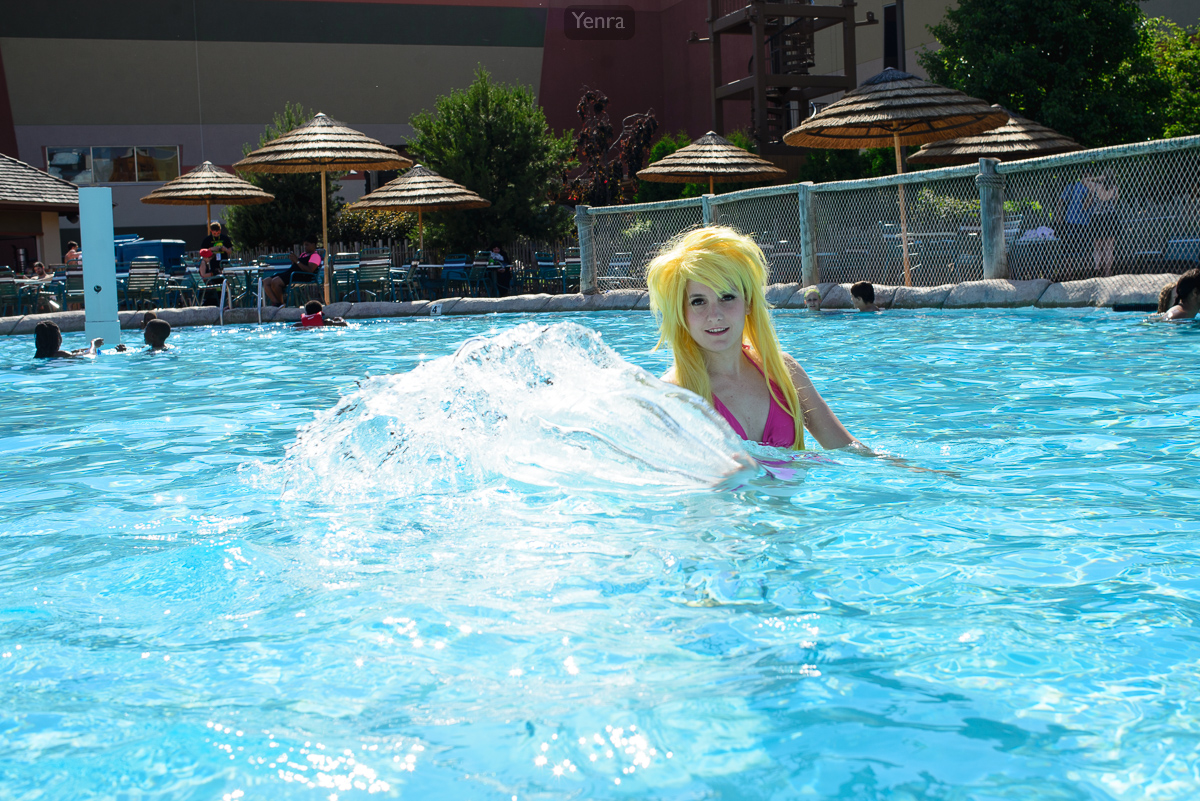
Stocking in the Pool, Swimsuit, Panty and Stocking · Photograph: Yenra · Credit: Larina
Captured: 2014:06:06 17:08:59
A broad splash rises in front of the yellow-haired subject. Its uneven edge makes a larger shape than the smaller ripples around it. The surrounding blue water gives you another scale of pattern to compare within the same frame.
Move your attention between the splash outline, the person and the quieter patches of water. Where does your eye pause? Different viewers may begin in different places, and a second look may reveal a detail you missed the first time.
For your own experiment, choose an existing photograph with water, or observe a surface from a comfortable dry position. Find a line, ripple or outline you enjoy and describe its place in the whole picture. The aim is a fresh observation; you do not need to reproduce the activity or copy a camera setting.
Look back with curiosity.
- Which water pattern catches your attention first?
- How does it sit beside the person or main subject?
- What changes when you compare the whole photographs?
Keep exploring
Noticing texture in a photograph · Noticing curves in a photograph · Noticing reflections in a photograph
Browse the complete Colossalcon 2014 gallery. Follow the original neighbors of a photograph you enjoy and see what else catches your attention. A small observation can become the beginning of your next experiment.