Field notes · Look · Try · Compare
Noticing tilted framing in a photograph
Explore how an angled view changes the arrangement of a whole photograph.

Derpy Hooves, My Little Pony · Photograph: Yenra
Captured: 2012:01:07 13:30:04
A tilted view can change the relationship between a person, the surrounding architecture, and the edges of a photograph. Familiar directions become something to explore: a railing slopes across the frame, a figure leans beside it, or a broad shape seems to travel toward a corner. Start by following those relationships through the whole picture.
Follow the directions across the frame
The gray wings and blond hair make a recognizable figure among pale architectural shapes. Look at the direction of the body, then follow the white structures behind it. Their angles carry your eye across the horizontal frame. Notice where those paths meet its edges and how much room remains around the wings.
In the earlier lesson on diagonals, a single slanting line offered a path through a picture. Here, look at the larger arrangement. Compare the directions of the person and surroundings with the rectangle that contains them. The effect comes from their relationship, including the open spaces between shapes.
Slanting lines can come from perspective, a leaning subject, the scene itself, or the orientation of the view. A finished photograph does not tell us every choice made with the camera or during editing. You can explore the visible arrangement while keeping that question open.
Look for a familiar reference
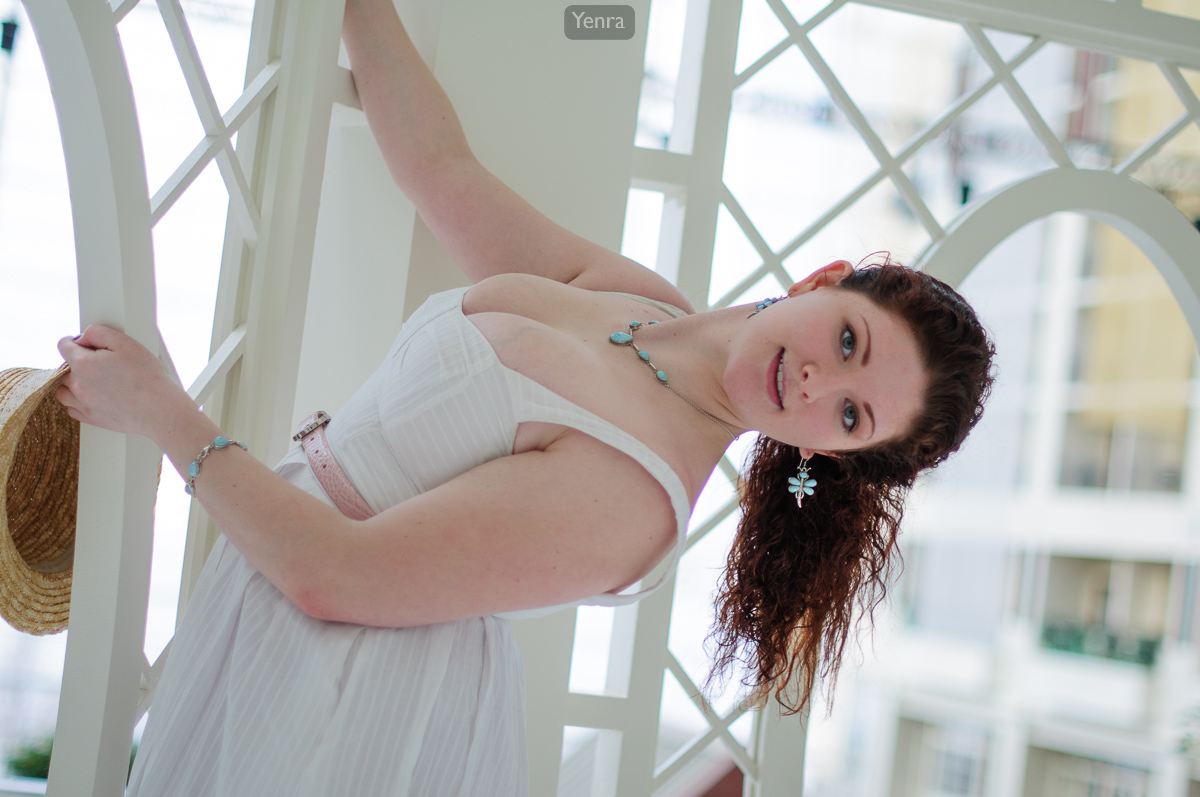
Tilted portrait in a white dress · Photograph: Yenra
Captured: 2012:01:07 15:07:31
The white dress, straw hat, and curved latticework share a pronounced angled arrangement in this photograph. Follow a longer section of the lattice, then compare it with the person's position. The curved and straighter parts offer different references as you read the frame.
Choose a familiar scene for your own experiment. A doorway or railing can give you a reference you recognize. Make a starting photograph with the camera held comfortably level. From the same stationary position, try a slight camera tilt while keeping your subject in view. A small change is enough to see the relationship shift.
Look around the edges before making the next picture. Does an important shape have room? Has a corner begun to attract your attention? You can adjust the amount of tilt or the framing to explore the particular relationship you enjoy.
Compare the feeling of the whole picture

Tilted view beside a white bench · Photograph: Yenra
Captured: 2013:01:05 22:52:02
The white bench and slanting railings give the night scene several directions to follow. Two people appear beside a planter with red flowers, with one leaning toward it. Colored lights add smaller points of attention around those larger forms.
Try tracing a path from a person to the bench and then toward the picture's edge. Which shape seems to anchor the view? Which direction carries your eye onward? Words such as lively, balanced, or unsettled can help you describe your own response when you connect them to a visible detail.
These archive examples differ in people, place, pose, and light. They offer separate arrangements to study. In your own pair of photographs, compare the level and slightly tilted views side by side. Keep whichever arrangement interests you, and write one sentence about what changed. Returning to that observation can make your next framing choice feel more deliberate.
Look back with curiosity.
- Which direction first catches your eye?
- What familiar reference helps you read the angle of the view?
- How does the whole picture feel when you compare the two framings?
Keep exploring
Noticing diagonals in a photograph · Exploring the edges of the frame · Exploring vertical and horizontal compositions
Browse the complete MAGFest 2012 and MAGFest 2013 galleries.