Field notes · Look · Try · Compare
Noticing pointed shapes in a costume prop
Follow teeth, horns and small points through three dragon-head details, noticing what repeats and what changes.
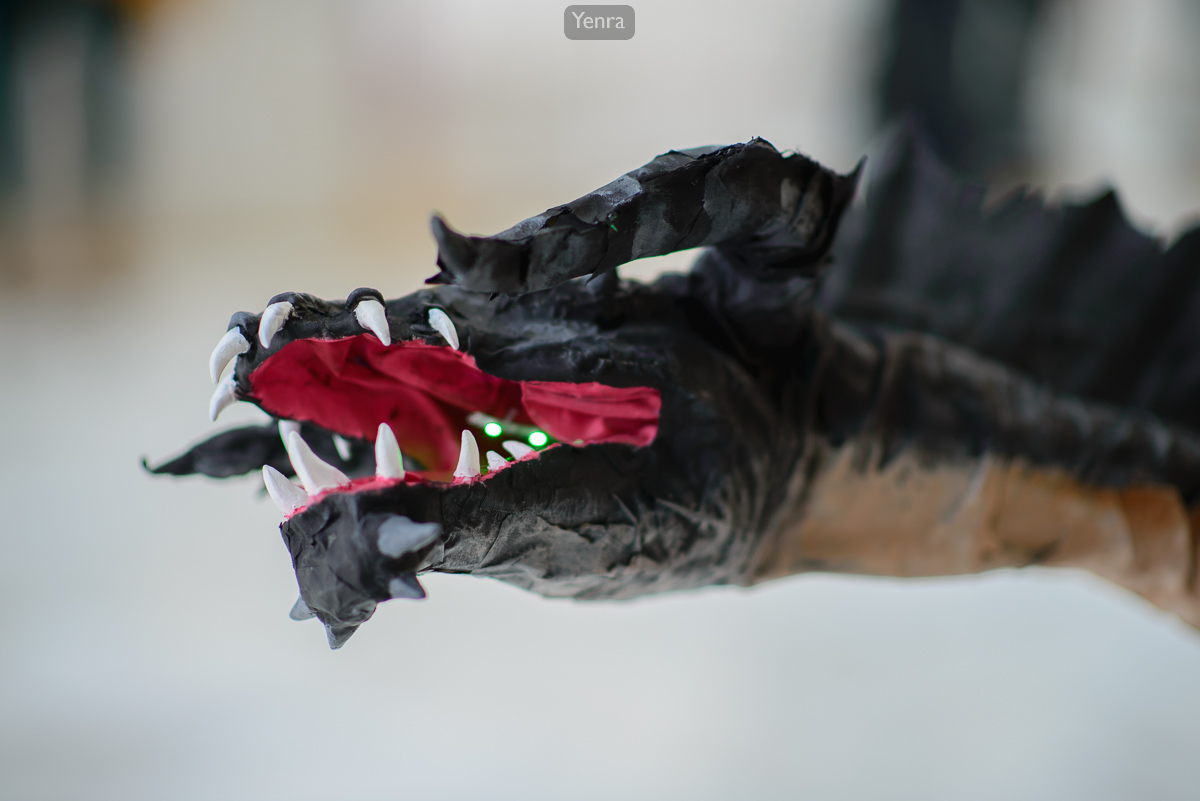
Katsucon 2016 Friday photograph 0268 · Photograph: Yenra
Captured: 2016:02:12 10:51:20
A small pointed shape can lead you into a photograph. A pale tooth stands out against a dark mouth; a larger horn sends your attention along another edge. Looking between the small points and the complete object gives you several ways to enjoy the same frame.
These three dragon-head details come from Katsucon 2016 Friday. Compare the black, green and blue forms, noticing where teeth, horns and spines repeat. You can begin with the shapes you see, without needing to identify the costume or know how the prop was made.
Find the pale points against a dark head
In the black dragon-head detail, pale teeth form small points around the red mouth. The mouth gives them a contrasting background, making several individual shapes easy to follow. Above and behind them, larger dark horns curve away from the head.
Choose one tooth, then look for a larger point nearby. Compare their size, direction and surroundings. You do not need a formal name for every part: a short pale point and a longer dark curve are useful observations on their own.
Compare the teeth with the larger spines
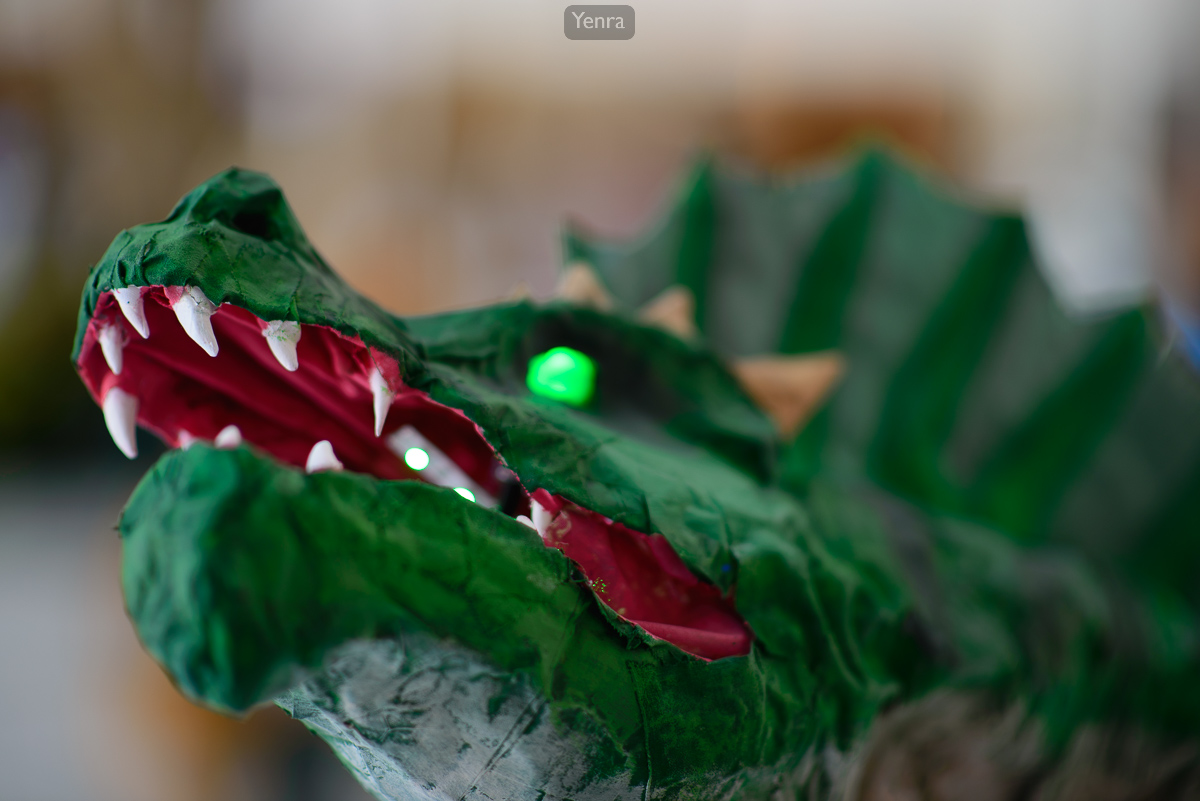
Katsucon 2016 Friday photograph 0269 · Photograph: Yenra
Captured: 2016:02:12 10:51:26
The green head offers another row of pale teeth. Larger spines rise behind the face, repeating a pointed shape at a different scale. Some of those forms are softer in the photograph, while the nearer mouth gives you clearer edges to follow.
Move your attention between the small points and the larger ones. Which can you separate most easily from the background? A point can remain recognizable even when its edge is soft. Look at what the complete photograph lets you discover, rather than expecting every detail to look equally sharp.
Follow points around a different outline
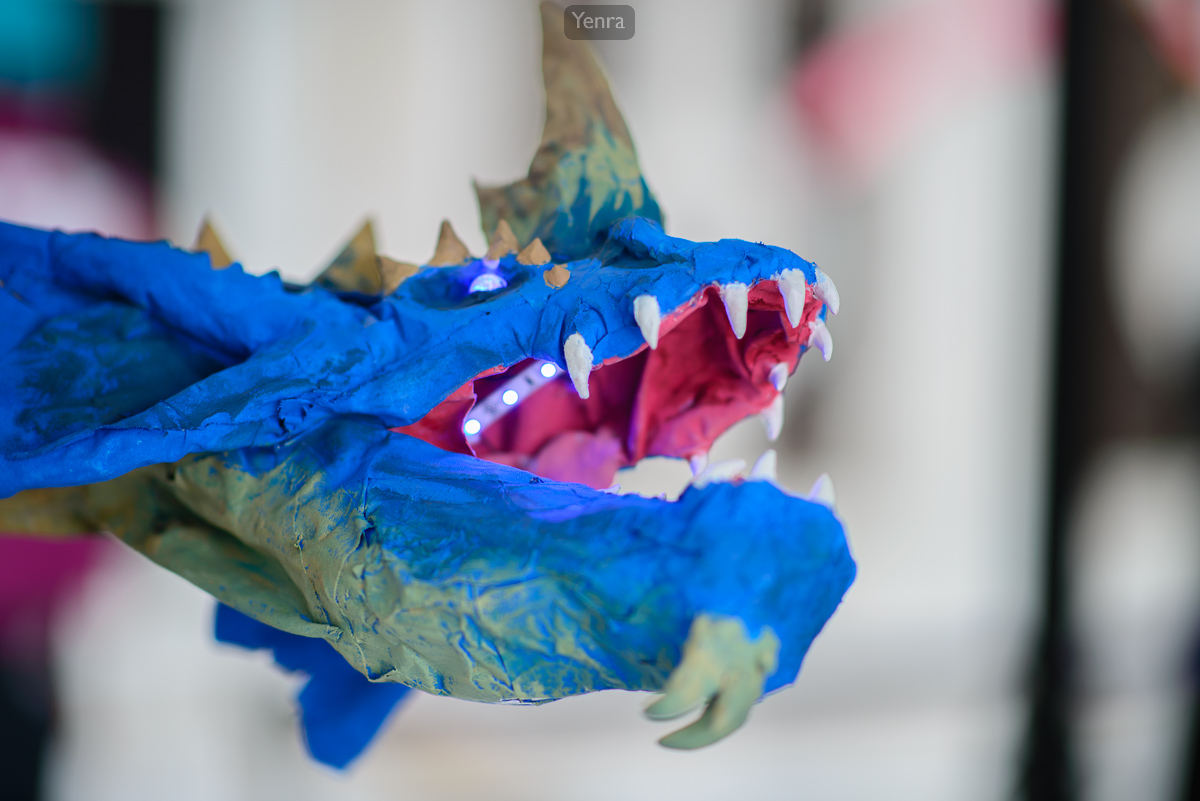
Katsucon 2016 Friday photograph 0271 · Photograph: Yenra
Captured: 2016:02:12 10:51:39
The blue head combines pale teeth with small gold-colored points and a longer horn. The mouth changes direction within the frame, so the pale shapes make a different arrangement from the earlier photographs. The colors offer another way to distinguish neighboring forms.
Return to the first picture and choose a connection between the two: a pale tooth against red, a curved horn or the space inside an open mouth. Then name one difference. A pair of simple observations can help you look more closely while leaving room to enjoy the whole object.
Look back with curiosity.
- Which point caught your attention first?
- How do size and color help the points stand apart?
- What changes when you look back at the whole frame?
Keep exploring
Noticing triangles in a portrait · Noticing where a photograph is sharp · Photographing the details that matter
Browse the complete Katsucon 2016 Friday gallery. Follow a photograph into its original neighbors and see which detail, drape or connection catches your attention next.