Field notes · Look · Try · Compare
Noticing converging lines in a photograph
Follow stairs, carpet stripes, and corridor edges into the scene.
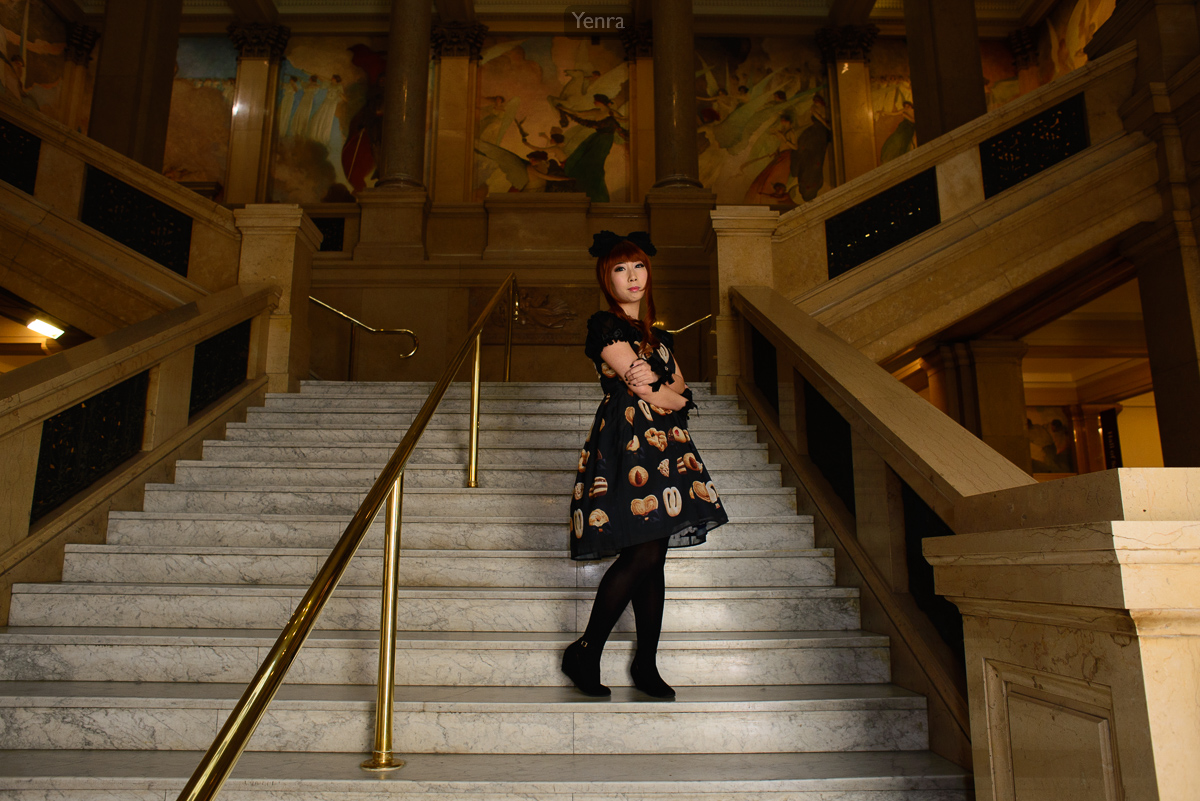
Confident Pose on White Marble Staircase · Photograph: Yenra
Captured: 2016:04:07 18:40:57
Some lines give your eye a way into a photograph. Stair edges, stripes on a floor and the sides of a corridor may appear farther apart near the camera and closer together in the distance. Follow one pair and notice how the scene begins to feel deeper.
Follow the stairs into the scene
The pale stairs and central handrail provide several paths through this portrait. Begin near the bottom of the frame, follow an edge toward the model, then look at the space beyond. You can trace the surroundings as well as the figure.
Compare the nearer edges with those farther away. Parallel edges extending away from a viewpoint can appear to approach one another in a photograph. This is a perspective relationship you can notice in everyday places, from a hallway to a row of floorboards.
The model interrupts some of the lines and gives you another place to return to. You might begin with the face and then explore the stairs, or enter along a handrail and arrive at the person. Try both routes and see what you enjoy about each.
You do not need every visible line to meet at one exact point. A scene can contain several directions at once, and some edges may be hidden. Begin with one pair that you can follow comfortably.
Compare the stripes near and far
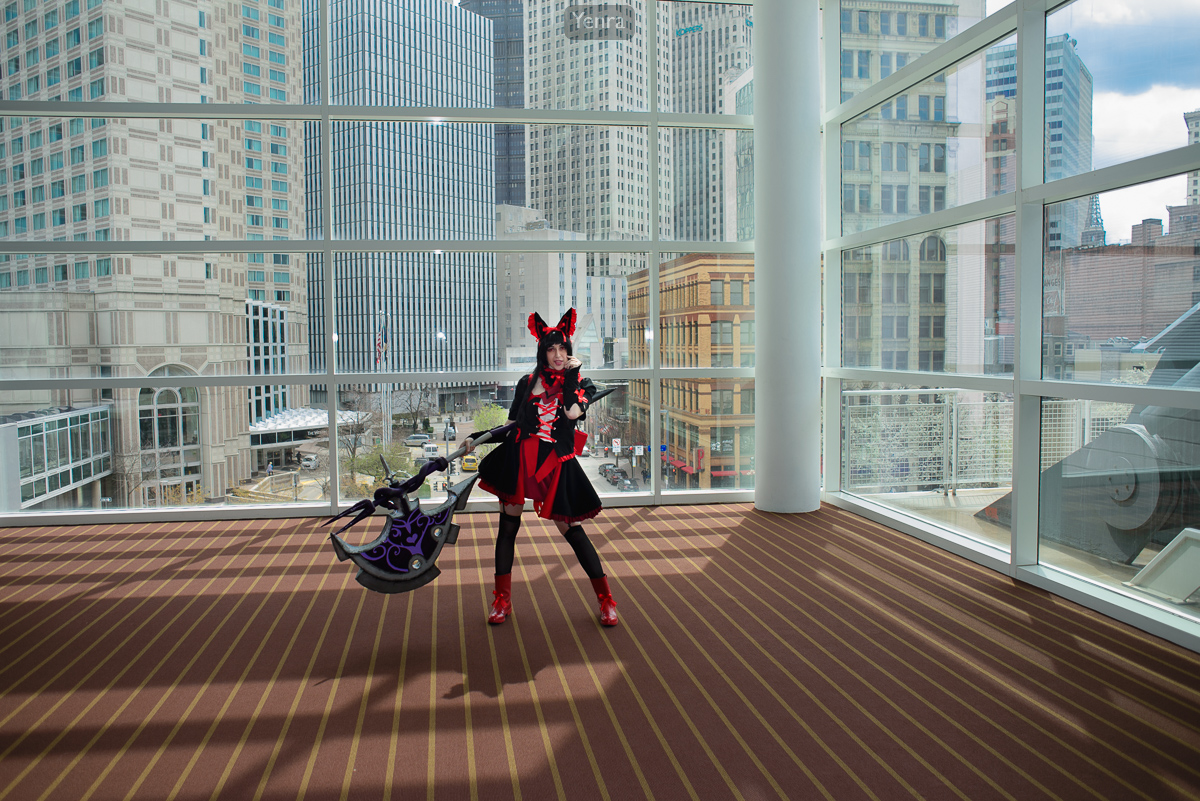
Rory Mercury, Gate · Photograph: Yenra · Credit: Crystal Fantasy Cosplay
Captured: 2016:04:09 13:40:26
In this Rory Mercury portrait, the carpet makes the relationship especially clear. The long yellow stripes are more widely spaced toward the bottom of the photograph and appear closer together toward the windows. The model stands among those receding paths.
Follow one stripe from the foreground into the scene. Then look at its neighbor. Comparing the two helps you see depth in the floor beneath the figure, while the window grid gives the background another set of shapes.
Notice where the figure sits in relation to the stripes. Some lines pass beside the costume; others disappear behind it. The connection between a subject and its surroundings can be as interesting as the lines themselves.
Converging lines are different from a single diagonal, which describes a direction across the frame. They are also different from a decorative pattern that spreads outward from a center. Here, the useful observation is how the spacing appears to change with distance.
For a photograph of your own, choose an accessible floor pattern or familiar corridor. From a comfortable standing position, compare a view nearer the center with one slightly to the side. A small change of viewpoint can give the subject a different relationship with the lines. An existing photograph is equally useful for this exercise.
Look for depth in a darker corridor
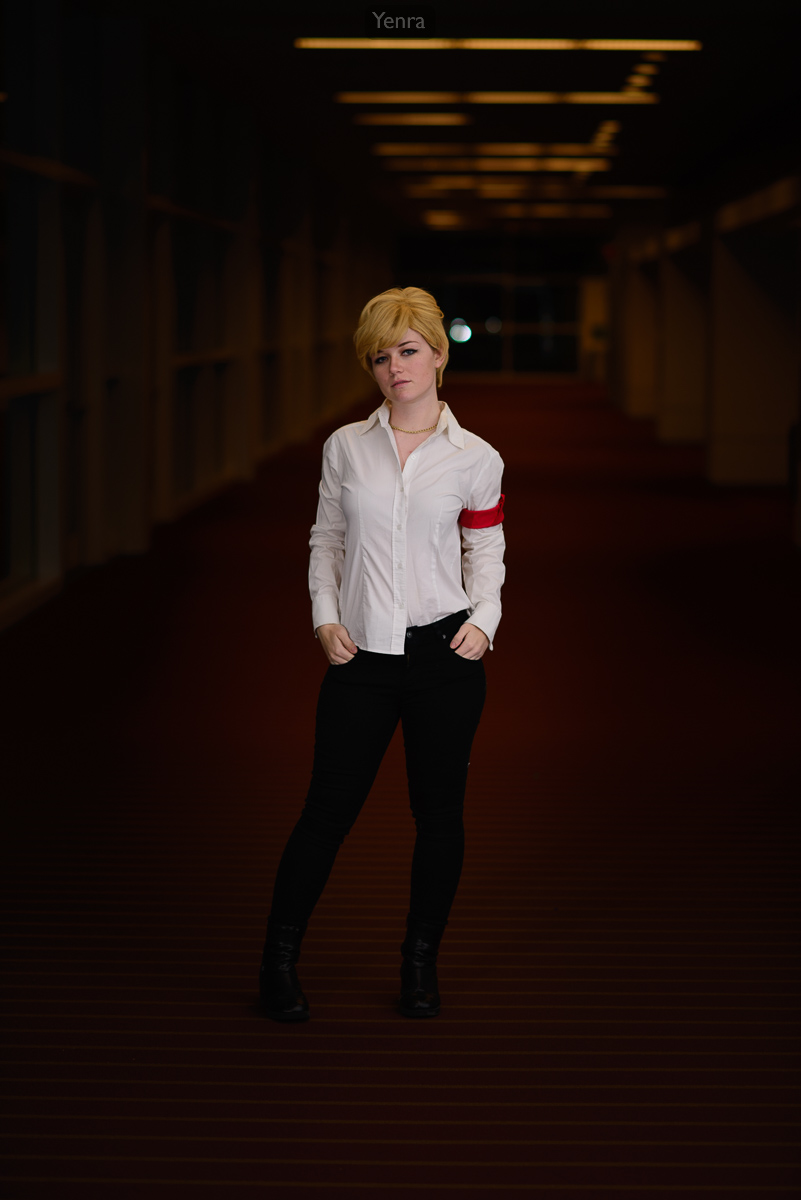
Haruka Tenou, Sailor Moon · Photograph: Yenra · Credit: Minniemoon Cosplay
Captured: 2016:04:09 20:51:46
Behind this Haruka Tenou portrait, corridor edges recede into a darker space. The overhead lights appear smaller farther away, giving you another clue to distance. The face and white shirt remain a strong point of attention in front.
This is a subtler example than the bright carpet stripes. Let your eye settle on the portrait first, then look beyond it. A background can contribute depth without becoming the most prominent part of the picture.
These finished photographs show visible relationships; they do not establish a particular lens choice, lighting arrangement or original intention. You can use what you see to form a question for your own work: where might a line carry attention, and where would you like the viewer to pause?
Keep one small discovery. Perhaps the lines make the space easier to understand, or perhaps you enjoy how the figure interrupts them. That observation gives you something concrete to explore the next time you raise a camera.
Look back with curiosity.
- Which edges appear to draw closer together?
- Where do those lines take your eye?
- How does the subject relate to that path?
Keep exploring
Following lines through a photograph · Noticing radiating lines in a photograph · Noticing diagonals in a photograph
Browse the complete Tekko 2016 gallery.