Field notes · Look · Try · Compare
Moving from an event crowd to a portrait
Arrange a wide crowd view, a closer group scene and an individual portrait so each photograph contributes a different scale of attention.
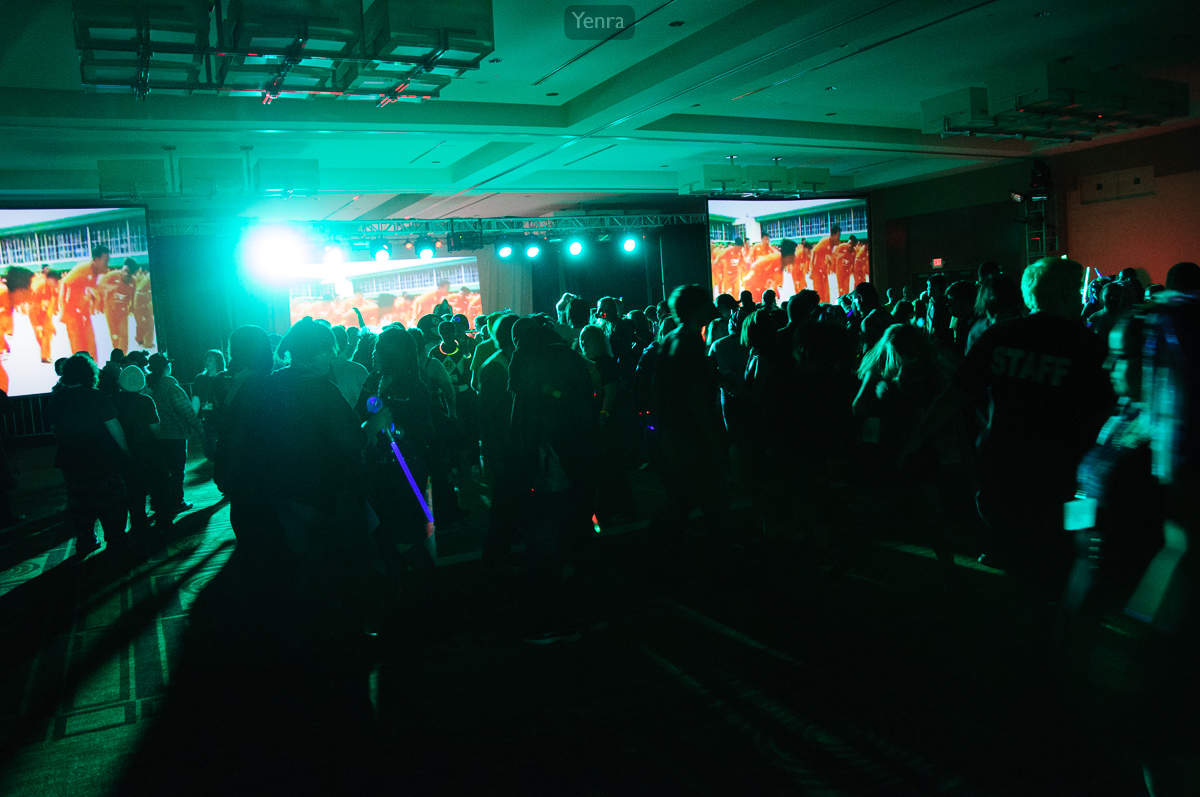
Crowd beneath green event lighting · Photograph: Yenra
Captured: 2011:11:19 01:35:28
An event collection can move between different scales of attention. A wide photograph introduces a room full of people, a closer scene offers particular gestures and details, and an individual portrait gives one person more space. Together, the pictures can offer more than any one view alone.
This new editorial sequence uses three Anime USA 2011 photographs. Its reading order runs backward through the recorded capture times: two crowd scenes from November 19 lead to a portrait from November 18. It is an arrangement for looking, not a continuous account of following someone through the event. The original dates, gallery order and archive links remain available.
Begin with the room and the crowd
The opening photograph shows a crowd beneath green light, with ceiling fixtures and large screens helping describe the room. Many people appear as dark outlines. The wide horizontal frame gives the collection a sense of the shared space before individual details become the focus.
As an opening, this view answers a different question from a portrait: what does the gathering look like at the scale of the room? It offers visible surroundings and a crowd without needing an attendance estimate or a claim about what every person is doing.
Choose a wider picture for what it contributes to your collection. It may contain less facial detail than the portraits that follow, yet make the setting easier to understand. Give it a factual caption and let the next image add another kind of information.
Move among a smaller group
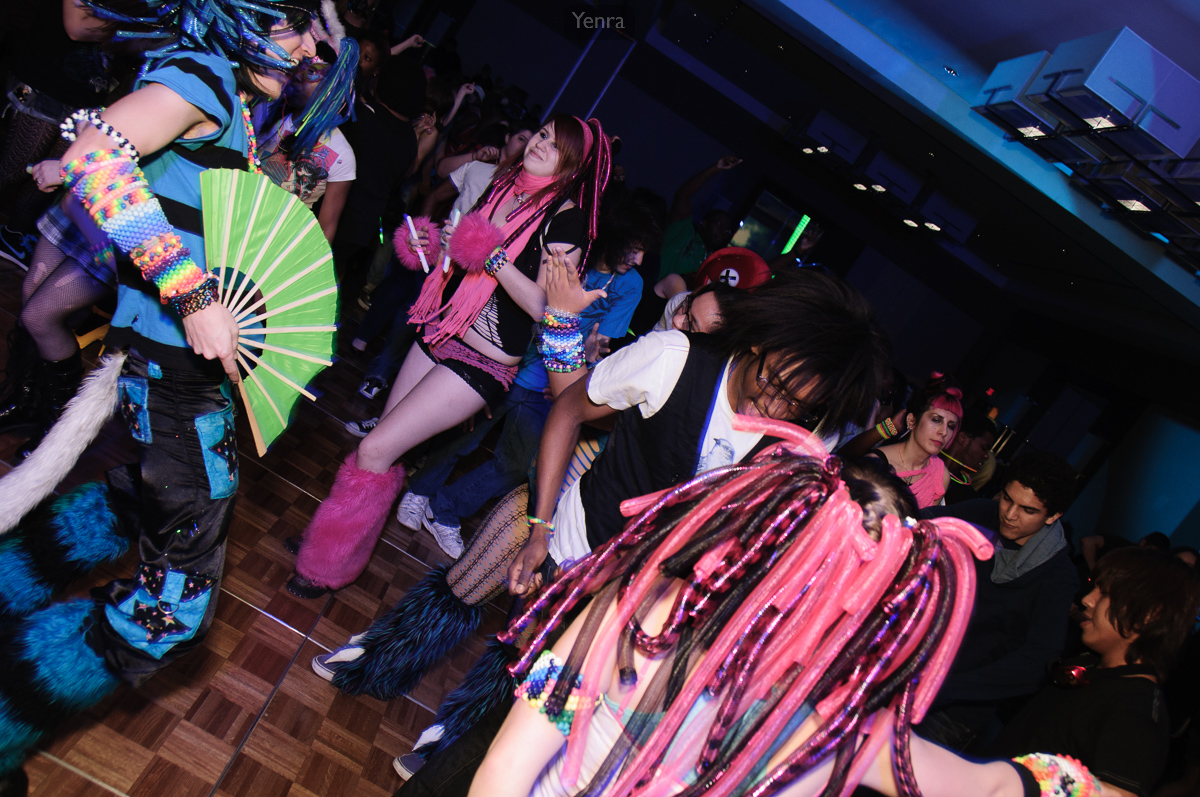
Colorful details among an event crowd · Photograph: Yenra
Captured: 2011:11:19 01:28:47
The closer horizontal scene brings several people, a folding fan, bead bracelets and colorful clothing into view. Overlapping figures make the crowd more specific. Small gestures and accessories become easier to notice than they were in the wide room view.
Compare the information in the first two pictures. The room remains part of the collection, while the nearer scene introduces details that can connect with a portrait. Blue clothing and multicolored beads are visible features you can follow without needing to identify anyone across photographs.
In your own selection, look for a group view that adds something between the widest scene and the individual portrait. It does not need to explain the entire event. A few recognizable details can help a reader move between scales with curiosity.
Finish with an individual portrait
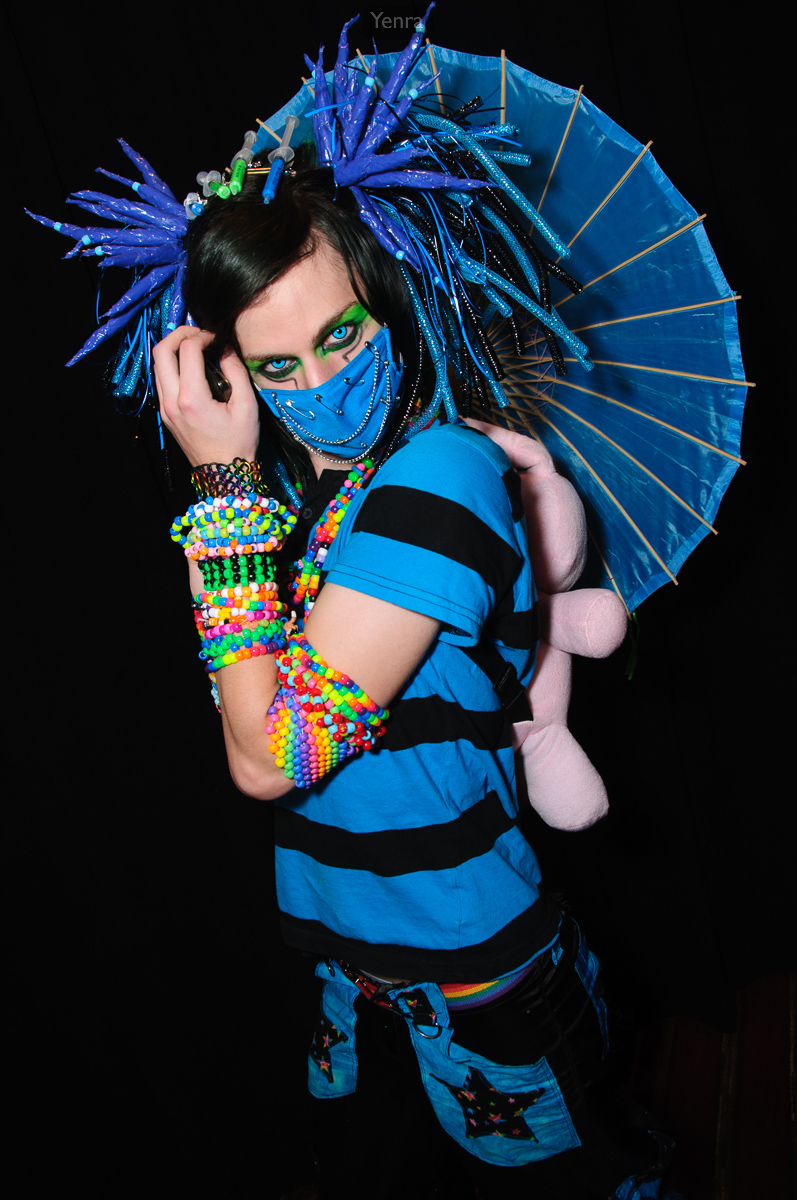
Blue costume portrait with a parasol · Photograph: Yenra
Captured: 2011:11:18 16:11:05
The final photograph gives one person more space within a vertical frame. Blue-and-black clothing, a blue mask, bead bracelets and an open blue parasol stand apart from a dark background. The portrait makes individual costume details available for a longer look.
Those visible colors and accessories offer echoes of the preceding crowd scene. The connection is editorial: this portrait was recorded earlier, and the sequence does not establish a continuous encounter or a shared identity across pictures. Its original capture time remains in the caption.
Try reversing the arrangement so the portrait introduces the collection and the wide room view closes it. Compare what each order reveals first and what it leaves you noticing. Keep every whole frame, factual caption and current credit; a small change of order can be a useful experiment without changing the photographs themselves.
Three scales, one possible sequence
- Establish the room: begin with the wider gathering.
- Move among the group: bring gestures and accessories into view.
- Meet an individual portrait: give one person and their details more space.
This editorial reading order reverses the recorded capture chronology. Compare another arrangement and keep the original dates with each photograph.
Look back with curiosity.
- What does each scale of view contribute?
- Which details connect the crowd and portrait photographs?
- How does the reverse reading order change your experience?
Keep exploring
Choosing variety for an event gallery · Making a portrait sequence that moves closer · Including an everyday detail in an event photo story
Browse the complete Anime USA 2011 gallery. Return to a photograph that interests you, follow its original neighbors, and see what else you notice. Your next useful experiment can begin with a small detail that catches your attention.