Field notes · Look · Try · Compare
Making a portrait with costume ears
Explore costume-ear outlines, the face, and the space around them.
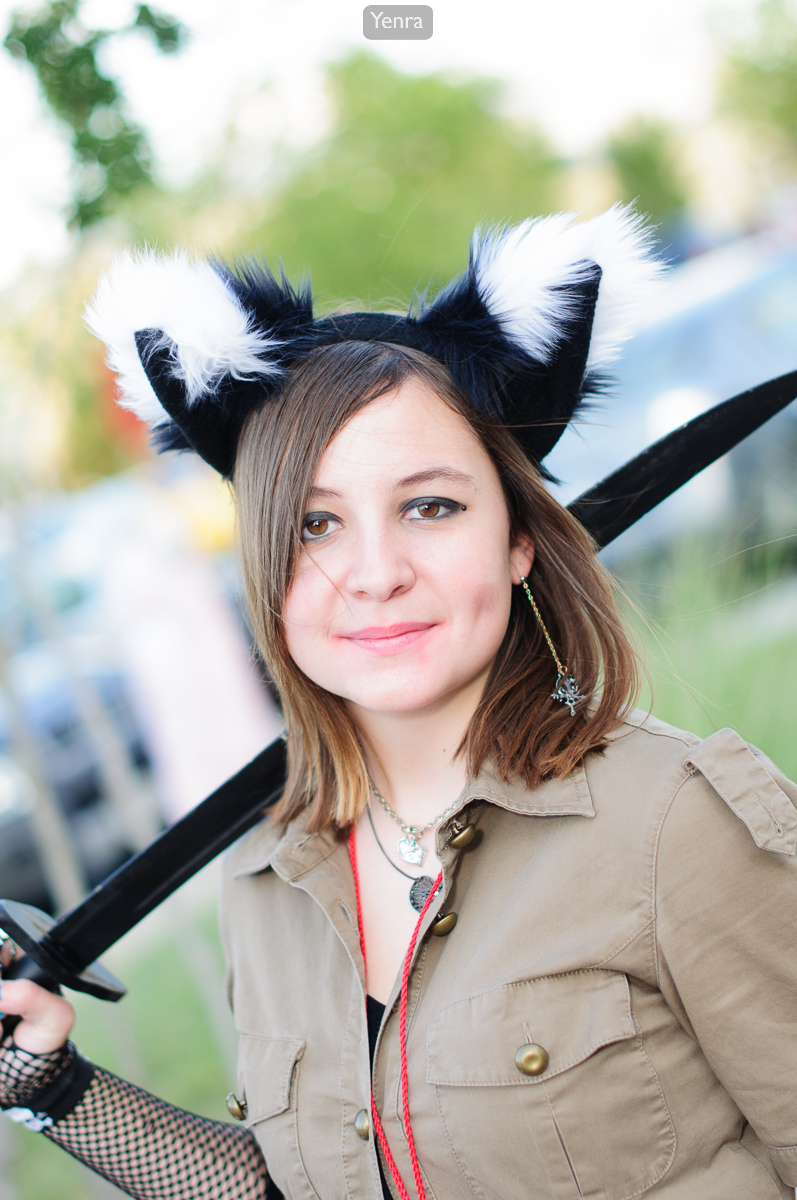
Woman with Cat Ears Headgear Holds Sword in Outdoor Setting · Photograph: Yenra
Captured: 2012:06:16 19:54:12
Costume ears can extend a portrait upward or outward, giving you an expressive outline to explore. Begin by asking your portrait partner which details they enjoy about the headpiece. Then try a framing that makes room for those details and a closer version that gives the face more space in the picture.
Give upright ears a clear outline
Black-and-white pointed ears rise above the head in this vertical portrait. Soft green and pale background areas surround them, while the face and upper body occupy the rest of the frame. The ears remain recognizable as part of the overall silhouette.
Look at the space beside the tips as well as above them. A small change in viewpoint can place an outline against a different background area. Try looking through the camera while your partner stays comfortable, then compare which edges are easier to distinguish.
You can begin with enough room to include the whole headpiece. This gives you a reference for a second, closer version. Keep the first photograph available while you compare; different framings can serve different purposes.
Explore a close frame with long ears

Woman Wearing Pink Bunny Ears Outdoors · Photograph: Yenra
Captured: 2012:06:17 11:53:05
Long pink ears extend across the upper part of this horizontal portrait and meet the top edge. The face has a substantial place in the frame, with green surroundings to the left and a yellow-and-pink prop near the lower edge.
This close composition offers another possibility: the photograph can show the character of a headpiece without containing every part of its outline. Compare the attention given to the face with the space occupied by the ears. Including the whole headpiece and choosing a close view can both be useful.
For your own pair of photographs, ask what you want the closer version to emphasize. It might be an expression, a shape beside the face, or the relationship between a prop and the headpiece. Keep the person's comfort and preferences part of that choice.
Include rounded ears and a reflection
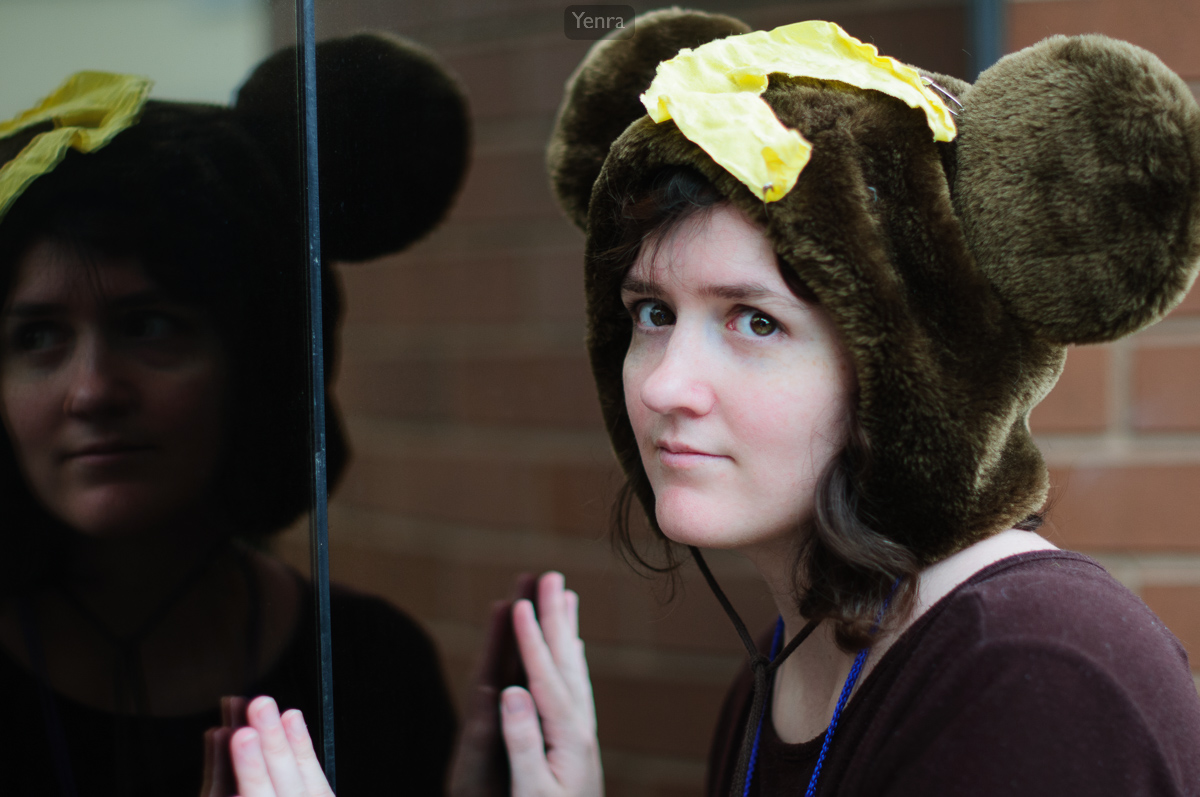
Teddiursa, Pokemon · Photograph: Yenra
Captured: 2012:06:17 11:53:39
A broad rounded brown ear fills the right side. At left, the dark reflection repeats the face, headpiece and raised hand. The horizontal frame has room for these two appearances, with the edge of the reflective surface dividing them.
Notice how the ear's width contributes to the composition. A wide headpiece may invite a horizontal frame, a little more distance, or a turn that changes its outline. None is required; they are possibilities to compare with your partner.
A reflection adds another shape to consider. If you explore one, look around both the direct portrait and its reflection before making the picture. Check which parts you want to include and where the frame edges meet them. You can make a useful portrait without a reflection, too.
Choose the framing together
These examples show different people and compositions, with the first photographed on June 16 and the later two on June 17, 2012. They offer a range of framing ideas. In your own experiment, compare a wider and closer view of the same willing partner, keeping the headpiece as they prefer to wear it.
Let the wearer decide whether anything needs adjusting. You can often explore the shape simply by changing your viewpoint or framing. Ask which version feels expressive to them and name one visual detail you enjoy. That shared choice can be the finished result, with another idea saved for next time.
Look back with curiosity.
- What did you enjoy noticing?
- Which variation would you like to explore?
- What small observation would you like to keep?
Keep exploring
Exploring portrait framing · Exploring the edges of the frame · Noticing reflections in a photograph
Browse the complete Anime Mid-Atlantic 2012 gallery.