Field notes · Look · Try · Compare
Making a portrait with a sword prop
Explore how a prop can remain part of a portrait as attention moves from the whole costume toward the face.
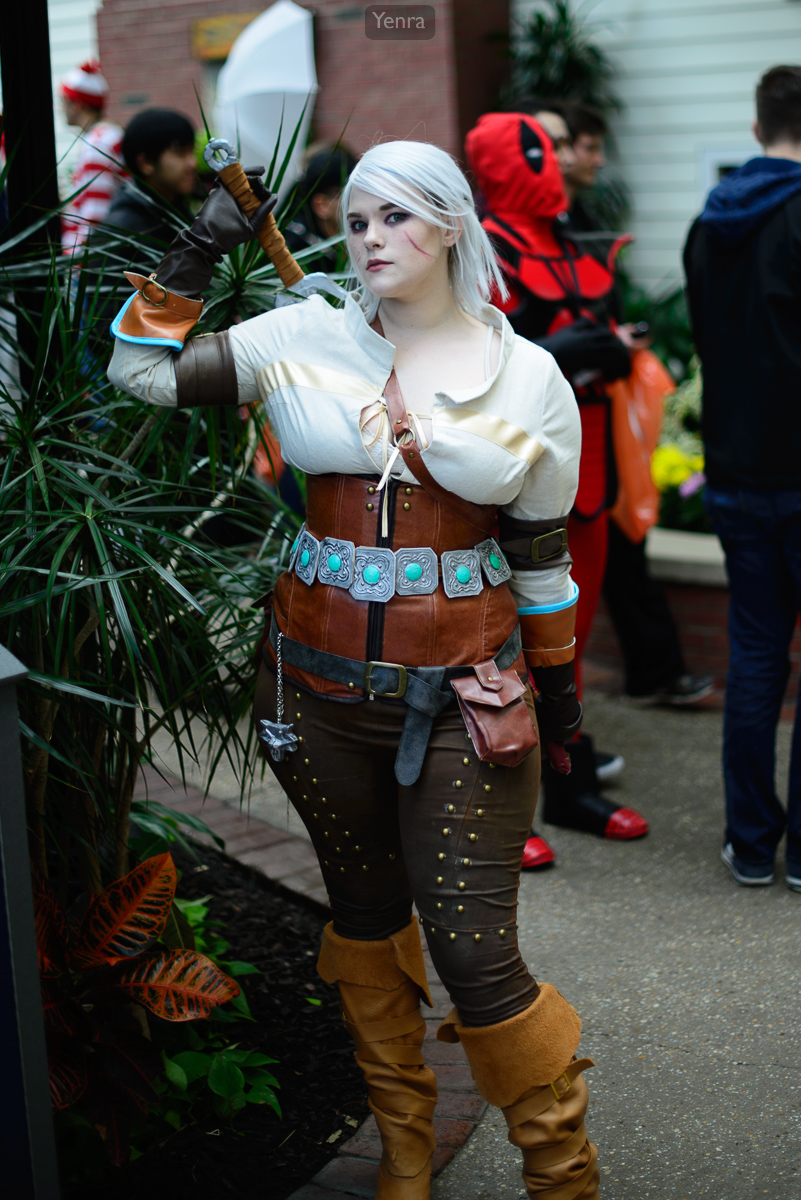
Ciri from Witcher 3: The Wild Hunt · Photograph: Yenra
Captured: 2017:02:17 12:07:26
A costume prop can help a portrait feel connected to its character. How much of it you include is a choice to explore: a wider frame can show how it is held, while a close portrait may need only a recognizable detail beside the face.
These three Katsucon 2017 portraits of Ciri show a sword hilt beside the shoulder at different scales. Follow the relationship between the face, gloved hand and hilt. Try the idea with a willing partner and a suitable costume prop held comfortably at rest.
Give the costume and prop room
The wider portrait includes much of the costume, the raised gloved hand and the sword hilt beside the shoulder. Plants and other people remain visible in the background. There is room to see how the prop belongs with the clothing and pose.
Follow the hand toward the grip, then return to the face. Notice how the visible hilt adds a shape above the shoulder. You do not need to see an entire prop for it to contribute to the portrait.
Begin your own variation with enough room to include the costume and the hand holding the prop. Invite your partner to settle into a comfortable position, make a photograph and review it together. Look for a clear relationship between the person and the object.
Bring the hand and hilt closer
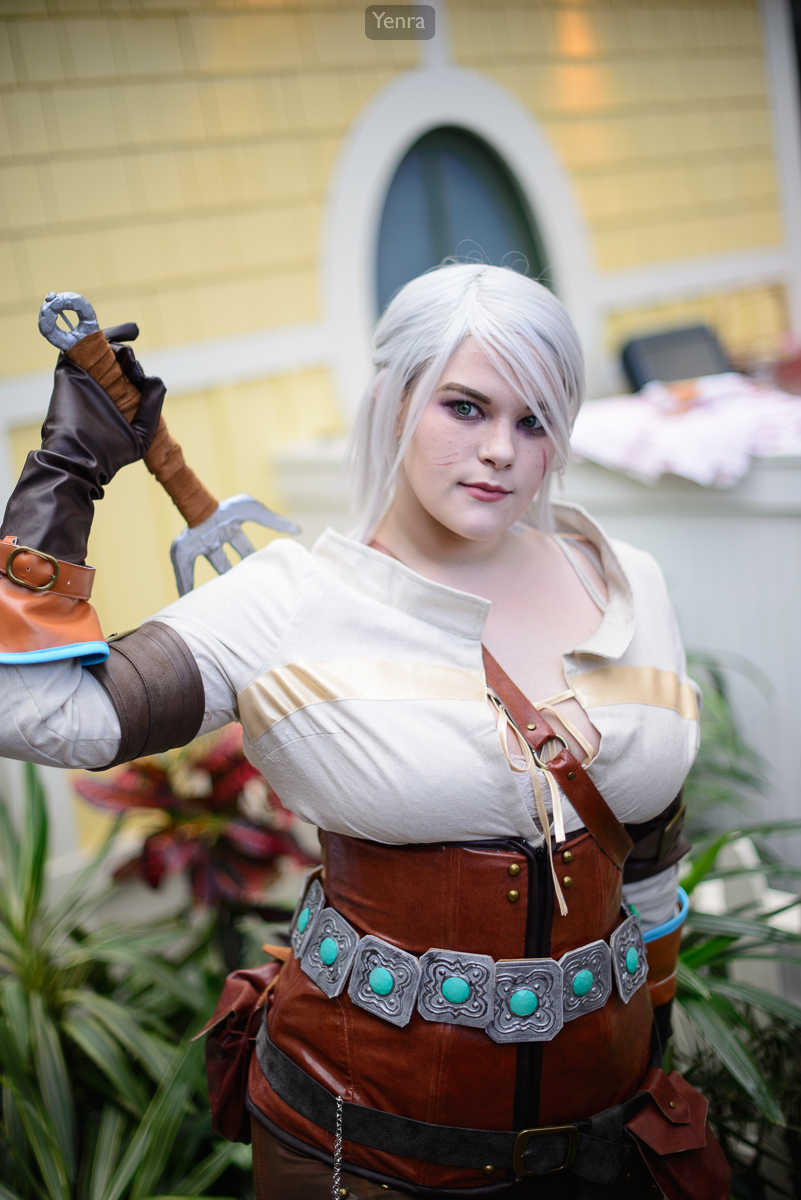
Ciri from Witcher 3: The Wild Hunt · Photograph: Yenra
Captured: 2017:02:17 12:07:52
The closer portrait keeps the hand, grip and face in view. The hilt sits to the left of the face, while the costume fills more of the lower frame. The background and framing differ from the opening photograph, offering several changes to compare.
Notice the spaces around the hand and beside the face. Follow the angled grip toward the shoulder, then look at the expression. The prop can be clearly present while the person remains the center of your attention.
Try moving closer and checking the frame edges. Decide which parts of the hand and prop you want to retain. A small adjustment may give those details more room, or let the face become more prominent. Choose the balance you and your partner enjoy.
Let the face lead while the prop remains nearby
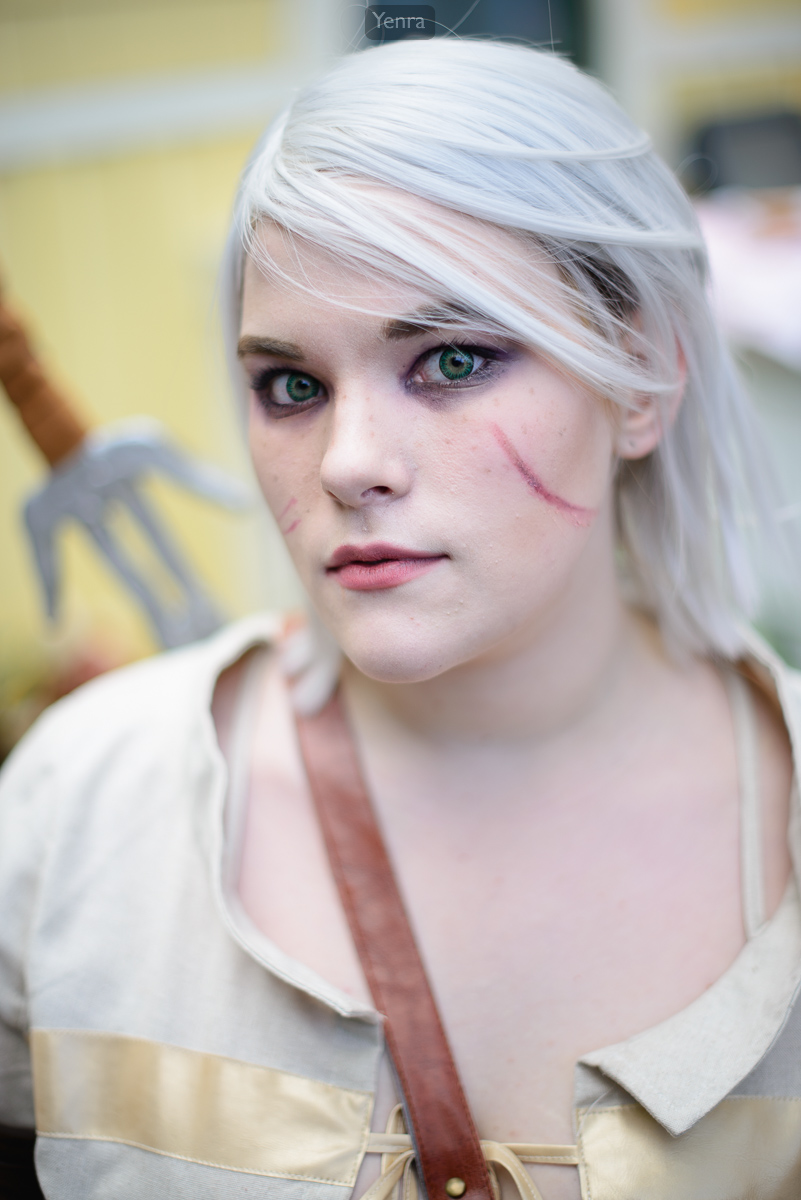
Ciri from Witcher 3: The Wild Hunt · Photograph: Yenra
Captured: 2017:02:17 12:08:36
In the close portrait, the face takes up much more of the frame. Part of the sword hilt remains softly visible at the left edge. It provides a familiar detail without competing with the sharper eyes and expression.
Compare this picture with the opening view. The wider portrait explains more of the costume; the close view offers a different encounter with the person. The small fragment of prop helps you connect the two.
Make a close variation of your own, allowing a recognizable part of the prop to remain nearby if it helps the picture. Review all three scales together. Keep the photographs that each contribute something you value, and note how much context felt useful.
Look back with curiosity.
- What does the wider frame reveal about the costume and hand position?
- How does the visible hilt connect the closer portrait with the whole view?
- When does a small, softer part of the prop provide enough context?
Keep exploring
Exploring props in a portrait · Exploring portrait framing · Noticing where a photograph is sharp
Browse the complete Katsucon 2017 gallery. Follow a photograph into its original neighbors and see which detail, gesture or change of setting catches your attention next.