Field notes · Look · Try · Compare
Making a portrait with a shield prop
Explore how a shield prop can share a portrait with a face, a gesture and a comfortable pose.
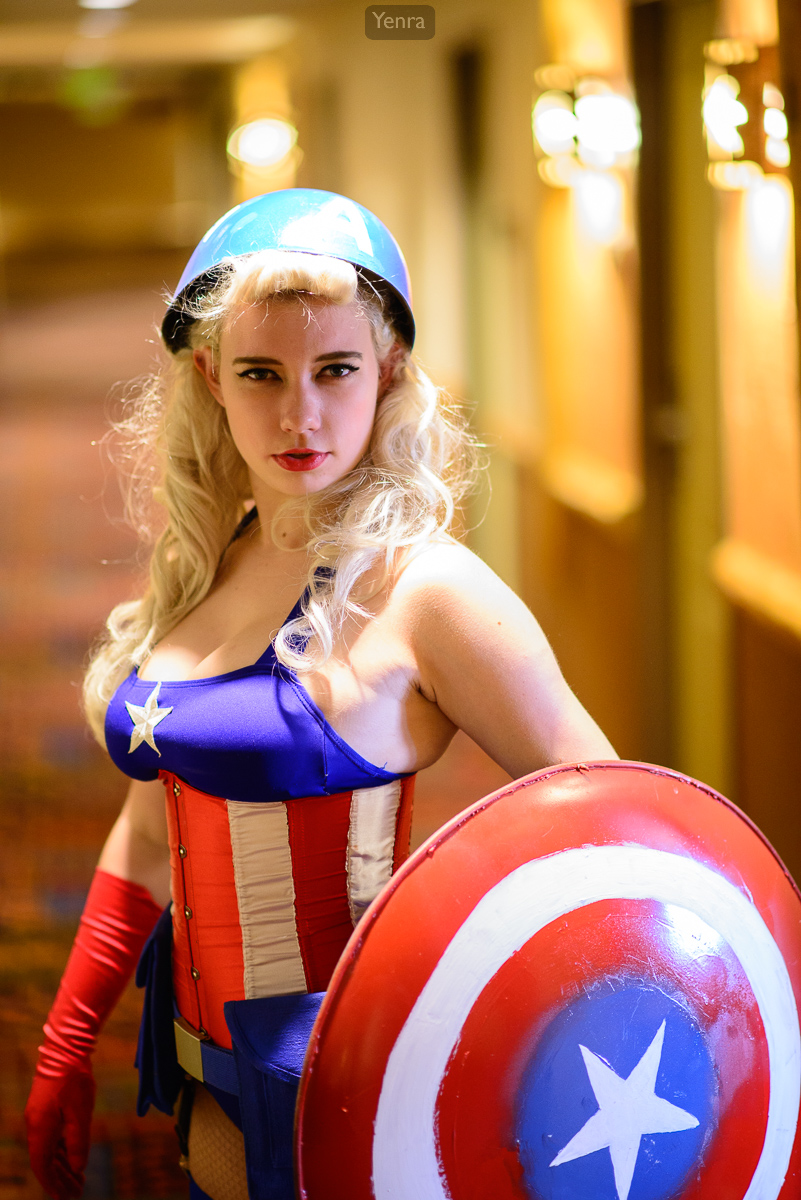
Captain America, Pinup · Photograph: Yenra · Credit: Blue Nova Cosplay
Captured: 2014:06:06 15:54:49
A broad costume prop can give a portrait a bold shape and offer a partner several enjoyable ways to pose. With a shield, the face, hands and circular outline can share the frame in different proportions. Start with a comfortable arrangement and let curiosity guide a small variation.
These Captain America portraits, credited to Blue Nova Cosplay in the archive, offer three examples from Colossalcon 2014. Their order is an editorial comparison: the first two reverse their recorded capture order, and the third was made after midnight. Use the visible arrangements as invitations to experiment, with the original dates available beneath each photograph.
Let the shield share the frame
The face remains clear above the red, white and blue shield in the foreground. The original photograph cuts through part of its outline at the right and lower edges, leaving the rings and star as large shapes within the portrait. Showing the whole original preserves that relationship.
Notice how the face and the visible section of shield share your attention. A prop can occupy a substantial part of a frame while an expression still gives the photograph a clear point of connection. The useful question is what this arrangement makes easy to see.
Invite a willing portrait partner to begin with a hold they enjoy. Make a photograph, look at it together and ask whether they would like to show more of the face, hands or prop. One small adjustment is enough to begin comparing possibilities.
Show more of its outline
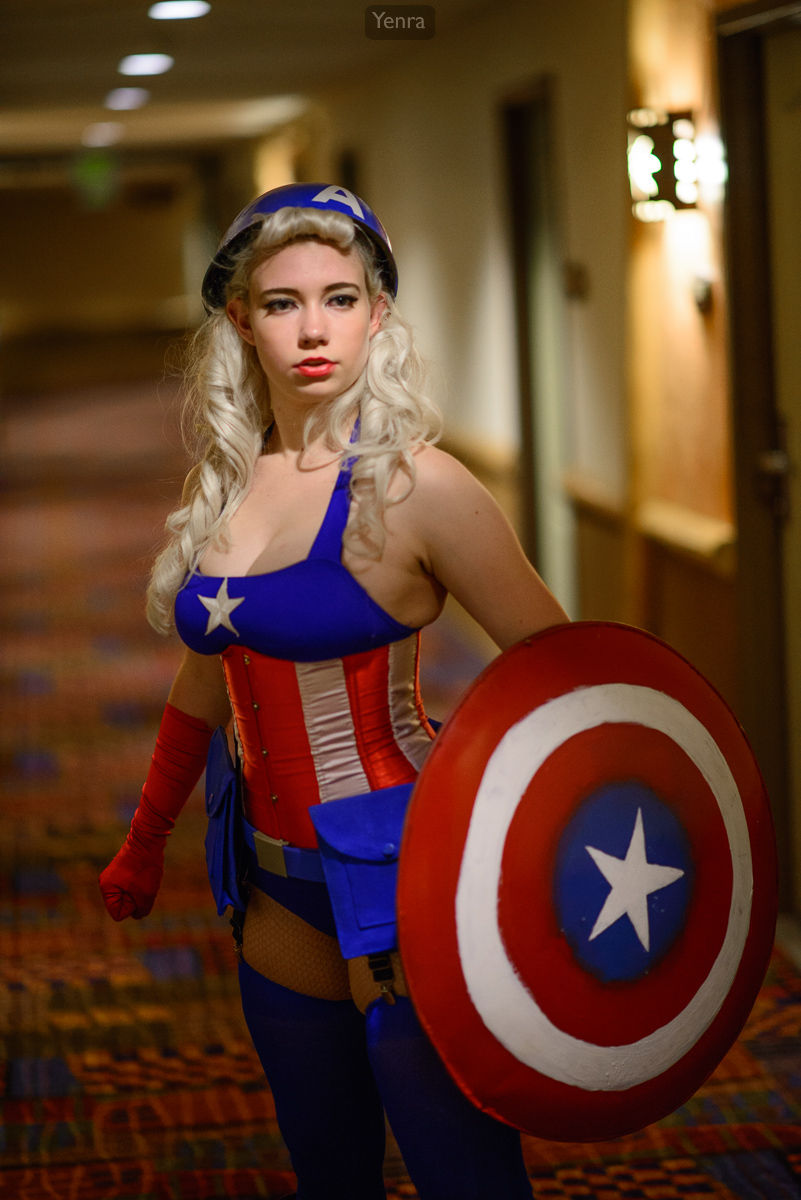
Captain America, Pinup · Photograph: Yenra · Credit: Blue Nova Cosplay
Captured: 2014:06:06 15:54:22
The slightly wider portrait includes the shield’s complete outline beside the body. Seen at an angle, that round object appears more oval in the photograph. More of the clothing and lower body also enters the frame, changing the balance among person, prop and surroundings.
Compare the complete outline here with the partial shape in the preceding portrait. Each gives the prop a different role. You might enjoy the bold close shape in one picture and the clearer relationship to the body in the other.
Try a closer photograph and a separate wider view while your partner keeps an easy position. Review the complete images side by side. Let what you enjoy in each guide the next variation, rather than treating a fully visible outline as a requirement for every portrait.
Try a lower placement
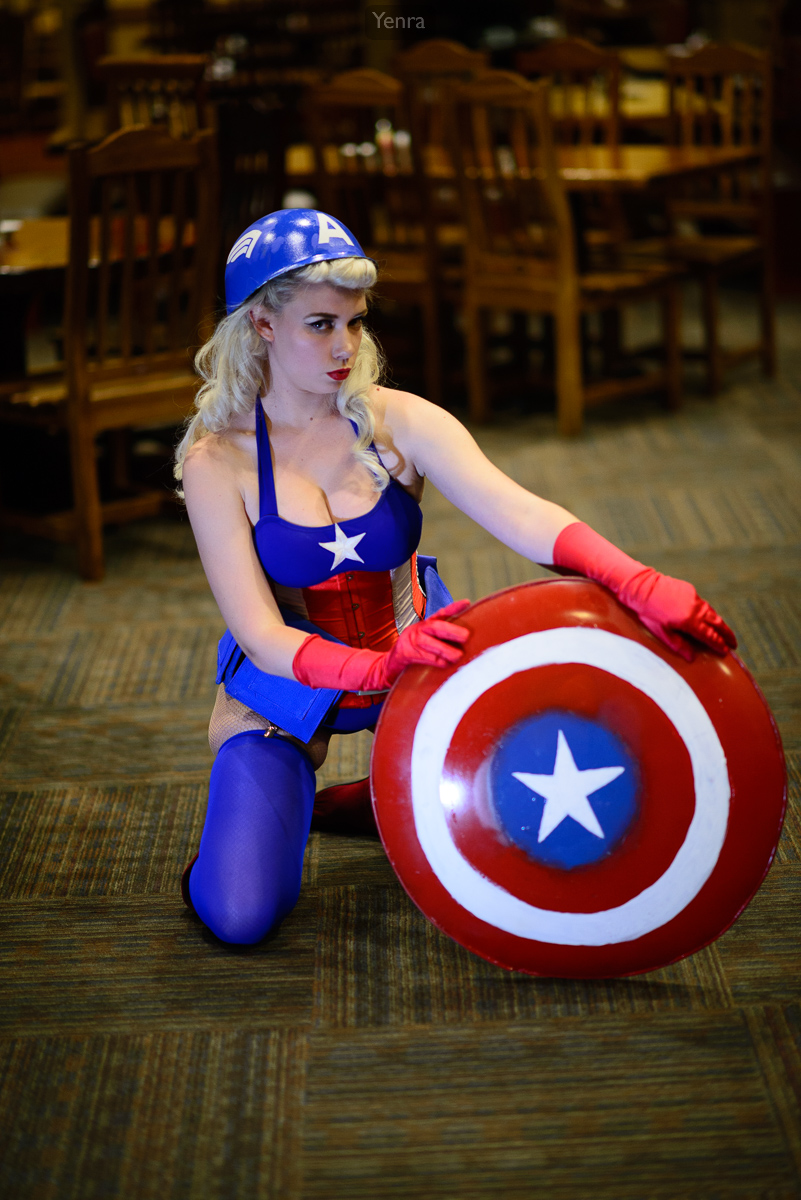
Captain America Pinup · Photograph: Yenra · Credit: Blue Nova Cosplay
Captured: 2014:06:07 00:11:28
In the lower pose, the shield sits in front with gloved hands on its upper edge and the face clearly above it. Its circular shape occupies the lower part of the portrait. The kneeling position is one visible arrangement in this example.
For a new portrait, let your partner choose a position that is comfortable for them. A seated pose, a supported prop or an arrangement beside a chair can offer another way to explore the relationship between face, hands and broad shape. The exercise can adapt to the person.
Review the variations together and name something you enjoy in each. Perhaps one gives the expression more space while another makes the hand gesture clearer. Keep a photograph you both like and one brief idea for next time; an enjoyable collaboration is a good foundation for further experiments.
Look back with curiosity.
- How do the face, hands and shield share the frame?
- What changes when more of the outline is visible?
- Which comfortable placement would you try together?
Keep exploring
Exploring props in a portrait · Exploring hand gestures in a portrait · Exploring portrait framing
Browse the complete Colossalcon 2014 gallery. Follow the original neighbors of a photograph you enjoy and see what else catches your attention. A small observation can become the beginning of your next experiment.