Field notes · Look · Try · Compare
Making a portrait with a parasol
Explore an open canopy, a folded shape, and a comfortable turn together.
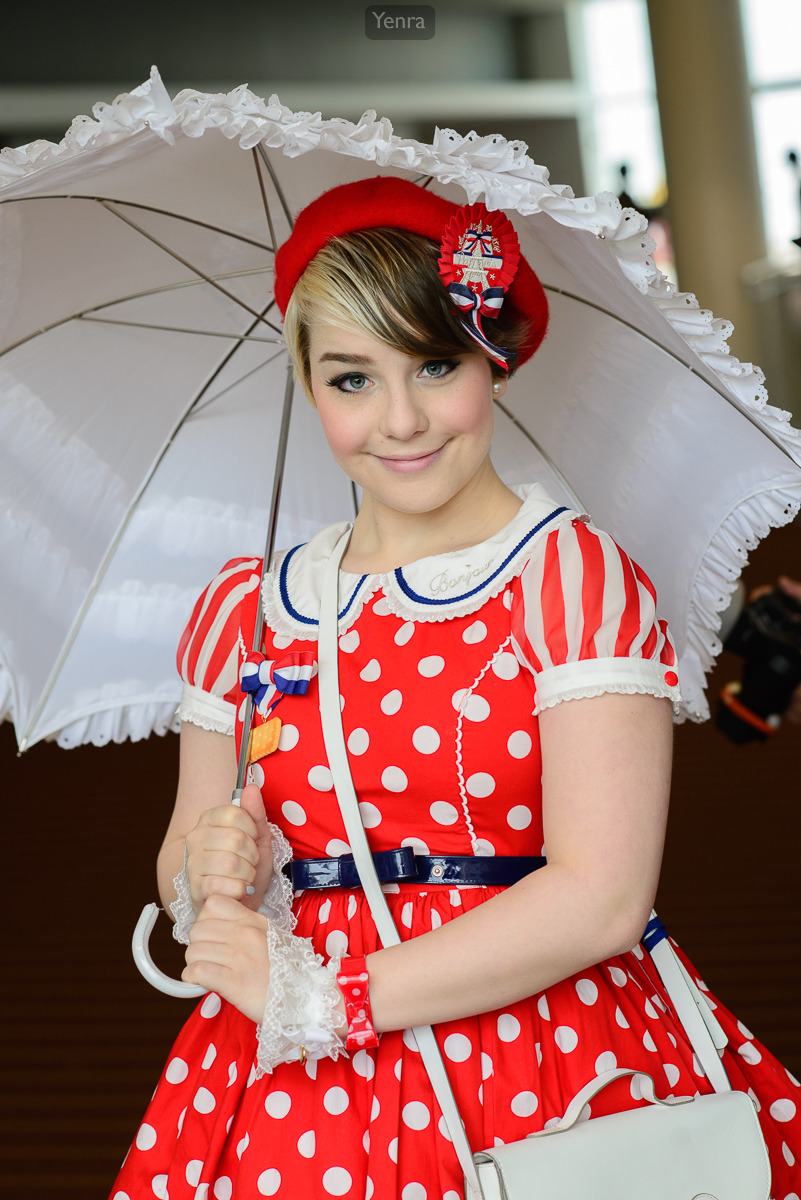
Portrait beneath a white lace parasol · Photograph: Yenra
Captured: 2014:04:05 11:42:50
A parasol brings a large, changeable shape into a portrait. Open, it can surround the head with a canopy; folded, it becomes a narrow form beside the body. With a willing partner, explore how that shape relates to the face, hands, and clothing. An ordinary umbrella offers the same starting possibilities.
Let the canopy surround the face
The open white lace parasol spreads behind the red beret and face. Its curved edge and visible ribs make a broad shape above the polka-dot dress. Notice the space between the face and the canopy, then follow the shaft toward the hand that holds it.
Give your partner room to open and handle their prop comfortably. Let them choose the grip and position, then look together at how the canopy appears around the head. A slight change in camera position may show more of one edge or give the face a different place within the larger shape.
Begin by describing what you can see in the finished photograph: the outline, the lace, the overlap, and the hand. In your own setting, observe the light on your partner's face as you work. The archive example offers a composition to explore; your surroundings and umbrella will have their own qualities.
Explore the folded shape
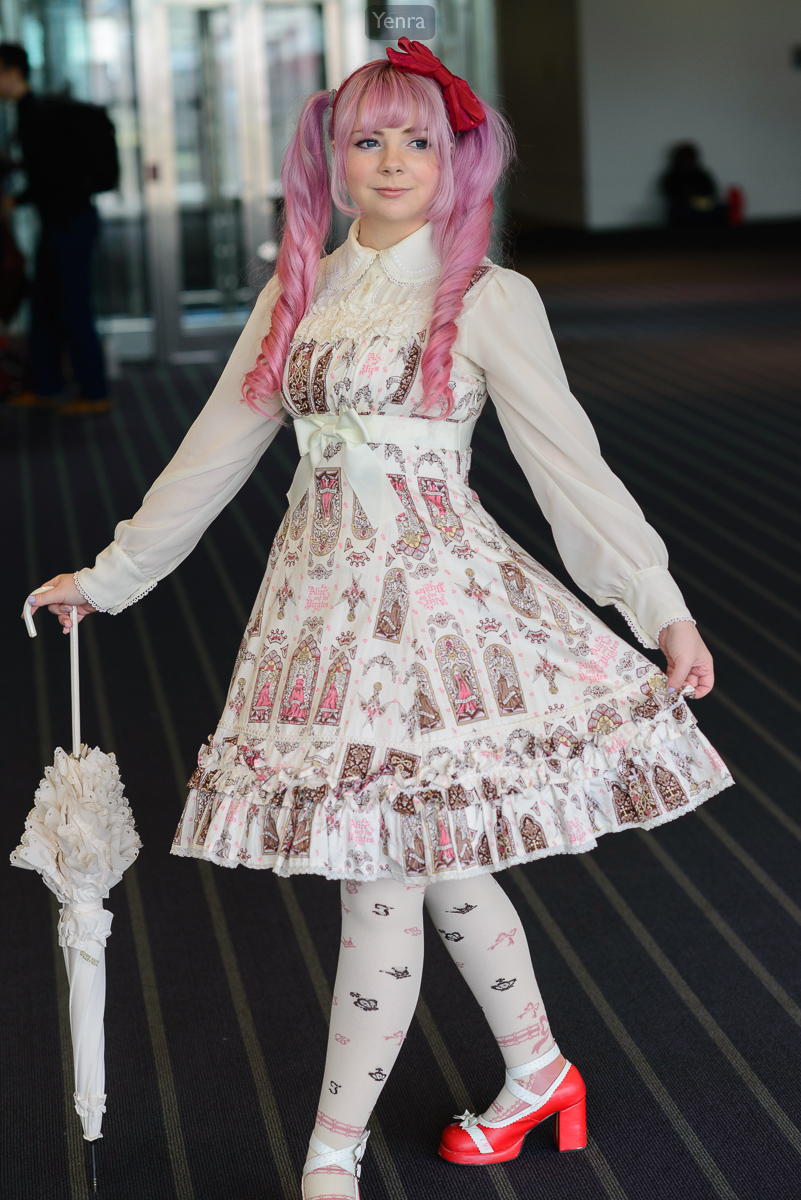
Portrait with a folded parasol and a patterned dress · Photograph: Yenra
Captured: 2014:04:05 11:54:19
Here the folded white parasol rests beside a patterned dress. One hand holds it while the other lifts part of the skirt. The narrow prop and wider fabric give you two different shapes to compare, with the hands connecting them to the pose.
A folded parasol can be part of a wider portrait that includes more of the clothing. Look at its tip, the space beside it, and the place where the hand meets the handle. Give those details enough room for the arrangement you want to show.
Invite your partner to choose a comfortable position and try a small framing variation. You could include the full outfit, then move closer to the upper body and hands. Compare what each view contributes. This example shows different clothing from the first portrait, so treat it as another idea to adapt to your own session.
Try a comfortable turn together
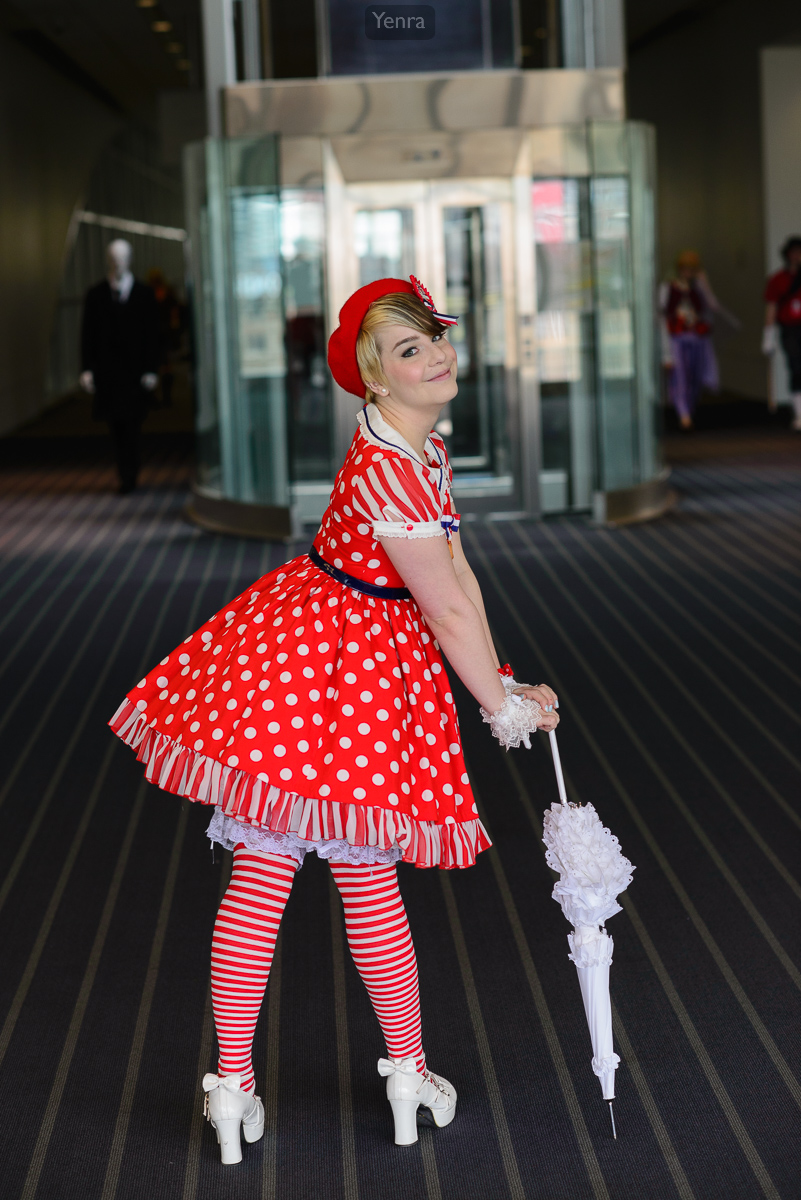
Turning portrait with a folded white parasol · Photograph: Yenra
Captured: 2014:04:05 11:55:41
The red beret and polka-dot dress return in this portrait, with the person looking back toward the camera and holding the folded parasol. The turn changes the relationship among the face, shoulders, and prop. The framing and background also differ from the open-canopy photograph.
Ask your partner whether they would enjoy trying a gentle turn or another direction of gaze. Let them find a position that feels easy, then adjust your framing around it. Notice the room beside the face and the line made by the folded prop.
Pause to look at the photographs together. Which arrangement does your partner enjoy? Which edge or gesture would you like to see more clearly? Choose one small variation to explore, and let that shared choice guide the next picture.
Look back with curiosity.
- What shape does the open canopy make around the face?
- Where does your eye travel when the prop is folded?
- Which position feels most comfortable and expressive to your partner?
Keep exploring
Exploring props in a portrait · Exploring portrait framing · Exploring hand gestures in a portrait
Browse the complete Tekko 2013 and Tekko 2014 galleries.