Field notes · Look · Try · Compare
Making a portrait with a musical instrument
Explore the connection between a face, hands, and an instrument or prop.
Kaori Miyazono, Your Lie in April · Photograph: Yenra
Captured: 2020:01:04 12:21:34
An instrument can give a portrait a connection to music, a character or something a model enjoys. It also gives the hands a role and adds a shape to compose around. Begin with a comfortable hold, then explore a pause or a small turn together.
Give the instrument a clear place
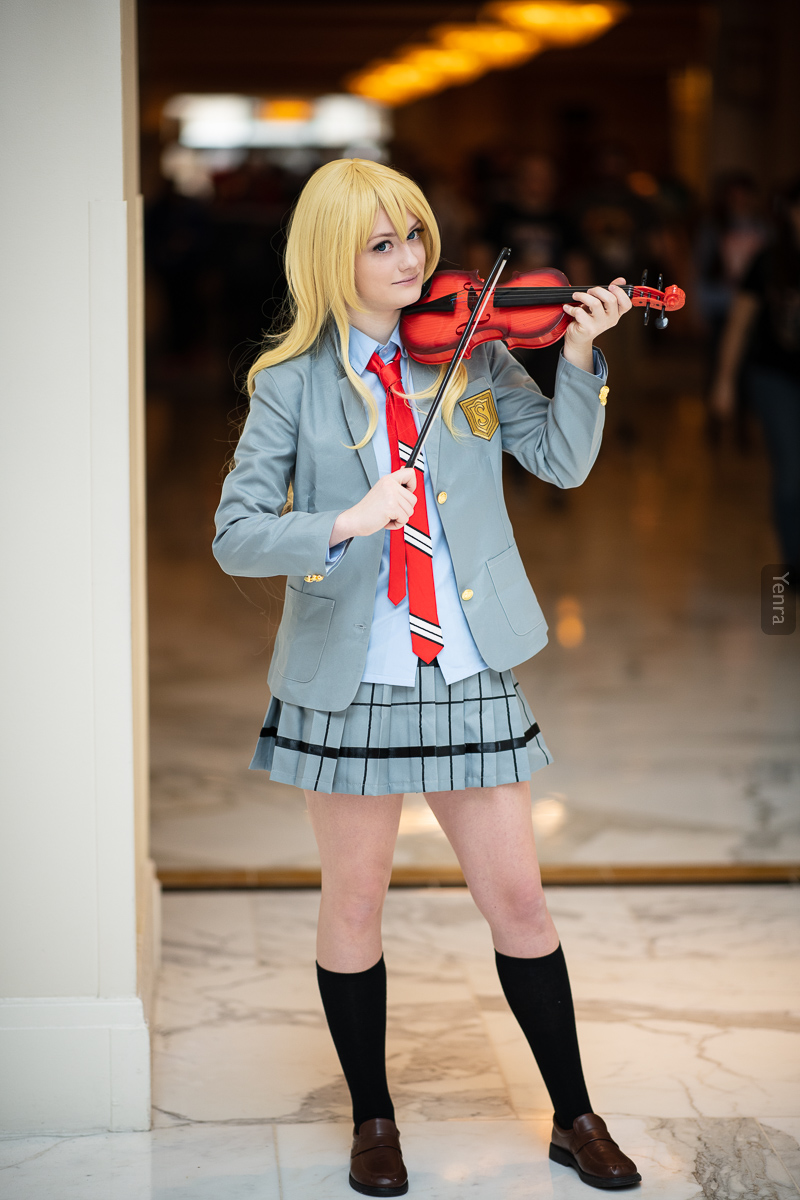
This Kaori Miyazono portrait from Your Lie in April brings a red violin-shaped object beneath the model's chin, with a bow in front. The face, hands and object gather into a close relationship within the upper part of the frame.
Follow that relationship rather than evaluating a performance. Notice how the red shape stands apart from the gray costume, where the fingers meet it, and how the bow adds another direction. Those are photographic details you can explore whether your model has an instrument or a costume prop.
For your own portrait, ask the model how they prefer to hold the object. A familiar, comfortable position is a useful beginning. If it is a musical instrument, follow its owner's guidance about handling it. The model can help decide which positions feel natural.
Check the frame edges before making a picture. Are the hands included in the way you want? Does the object have room? You can step back slightly or change your camera position while keeping the model's chosen hold.
The archive photographs show visible poses with a violin-shaped object. They do not tell us whether it was playable or document a musical performance. Use them as invitations to look at shape and connection; your own portrait can start with whatever instrument or prop is already available.
Try a relaxed pause
Kaori Miyazono, Your Lie in April · Photograph: Yenra
Captured: 2020:01:04 12:36:20
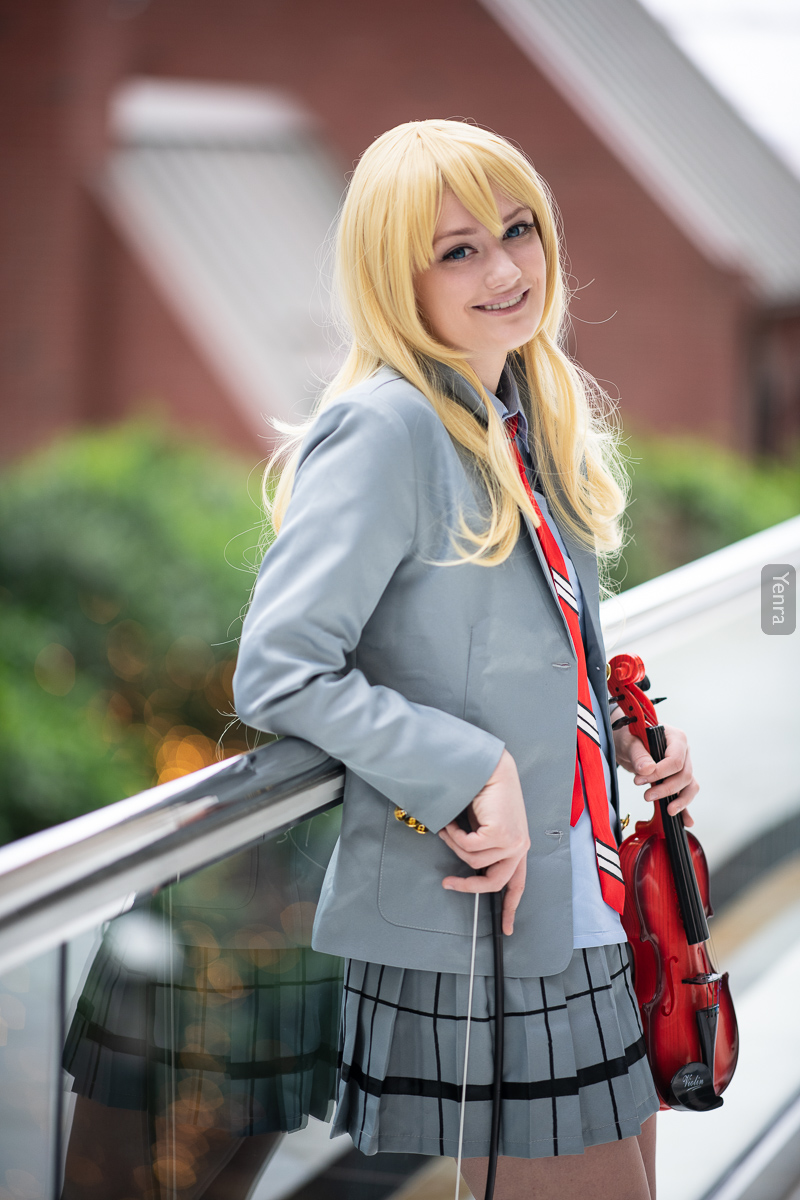
In the next portrait, the red object hangs lower beside the body as the model rests near a railing. The face and object now have more space between them. The change makes another relationship available without removing the instrument from the picture.
Compare the place of the hands in the two photographs. In the first they help gather attention near the face; here they contribute lower in the frame. Neither arrangement has to be the final answer for a session.
Invite a relaxed pause after a held position. Your model might lower the object or choose a different comfortable grip. Let them guide that movement, then look at the whole frame before photographing again.
Keep the conversation simple: “Would you like to try holding it another way?” leaves room for an idea you may not have anticipated. A portrait can become more personal when the model helps shape the variation.
Keep the connection through a turn
Kaori Miyazono, Your Lie in April · Photograph: Yenra
Captured: 2020:01:04 13:01:00
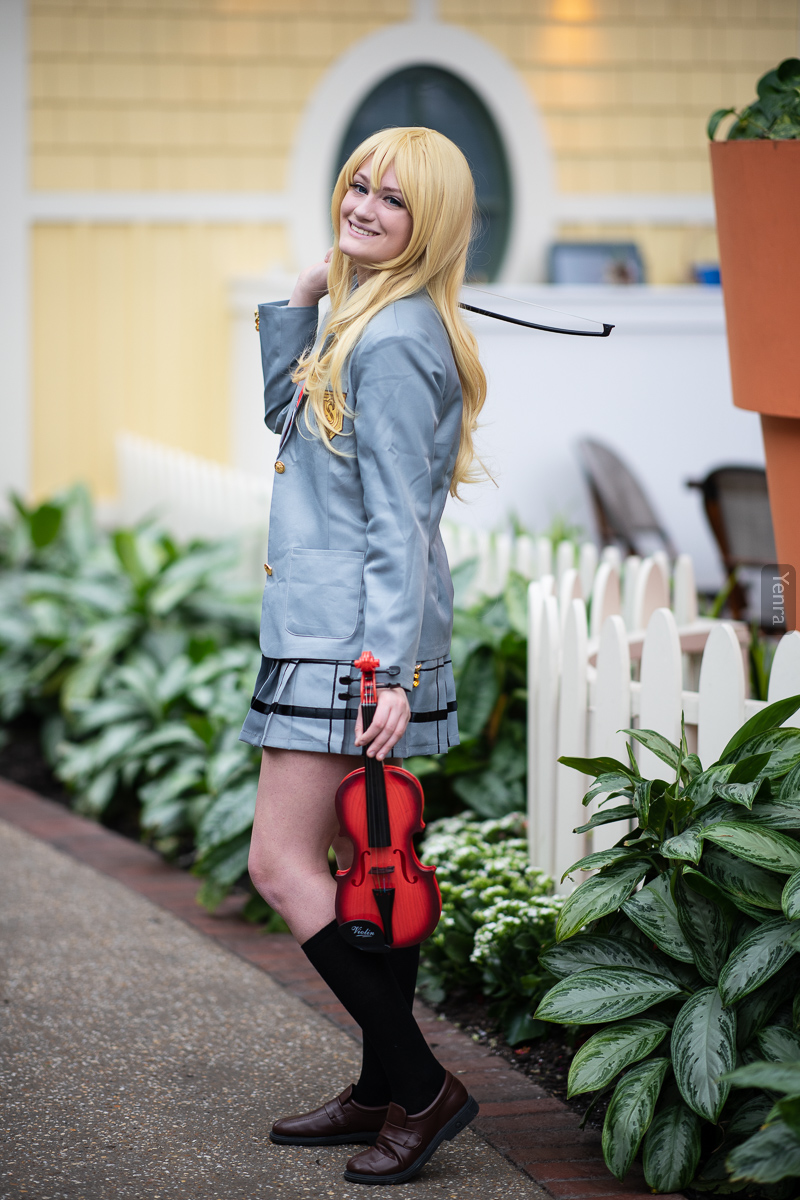
Here the model turns toward the camera, with the red object down at one side and the bow behind the shoulder. The face offers a different point of contact, while the held object continues to identify the portrait's theme.
Notice the turn and the gaze, then look at the space around the hands and object. A small shift can change several relationships at once. You can learn from those changes without copying the exact bow position.
Try one gentle change of gaze or body angle that feels comfortable to your model. Check how the object overlaps the costume and whether its outline remains easy to read. Photograph the variation, then take a moment to look together.
These examples differ in pose, framing and surroundings. They offer possibilities rather than a controlled test. Choose one question for your own session: how close should the object sit to the face, what does a pause add, or which turn feels expressive? A few thoughtful variations are enough to begin.
Look back with curiosity.
- What does the object contribute to the portrait?
- Which position feels comfortable and expressive to your model?
- What would you change about the framing next time?
Keep exploring
Exploring props in a portrait · Exploring hand gestures in a portrait · Planning a portrait together
Browse the complete MAGFest 2020 gallery.