Field notes · Look · Try · Compare
Making a portrait with a lantern
Let a held lantern suggest small changes of gesture, gaze, and framing.
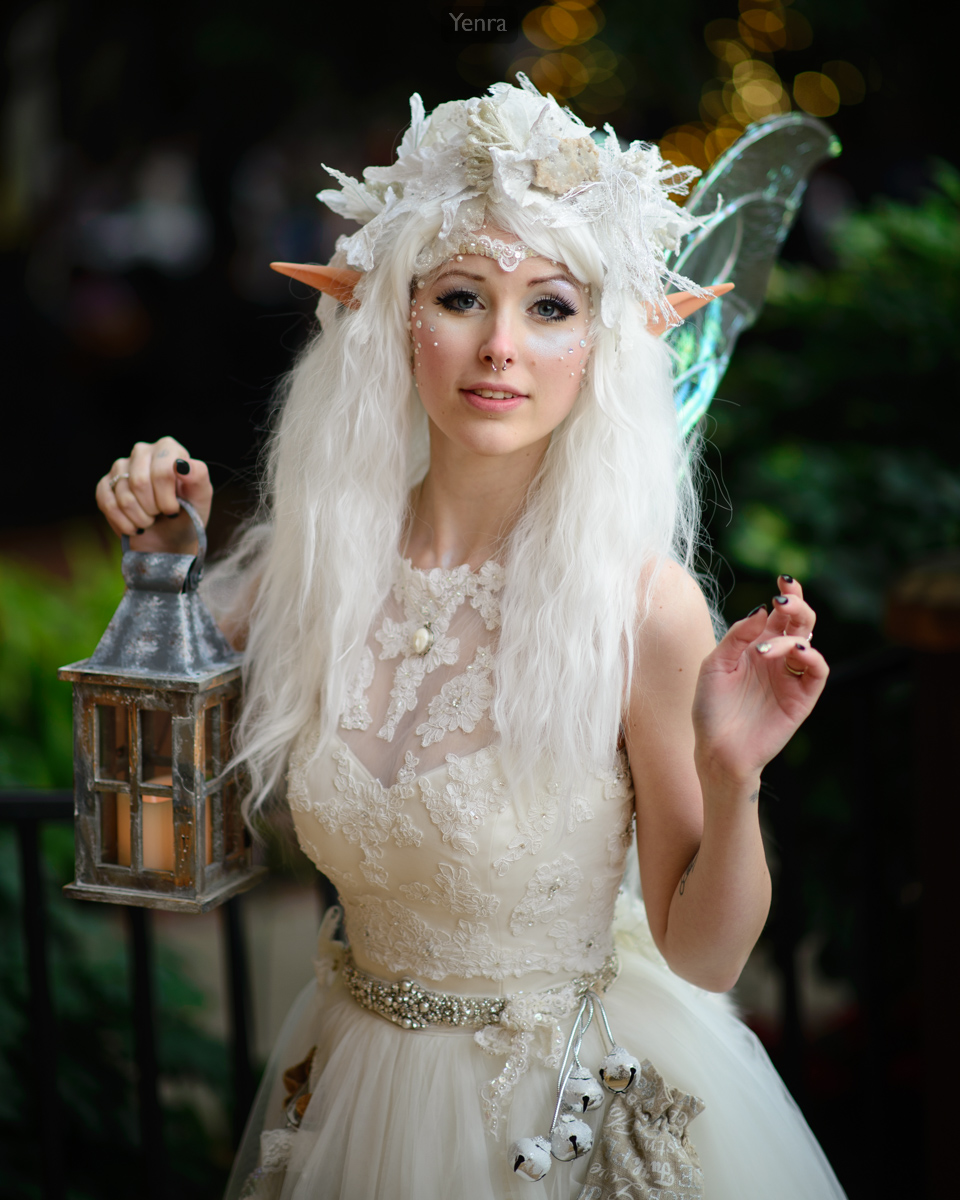
Winter Fairy · Photograph: Yenra · Credit: Chickadee Cosplay
Captured: 2017:01:07 17:08:12
A lantern gives a hand a small task and adds a recognizable shape beside a person. It can stay near the face or become a smaller part of a wider portrait. Begin with a comfortable hold and explore what happens when gesture, gaze, and framing change.
Give the handle a place in the picture
In this Winter Fairy portrait, Chickadee Cosplay holds the lantern beside the body. Its narrow handle joins the fingers to a larger rectangular shape below. The metal edges and darker tones contrast with the white hair and costume.
Look from the eyes to the hand and then down the lantern. Notice how the handle helps you follow that route. The object has a clear place in the photograph without covering the face. The free hand offers another small gesture on the opposite side.
For your own experiment, choose an unlit lantern or a lightweight object with a handle that you already have. A small basket or similar familiar object can offer the same question about hands and shape. Let the model choose a comfortable way to hold it.
The lantern in these photographs is a visible prop. The pictures do not establish that its candle was lit or that it illuminated the face. You can explore the exercise in ordinary available light, paying attention to the object and the person rather than trying to reconstruct the original lighting setup.
Let gaze and the free hand vary
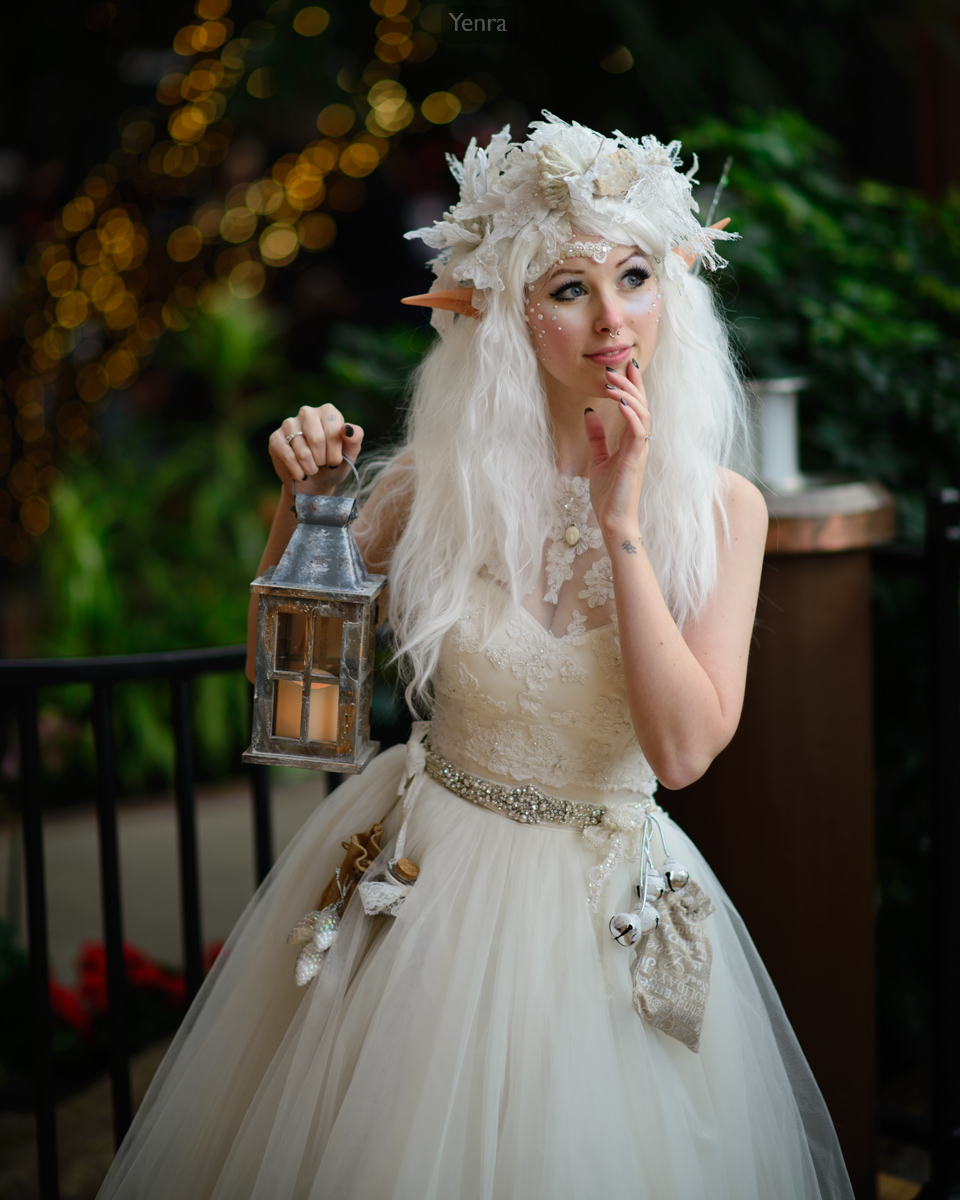
Winter Fairy · Photograph: Yenra · Credit: Chickadee Cosplay
Captured: 2017:01:07 17:08:26
The lantern remains beside the model in this second view, while the free fingertips rest near the chin and the gaze turns to the side. The handle still connects hand and object, but the face and free hand offer a different relationship.
Compare where your attention travels in the two photographs. You might begin with the eyes, follow a hand, or notice the lantern's darker rectangle against the white dress. Your route through the picture can change even when the same objects remain present.
Invite one small variation during your own portrait session. The model might look toward you and then toward a nearby point, or find another comfortable place for the free hand. Keep the hold easy and make room for their suggestions.
You can keep the framing similar for this comparison. That makes it easier to notice what the gesture contributes. There is no need to invent a story for the expression; describe the visible direction of the gaze and the position of the hand, then see what you enjoy about them.
Step back to include the whole gesture
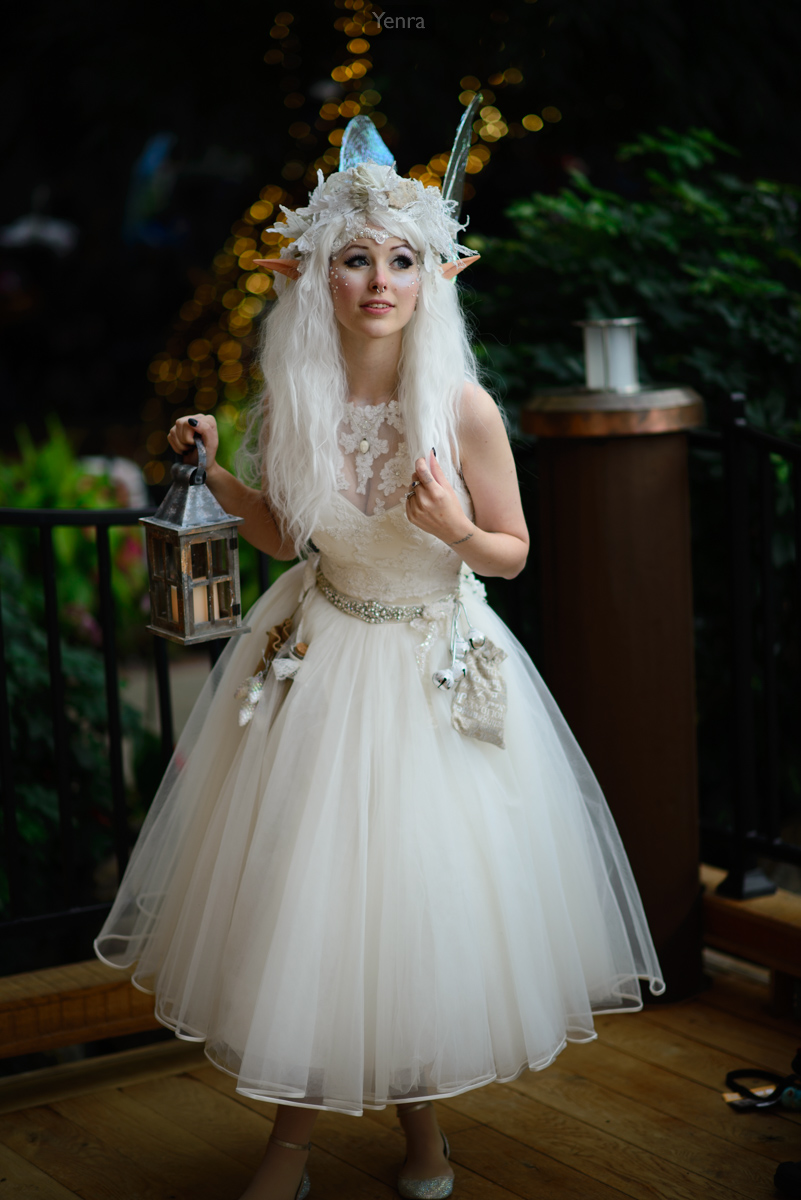
Winter Fairy · Photograph: Yenra · Credit: Chickadee Cosplay
Captured: 2017:01:07 17:08:50
The wider photograph brings the skirt, wings, floor, and surrounding space into view. The lantern becomes a smaller element within the whole costume. Its silhouette remains visible beside the dress, with room around the held object.
Notice what the additional space gives you to explore. You can see how the arm carries the lantern, how the dress falls, and where the figure meets the floor. Small blurred lights and darker shapes become part of the surroundings.
Step back for a wider photograph of your own model and look at the edges of the frame. Leave room for the object and the gesture you want to include. Keep the complete view alongside the closer portrait so you can compare their different emphases.
Review the photographs together. Which hold felt easiest? Where does the lantern receive just enough attention for the picture you want to make? Keep a view you both enjoy and a note about one small change to explore next time.
Look back with curiosity.
- How does the handle connect the hand to the object?
- Where does your eye move between the face and the lantern?
- Which framing would you like to explore again?
Keep exploring
Exploring props in a portrait · Exploring hand gestures in a portrait · Making a portrait with headphones
Browse the complete MAGFest 2017 gallery.