Field notes · Look · Try · Compare
Making a portrait with a hood
Explore the opening, folds, and color of a hood together.
A hood brings its own shapes into a portrait: an opening around the face, folds beside the cheeks, and a color that can connect the head with the shoulders. With a willing partner, explore those relationships through a few comfortable variations. An everyday hoodie is enough to begin.
Notice the opening around the face
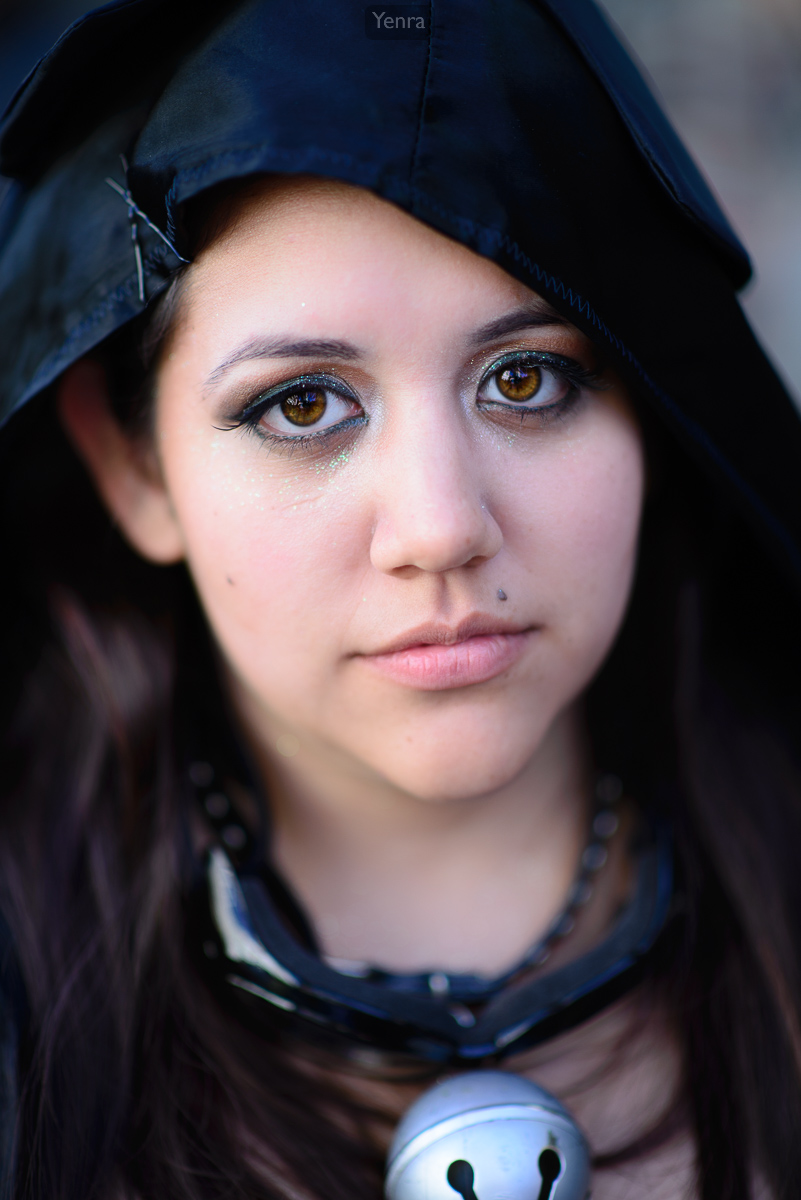
Close portrait beneath a dark hood · Photograph: Yenra
Captured: 2013:05:25 16:48:20
In this close portrait, a dark hood outlines the face. Glitter around the eyes provides small details to notice within that opening, and a round silver pendant appears below. Follow the fabric edge around the forehead and cheeks, then look at how much room the face has inside it.
For a portrait of your own, let your partner arrange the hood as they like. Notice the shape of the opening before making the first picture. It may be broad and rounded, narrow at the top, or different on either side. Ask which arrangement feels comfortable and expresses something they enjoy.
Try a small change in framing while your partner keeps the same position. A closer view may bring the opening and expression forward; a little more room may reveal folds or the shoulders. Compare the finished pictures together. The archive photograph gives you visible relationships to explore, while your own light and clothing will offer their own possibilities.
Give the clothing room
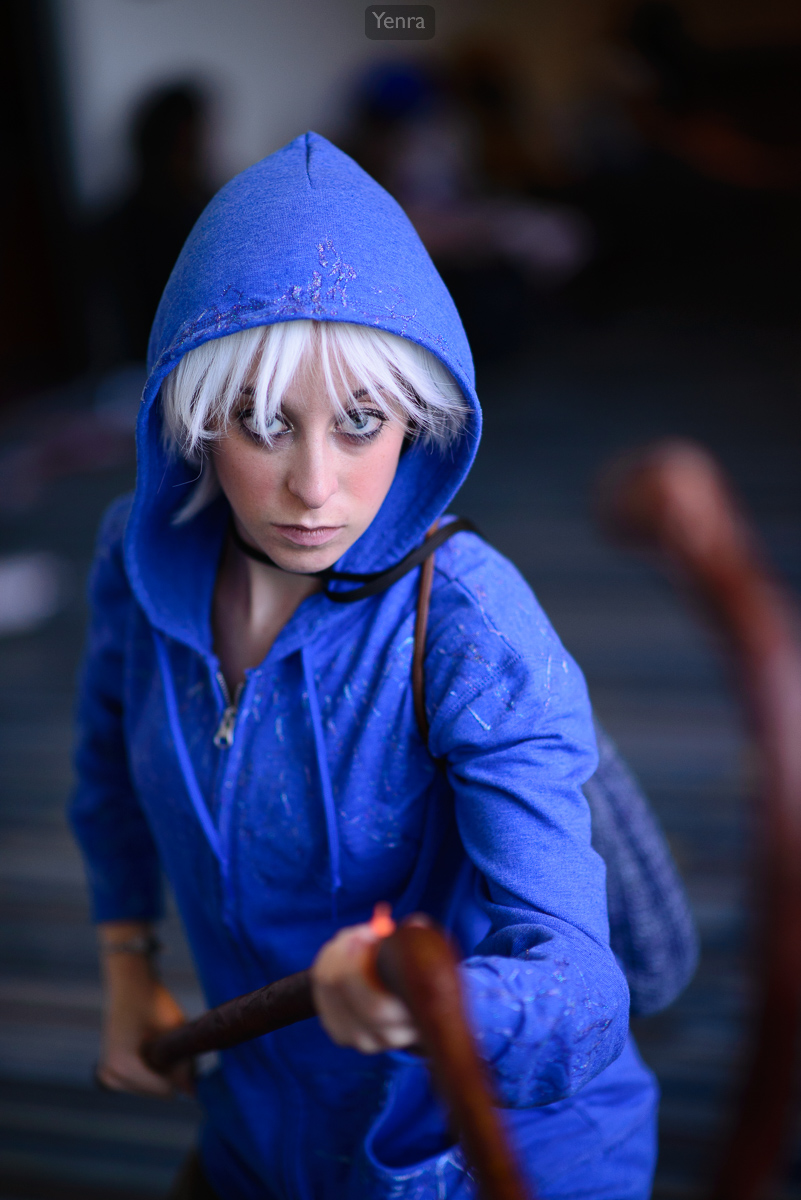
Jack Frost from Dreamwork's Rise of the Guardians · Photograph: Yenra
Captured: 2013:05:25 14:51:48
The bright blue hood connects with the shoulders in this wider portrait. White hair stands out within the opening, while the hands and curved wooden staff reach toward the camera. Including more of the outfit gives the face a relationship with gesture, color, and a larger shape in front.
These archive portraits show different people and clothing, so each offers a separate starting idea. In your own session, make a wider view that gives the garment room. Notice whether its folds lead toward the face, spread across the shoulders, or introduce another shape you want to include.
Invite your partner to choose a relaxed hand position or a small turn. A prop can be part of a portrait when they want to include one; the hood and a comfortable gesture already offer plenty to explore. Look together at what the wider framing adds and what you would enjoy seeing more closely.
Choose a comfortable variation together
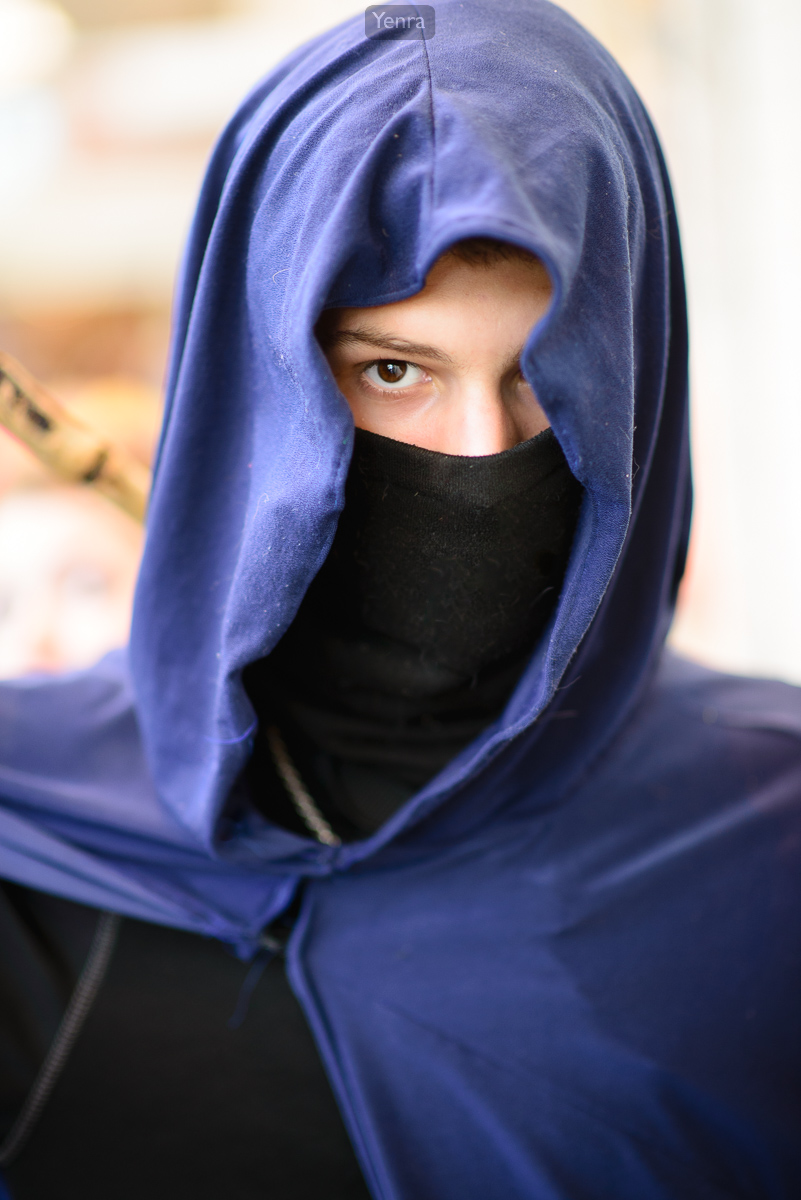
Portrait in a blue hood and black face covering · Photograph: Yenra
Captured: 2013:05:25 12:15:43
This portrait combines a blue hood with a separate black face covering. One eye is fully visible, with fabric folds and the covering making different edges around the visible part of the face. Trace those edges individually and notice where they meet.
Your partner can choose how much of their face they want to show and adjust their own clothing. A face covering is optional. A change in gaze, a slight turn, or a different opening in an everyday hood can each become a useful variation. Let comfort guide the choices you make together.
After a few photographs, pause to review them. Ask which expression or arrangement your partner enjoys and choose one detail to explore a little further. You might keep the opening as it is and move closer, or keep the framing and try another gaze. A small shared choice can be enough to give the next picture a fresh direction.
Look back with curiosity.
- What shape does the hood make around the face?
- What changes when more clothing or surroundings enter the frame?
- Which small variation feels most comfortable and expressive to your partner?
Keep exploring
Seeing clothing as shape · Exploring portrait framing · Exploring a portrait with a mask
Browse the complete Animazement 2013 gallery.