Field notes · Look · Try · Compare
Making a portrait with a flowing skirt
Explore a skirt’s outline with the model, from a relaxed shape to a wider sweep of fabric.
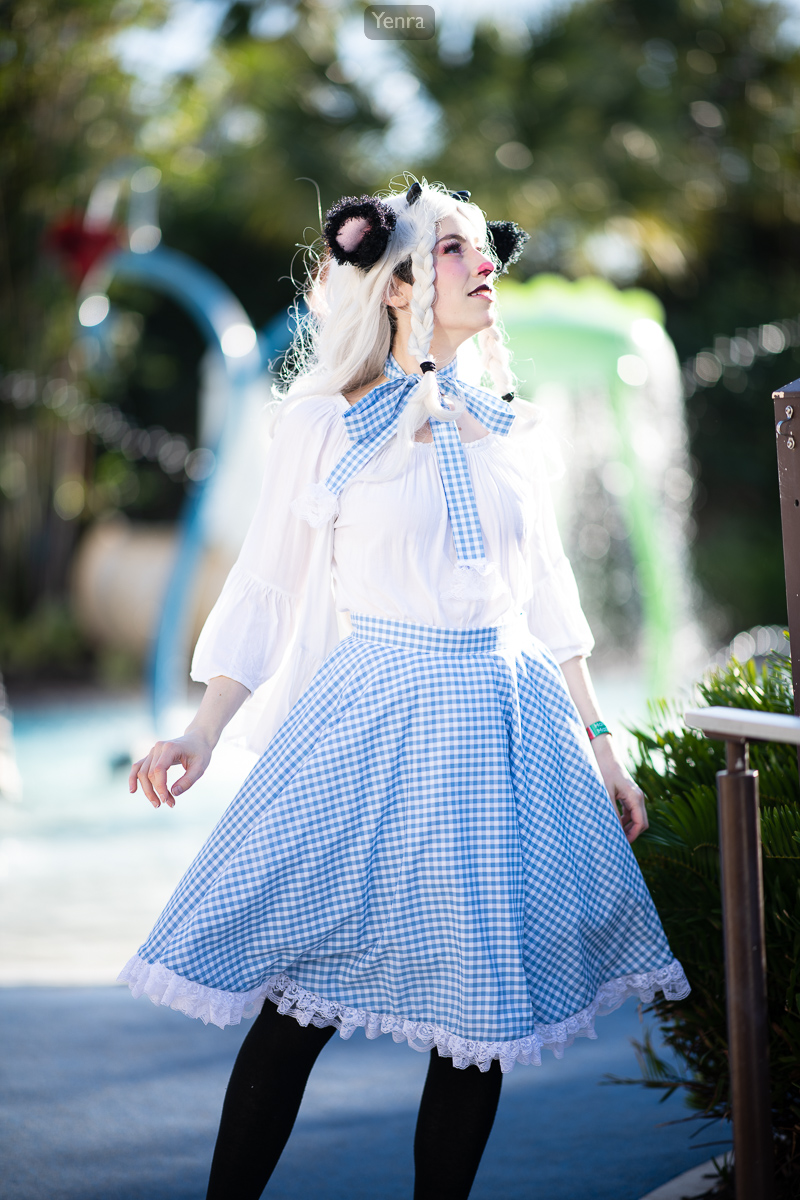
Whimsical Woman · Photograph: Yenra
Captured: 2019:12:14 15:54:48
A skirt can change the outline of a portrait in simple and enjoyable ways. Its resting shape, a held edge or an optional small turn can give you and the model several arrangements to explore together.
These three Holiday Matsuri 2019 portraits show a blue-and-white gingham skirt in different shapes. They form a new editorial comparison of the finished photographs. Begin with a comfortable still variation, then follow the possibilities that interest you both.
Begin with the outline
The skirt hangs in a broad curve beneath the white blouse. The model’s arms and angled leg contribute other lines, while the blue-and-white checks make the fabric’s shape easy to follow.
Trace the hem from one side to the other. Notice its distance from the edges of the photograph and the space beside the hands. A clear outline can give you a useful starting point before trying a different arrangement.
For your own portrait, choose clothing the model enjoys wearing and agree on a simple first frame. Let the fabric settle naturally. You can change your framing or the direction of the model’s body without asking for a complicated movement.
Look at the photograph together. Which parts of the shape do you each notice? Those observations can suggest the next small variation.
Give the fabric room
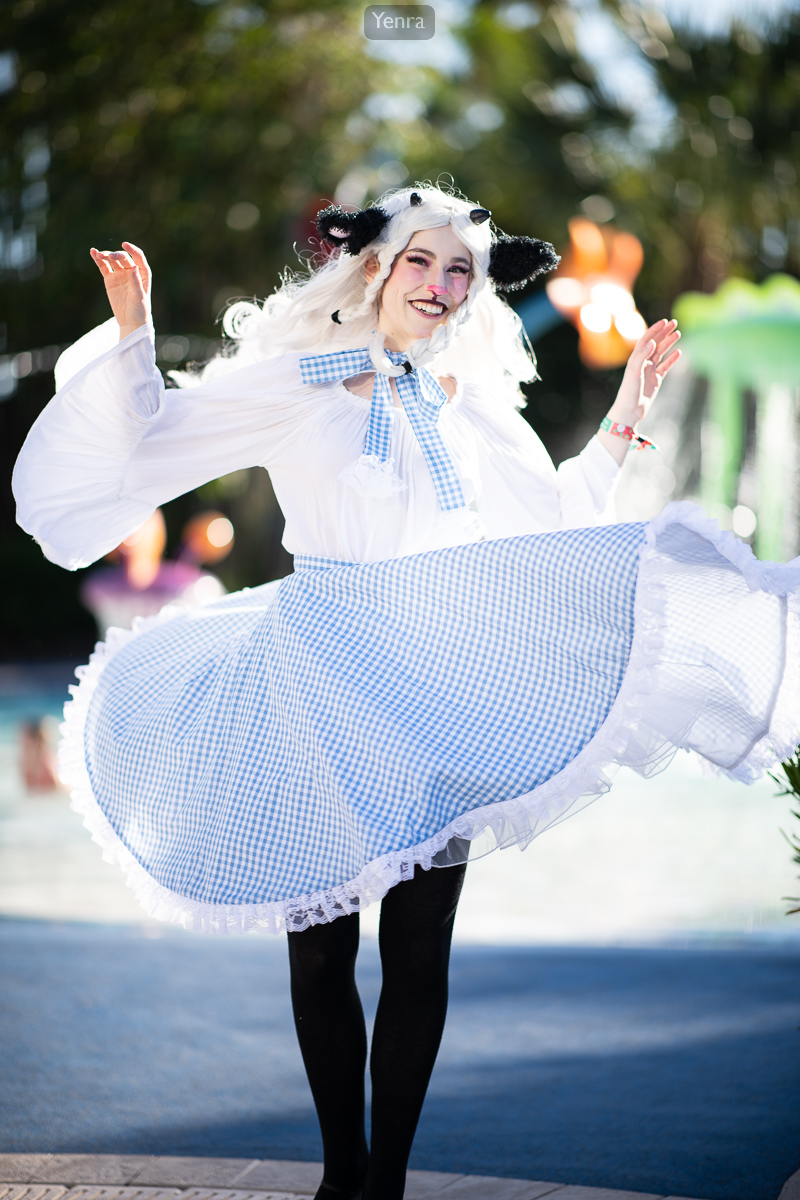
Woman in White and Blue Gingham Dress · Photograph: Yenra
Captured: 2019:12:14 15:55:07
In this frame, the skirt spreads outward into a wide curve, with white lace following the hem. Raised hands add smaller shapes above it. The fabric occupies more of the picture’s width than in the first view.
The finished photograph shows the spread clearly, even though it does not tell us the exact movement or direction that produced it. Let that visible shape suggest an experiment of your own.
The model might hold a small section of the skirt, try a gentle turn, or choose a still position that gives the fabric room. Movement is optional. A comfortable variation you agree on together is enough.
Leave some space around the fabric when framing. Notice the hem and hands as their positions change, and compare a few possibilities. There is no need for a particular skirt size or a dramatic spin to make an interesting shape.
Compare a quieter shape
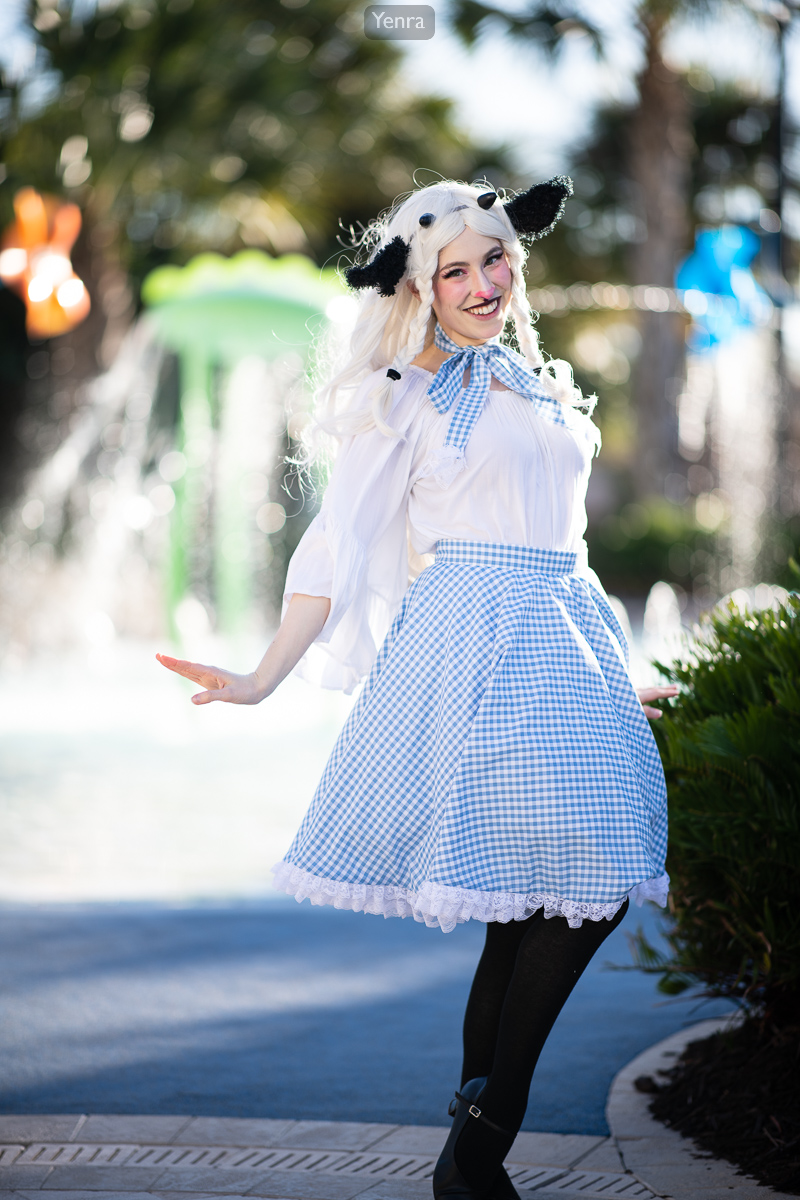
Cow Costume Outfit · Photograph: Yenra
Captured: 2019:12:14 15:55:42
The third photograph brings the fabric into a narrower outline, with the hands held low beside the body. The checks, lace and bow remain visible, giving you familiar details to compare with the wider shape.
Move between the three photographs and ask what each arrangement brings forward. The broad spread emphasizes the fabric’s width. The quieter shapes give other details, including hands and the blouse, more space in your attention.
These variations can all belong in a useful study. Keep a still frame alongside a moving one, or compare several still arrangements. A portrait session can grow through small decisions you and the model make together.
You can also explore this idea with photographs already in your archive. Choose two or three with different fabric outlines and write a few words about the hem, gestures and surrounding space. That small comparison may give you a fresh starting point for another day.
Look back with curiosity.
- What shape does the hem make?
- How much space helps the fabric feel clear in the frame?
- Which still or moving variation would you and the model like to explore?
Keep exploring
Seeing clothing as shape · Exploring movement in a portrait
Browse the complete Holiday Matsuri 2019 gallery.