Field notes · Look · Try · Compare
Including a necklace in a portrait
Give a small worn object room in a portrait, then make a closer photograph that shows what interested you and your portrait partner.
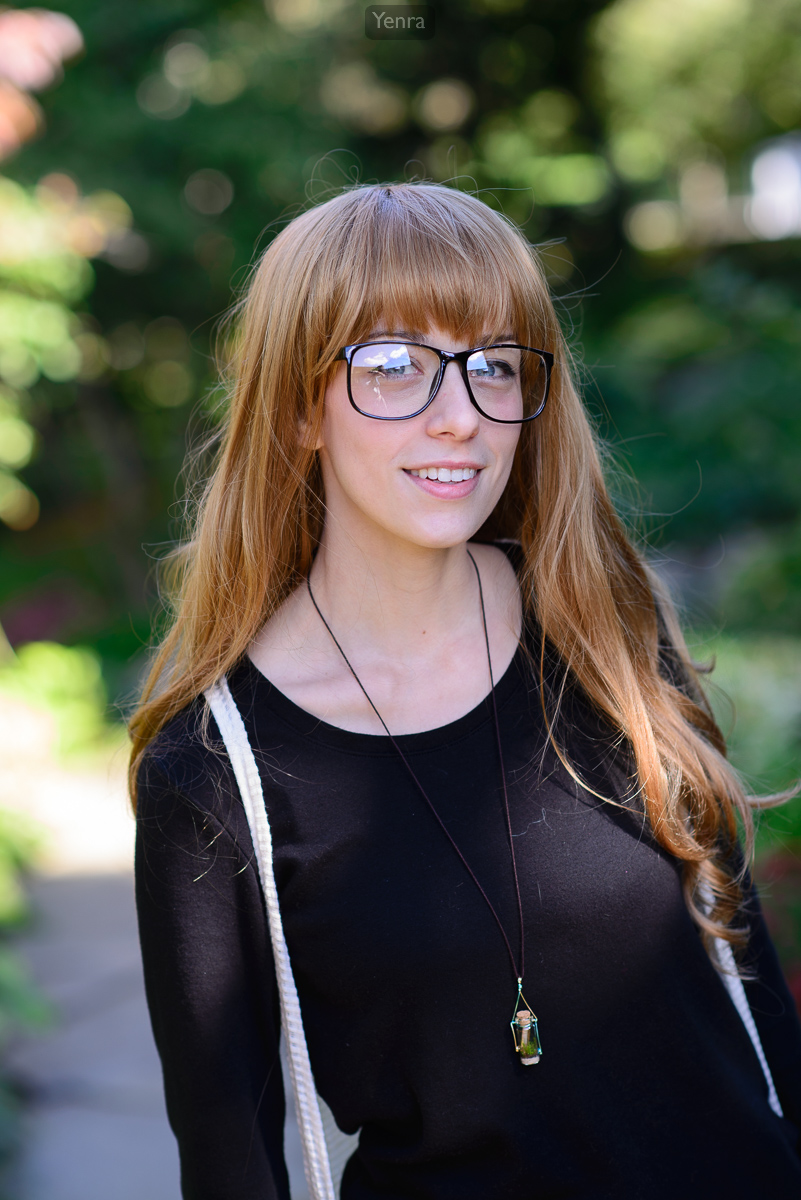
Morning in the Garden · Photograph: Yenra
Captured: 2014:10:05 11:21:09
A necklace can be a small but enjoyable part of a portrait. It might sit quietly beneath the face, stand apart against clothing or become the subject of a separate detail photograph. Giving it room in the frame lets you explore those possibilities with your portrait partner.
These three Anime USA 2014 photographs show a necklace at two scales. They provide ideas for a new exercise, rather than a record of the directions given during the original session. Start with an accessory your partner would enjoy including and a comfortable portrait you both like.
Include the necklace with the person
In the first portrait, the long cord and small pendant sit against black clothing beneath the face. The broad area of dark fabric gives the necklace a simple surrounding surface, while the portrait still includes the person, hair, glasses and garden background.
Follow your attention from the face down the cord. Notice the room around the pendant and how small it is within the complete frame. A detail can be visible without becoming the largest or brightest part of the photograph.
With your partner, begin with a framing that includes both the face and the accessory. Look at the result together. If the necklace meets the edge of the frame or blends into another detail, try a small change of camera position or framing.
Keep the object visible as the portrait changes
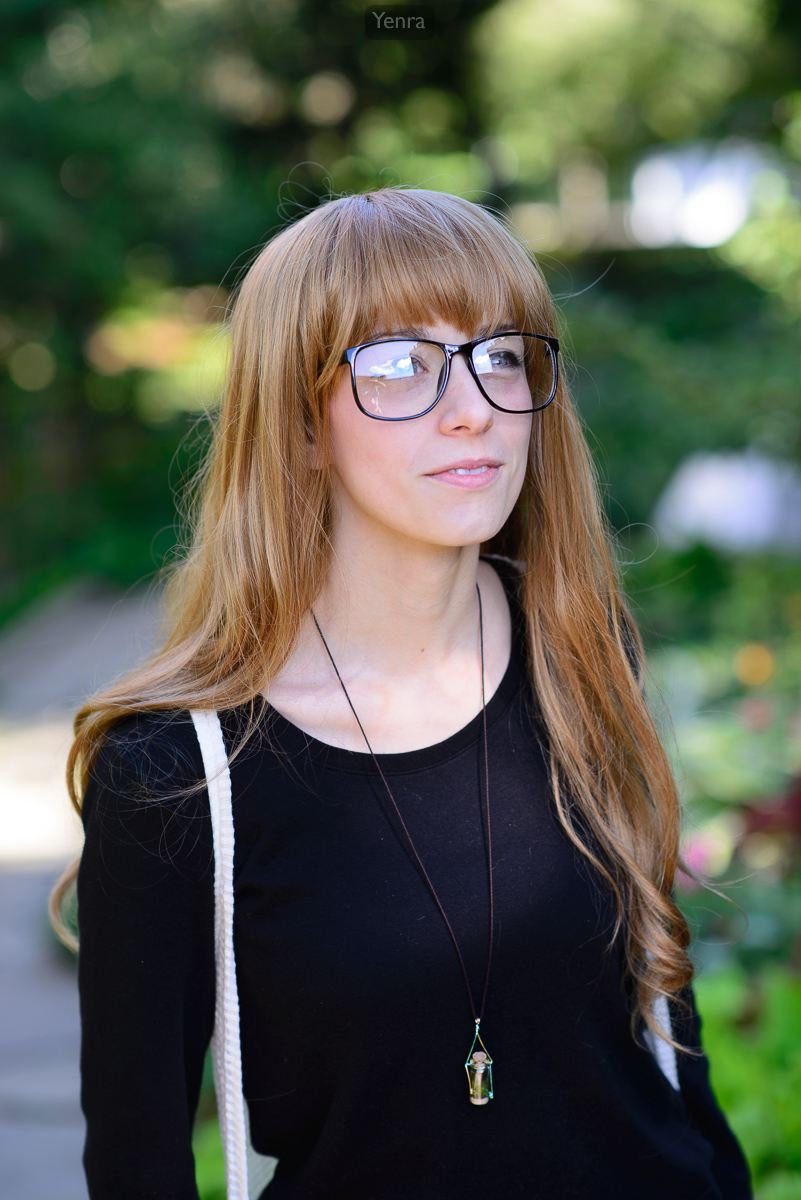
Morning in the Garden · Photograph: Yenra
Captured: 2014:10:05 11:21:36
The second portrait includes a more sideways gaze while the necklace remains visible against the dark top. The difference is modest: the two pictures let you compare the person’s expression and direction of attention while keeping the accessory in view.
Look at the face first, then check the pendant and the space beneath it. You do not need to choose between a portrait of a person and a record of an object. This framing makes room for both, with the person still central to the experience.
Invite a small variation your partner enjoys: a change of gaze, a gentle turn or another easy stance. Review the whole picture before making another adjustment. The useful choice is one you both feel good about.
Give the small detail its own view

Little terrarium · Photograph: Yenra
Captured: 2014:10:05 11:22:18
In the horizontal detail photograph, hands support the small clear vial pendant. The closer framing makes the object and the way it is held easier to see. Dark clothing remains behind the hands, connecting this view with the portraits.
A separate detail image lets the object occupy more of the picture. It also gives the hands a role in describing its scale. The supplied archive title is “Little terrarium”; the photograph itself does not establish the object’s history or personal significance.
If your partner would enjoy a closer view, let them choose how to show the accessory comfortably. It can remain worn, rest in a hand or be photographed separately. Ask what context they want to share, and keep any caption within that information.
Look back with curiosity.
- How much room does the necklace have in the portrait?
- What does the closer view let you notice?
- Which photographs would you and your partner keep?
Keep exploring
Photographing the details that matter · Exploring hand gestures in a portrait · Pairing a portrait with a detail
Browse the complete Anime USA 2014 gallery. Return to a photograph that interests you, follow its original neighbors, and see what else you notice. Your next useful experiment can begin with a small detail that catches your attention.