Field notes · Look · Try · Compare
Exploring bokeh
Follow the shapes, colors, and textures of out-of-focus areas, then try a small study with background lights.
Out-of-focus areas can be an active part of a photograph. A soft band of color can surround a face; small lights can become a rhythm of bright shapes. Bokeh describes the character of that blur. Look at its texture, edges, color, and placement, and you will find more to explore than simply how much of the background is soft.
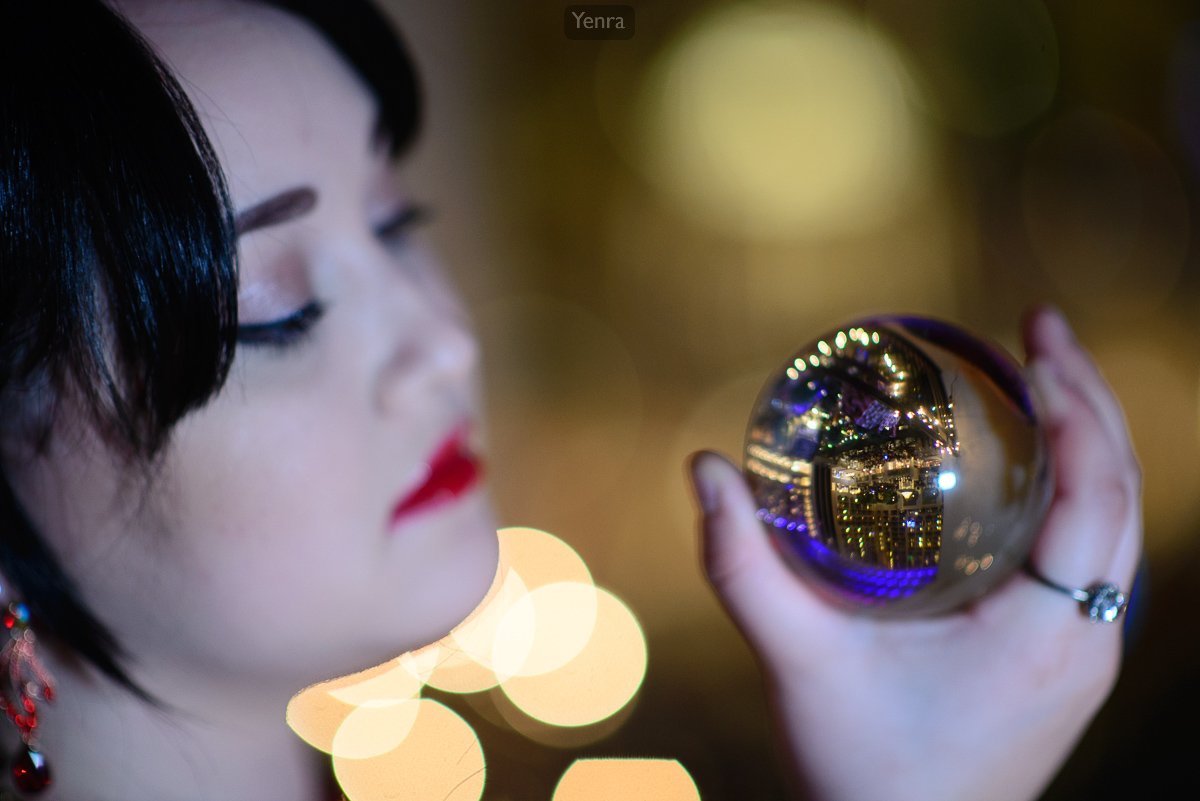
Lensball with Bokeh · Photograph: Yenra
Follow the shapes of the light.
In Lensball with Bokeh, the glass sphere holds a sharply described view while large warm highlights sit behind it. The face and hand form softer neighboring shapes. Look at where the bright circles overlap, how their size changes, and the way their warm color sits beside the cooler parts of the frame.
Try tracing the brightest areas with your eye. Do they lead toward the subject, surround it, or invite attention elsewhere? You can use those relationships while composing. A small change of viewpoint may move a highlight from directly behind a face into an open part of the background.
Explore a different kind of softness.
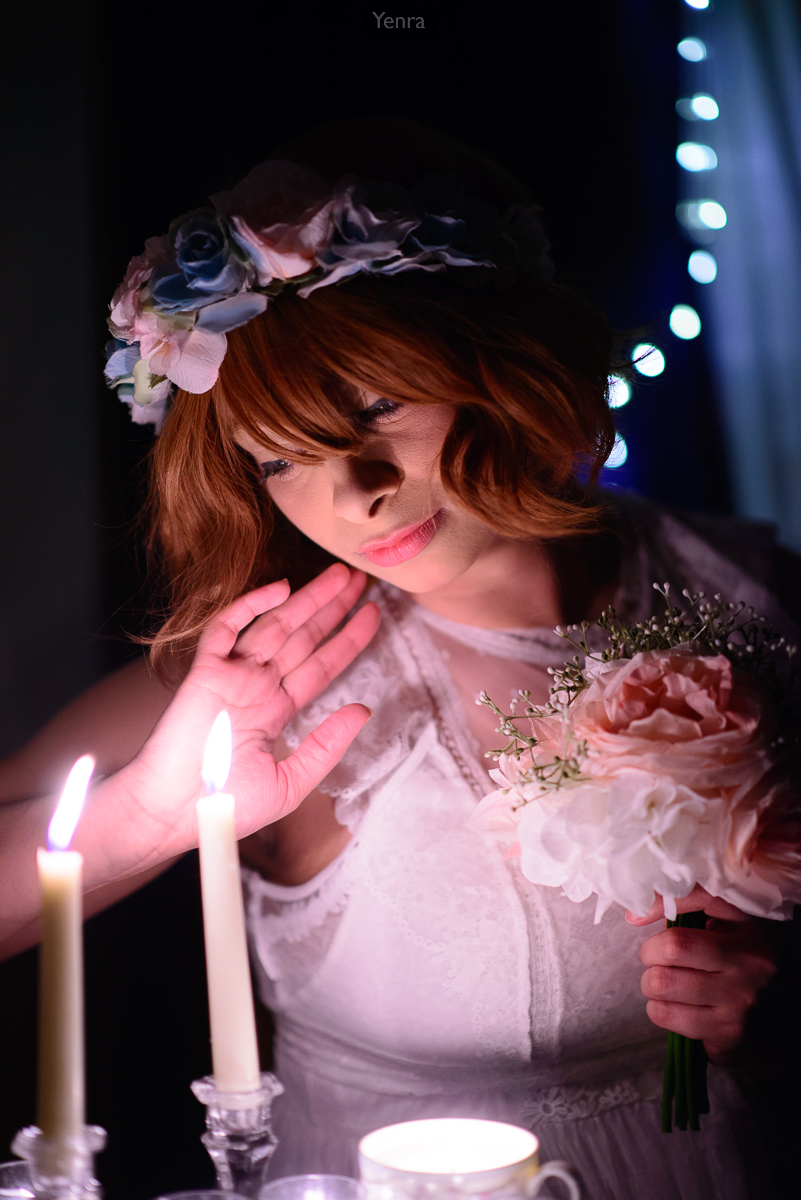
Candlelight and Bokeh · Photograph: Yenra
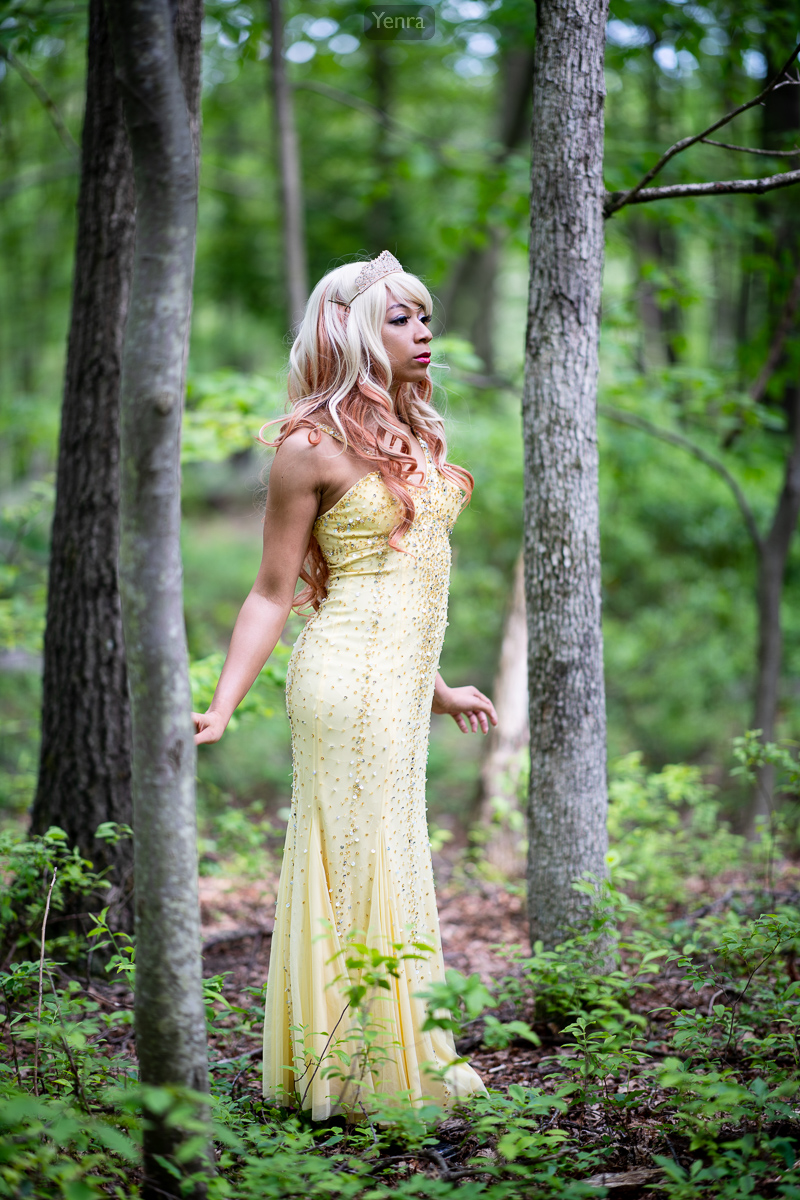
Fairy-tale Princess, Yellow Gown, Tiara · Photograph: Yenra
In Candlelight and Bokeh, the blue background lights form a narrow trail beside the portrait. The warmer foreground light creates a second area of attention. The photo record gives the same 85 mm focal length and f/1.4 aperture as the lensball photograph, yet the arrangement of near and far elements makes a different picture.
The Fairy Forest portrait offers another texture: soft leaves and small highlights around the tree trunks. Look for the transition from the dress and face to the greenery behind them. Bokeh can be broad washes and textures as well as distinct circles of light.
Let distance and aperture become things to try.
Aperture, focus distance, focal length, and the distance to the background all contribute to how blur appears. Moving a subject farther from the background often gives you more room to separate the two. A wider aperture can make the zone of acceptable sharpness shallower; a smaller opening can bring more of the surroundings into that zone.
Try the options your camera offers and check the subject’s focus as you work. A favorite result may have a very soft background, or enough detail to describe the place. Nikon’s introduction to bokeh gives additional examples and explains how distance and lens aperture influence the effect.

Vault Dweller at Sunset, Fallout · Photograph: Yenra
Here, small warm highlights appear beyond the blue costume and the bright sweep of hair. Compare their role with the large circles in the lensball frame. Both can contribute: one adds a quieter pattern, while the other becomes a major shape in the composition.
Try an evening-light study.
- Choose a small subject and ordinary electric lights. A favorite object near distant decorative lights makes an easy starting scene.
- Focus on the subject. Begin with a comfortable camera position and make a photograph. Notice the size and location of the background highlights.
- Change one distance. Move the subject a little farther from the lights, or move your camera closer while keeping the subject in focus. Compare what happens to the framing and blur.
- Try two apertures if available. Keep your viewpoint and subject position steady. Use aperture priority, or adjust exposure as needed, and compare both the subject and the highlights.
- Compose with a highlight. Move sideways until one bright shape sits somewhere you like. Make that relationship the reason for the next photograph.
Choose the version that feels right for the picture.
- Which shapes support the subject, and which become subjects in their own right?
- How do the colors in the blurred areas relate to the sharper parts?
- How much of the place would you like a viewer to recognize?
Browse all 62 photographs in the Bokeh collection for more ways to use softness, or continue with choosing a portrait background. Your own comparisons are a useful way to discover the rendering you enjoy.