Field notes · Look · Try · Compare
Documenting a costume with photographs
Give each view a useful role in a small record of an outfit and its details.
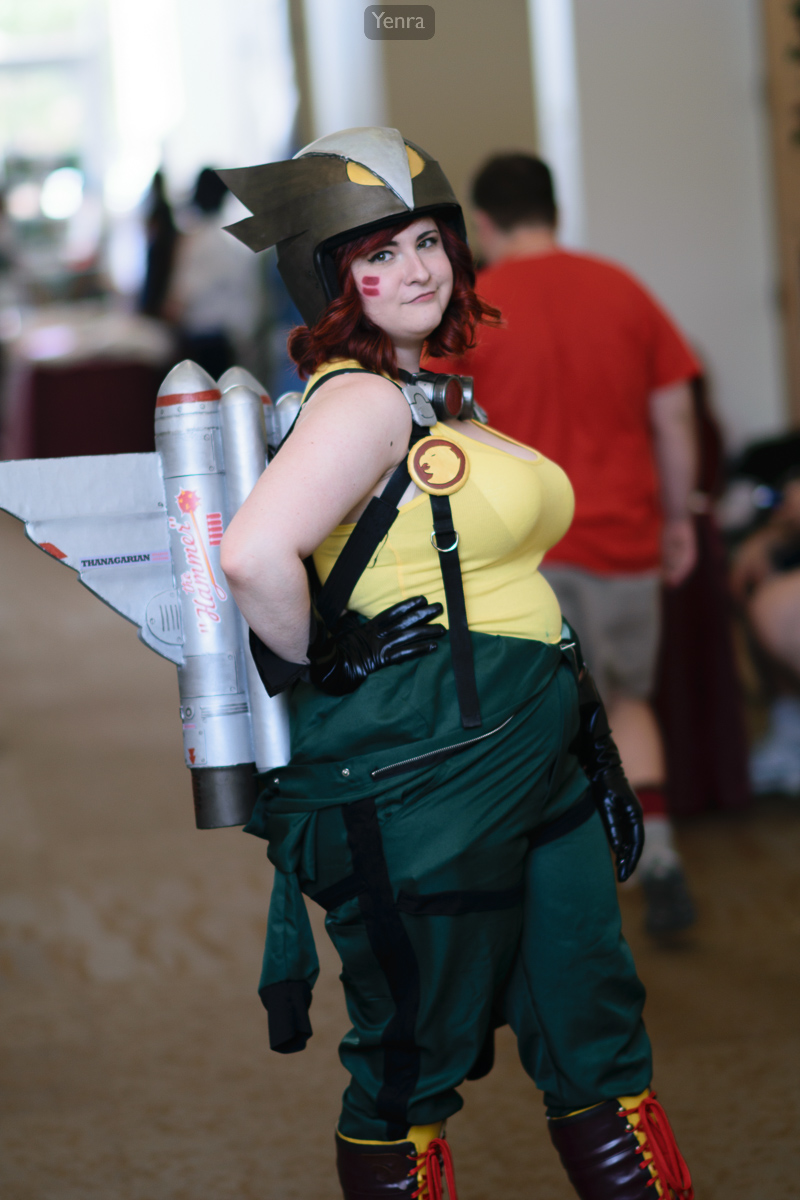
Hawkgirl Cosplay at Comic-Con · Photograph: Yenra
Captured: 2015:06:20 13:05:13
A small set of photographs can help someone remember an outfit and the details they care about. Give each picture a useful job: show how the pieces relate, reveal another side, or make a small feature easier to see. Begin by asking the wearer or maker what they would most like to record.
Begin with the outfit in context
The first portrait connects a yellow top, green trousers, dark gloves, headpiece and silver-colored backpack prop. The tops of the red-laced boots also appear. Seeing several elements together helps the viewer understand their relationships before looking closely at a particular feature.
An overall view gives your record an anchor. For your own outfit, decide together which pieces should be visible and leave the framing flexible enough to include them. If the shoes or an accessory matter, you can include them in the wider frame, give them their own photograph, or do both.
Add an angle that reveals something new
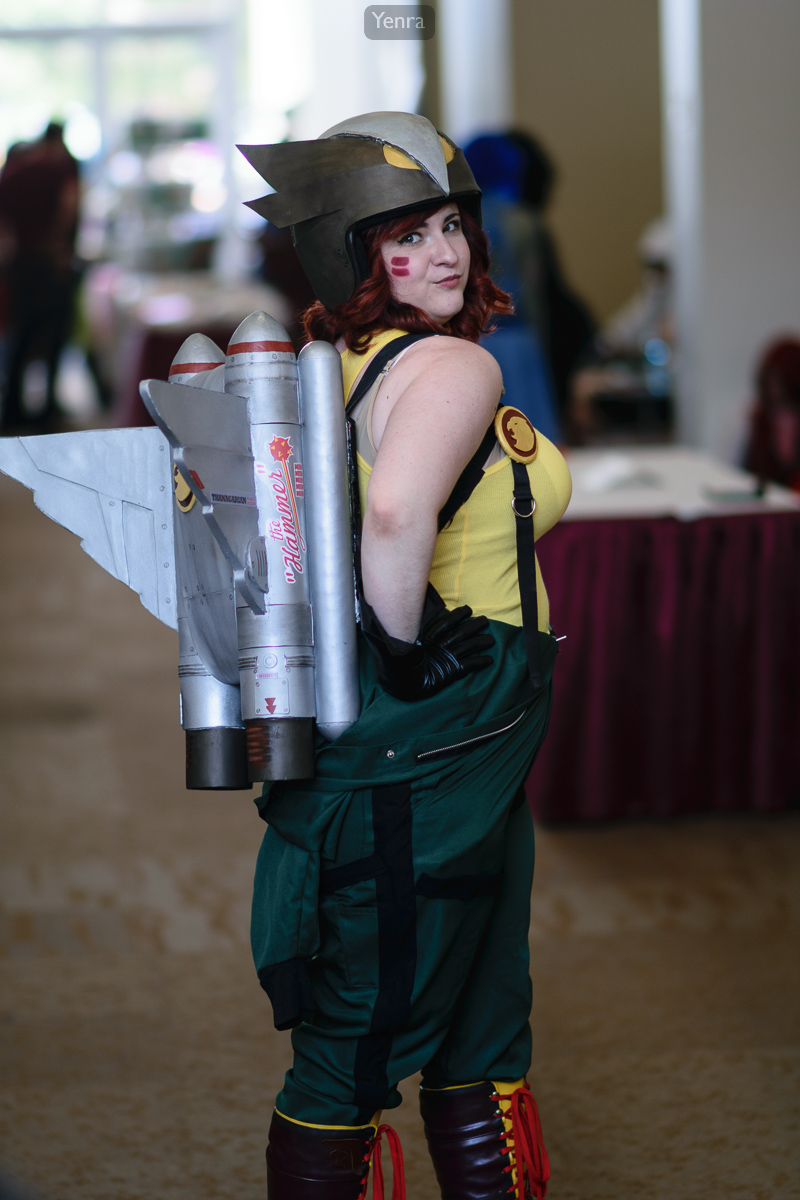
Cosplayer Wearing Rocket-Packed Costume · Photograph: Yenra
Captured: 2015:06:20 13:05:26
A turn makes more of the backpack prop visible. Its cylinders and wing shapes occupy a larger part of the picture, while the face and clothing remain connected to them. The second view adds information that is less prominent in the first.
Look for a useful change rather than a prescribed number of angles. A back-mounted accessory, layered skirt or decorated sleeve may become clearer from one side. Ask your partner which view shows the feature they want to remember, and let them suggest a comfortable turn.
Record a clothing detail
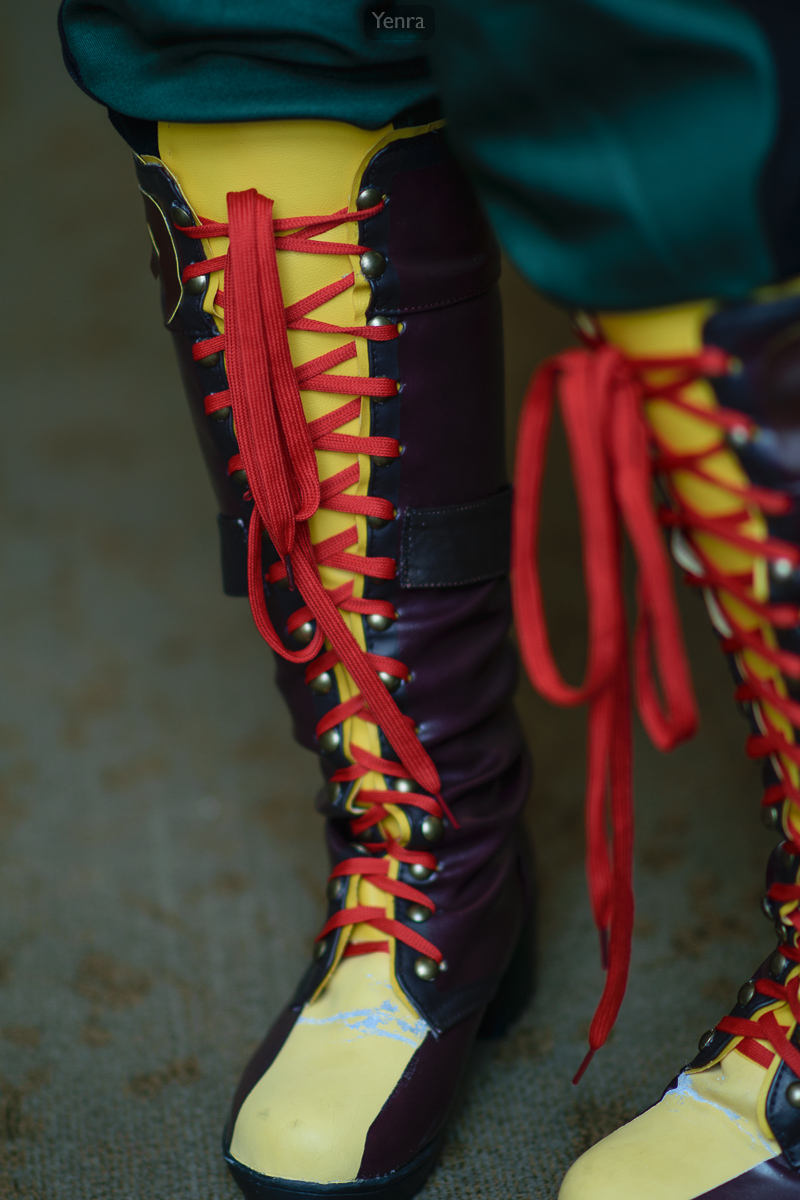
Person Wearing Knee-High Boots · Photograph: Yenra
Captured: 2015:06:20 13:09:18
The close view shows red laces crossing yellow panels, dark boot shapes and green trouser cuffs. Details that were small or outside the wider portrait now become the main subject. Their colors and arrangement are easier to compare.
Choose a detail because it contributes something useful. It might be a fastening, a decorative edge, a fold or a color relationship. Leave enough of the surrounding area to make the detail understandable, then check the photograph at a size where you can see the feature clearly.
Move closer to an accessory
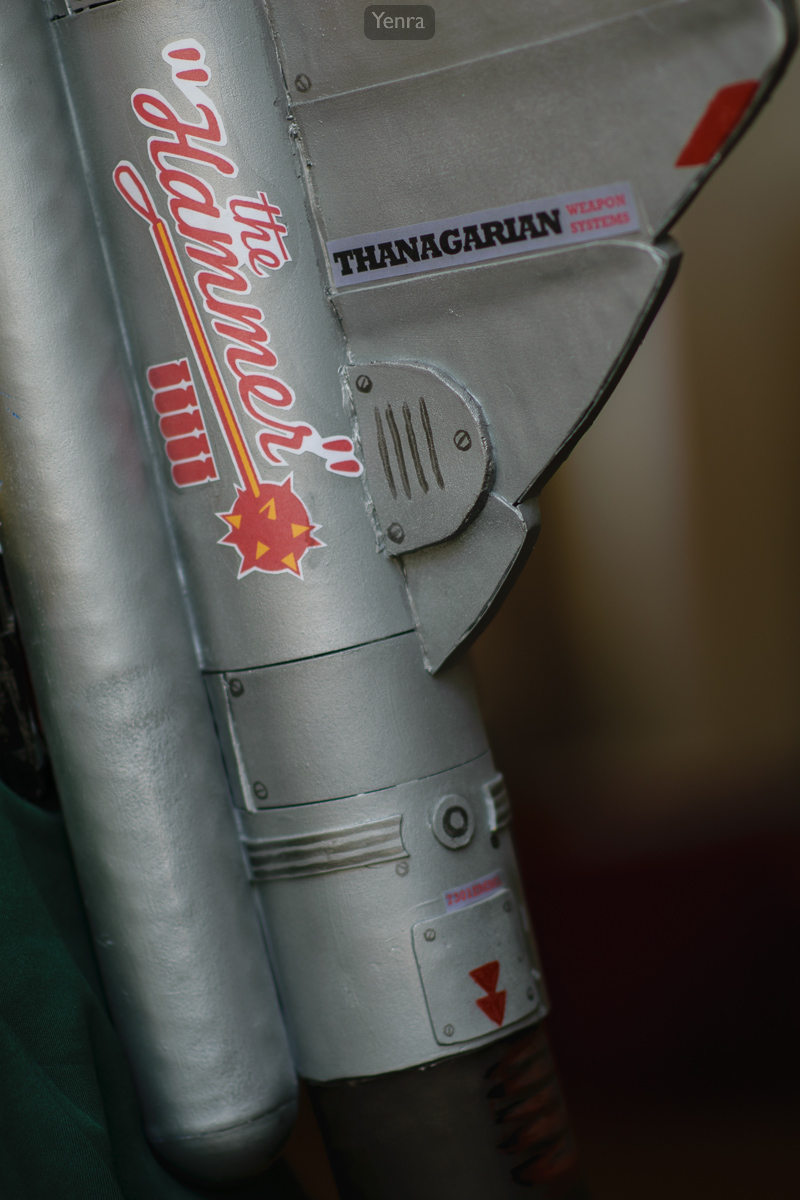
Close-Up View of Missile/Rocket with Labels · Photograph: Yenra
Captured: 2015:06:20 13:10:10
The accessory detail makes printed labels, panel lines and wing shapes easier to read. It complements the view showing where the prop sits on the outfit. Together, the two photographs describe both its placement and some of its visible decoration.
A photograph can record what is visible even when you do not yet have a maker’s description of materials or construction. Keep any confirmed notes alongside the images. When someone supplies a maker, wearer or photographer credit, retain the name they want used and make clear which contribution it describes.
Give each view a useful job
- Outfit context
- The first portrait connects several pieces. A future view could include the entire outfit from head to toe.
- Another angle
- The turned portrait reveals more of the backpack prop. Another side could answer a different question.
- Clothing detail
- The boots make the lacing and color arrangement clear. Another detail might record a fastening or decorative edge.
- Accessory detail
- The close view of the prop shows labels and surface decoration. A confirmed maker’s note could add context.
You can use these roles as a flexible checklist. A few complementary views can already make a useful record, with room to add another photograph later. Keep the originals, dates, source links and confirmed credits together, and finish with one small question about what you would like to show next.
Look back with curiosity.
- What does each photograph add?
- Which detail matters most to the person who made or wears it?
- What would be useful to photograph next?
Keep exploring
Photographing the details that matter · Pairing a portrait with a detail · Making a flexible portrait shot list · Making a credits page for a photo collection
Browse the complete Anime Mid-Atlantic 2015 gallery.