Field notes · Look · Try · Compare
Connecting pairs through a group portrait
Use a larger group photograph as a bridge between two portraits of pairs.
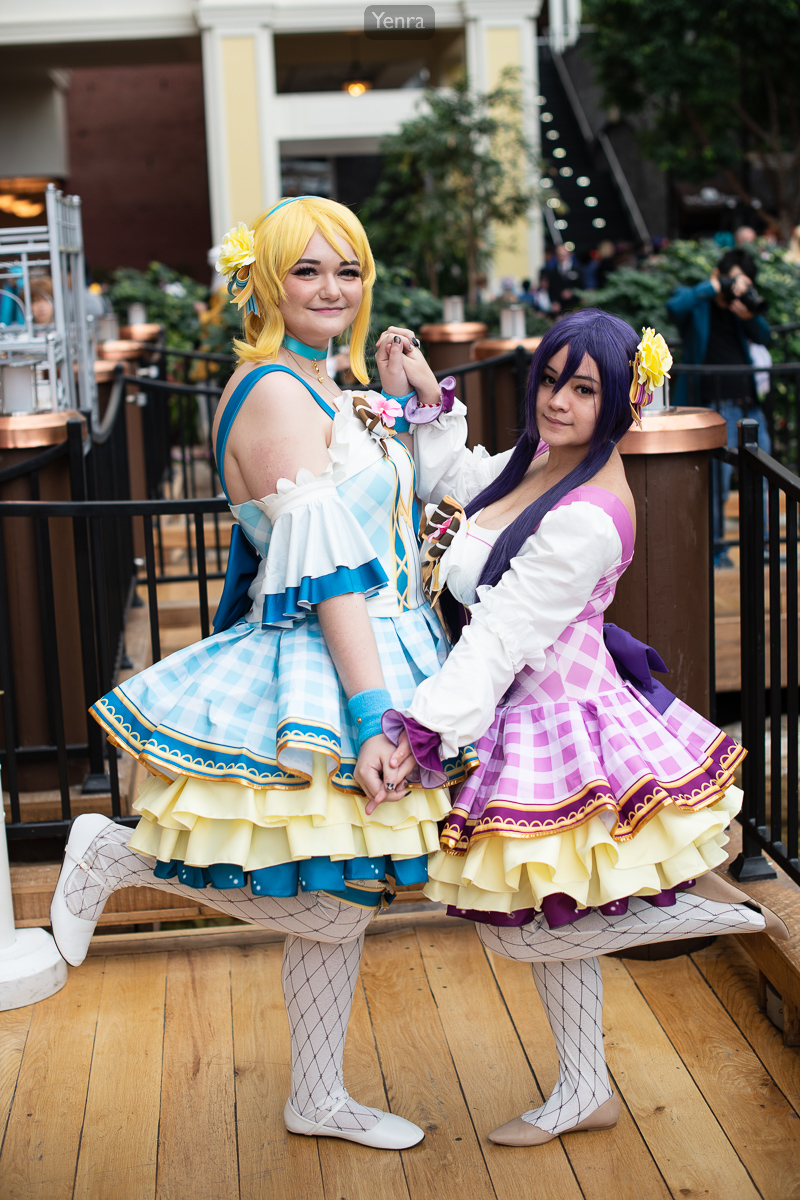
Eli and Nozomi, Flower Bouquet, Love Live · Photograph: Yenra · Archive tags: Eli Ayase, Flower Bouquet, Fuzznub, Love Live, Nozomi Tojo, Peachy Chuu
Captured: 2019:02:16 10:45:29
A group photograph can connect two smaller portraits. Begin with a pair, open the view to a larger group, then return to another pair. The middle picture gives the reader a chance to recognize people from both ends of the sequence and discover more of the setting.
These three Katsucon 2019 photographs share Flower Bouquet, Love Live archive titles. The proposed reading order is pair, six-person group, different pair. It is a new editorial arrangement of existing photographs. Follow the visible costumes and repeated details to see how the pictures connect.
Begin with one pair
The opening pair wears blue-and-yellow and purple-and-yellow costumes. They hold hands, with one leg bent each, beside the railing. Their shared pose gives this proposed sequence a clear, small starting group.
Look for one or two details you can carry into the next photograph: a costume color, a flower decoration or a hairstyle. These visible cues can help a reader recognize the connection without a long explanation.
When arranging your own pictures, choose a pair photograph you enjoy looking at on its own. Then ask what a larger group view might add. The opening does not need to explain everything; it can leave room for the next picture to contribute.
Widen the story to the group
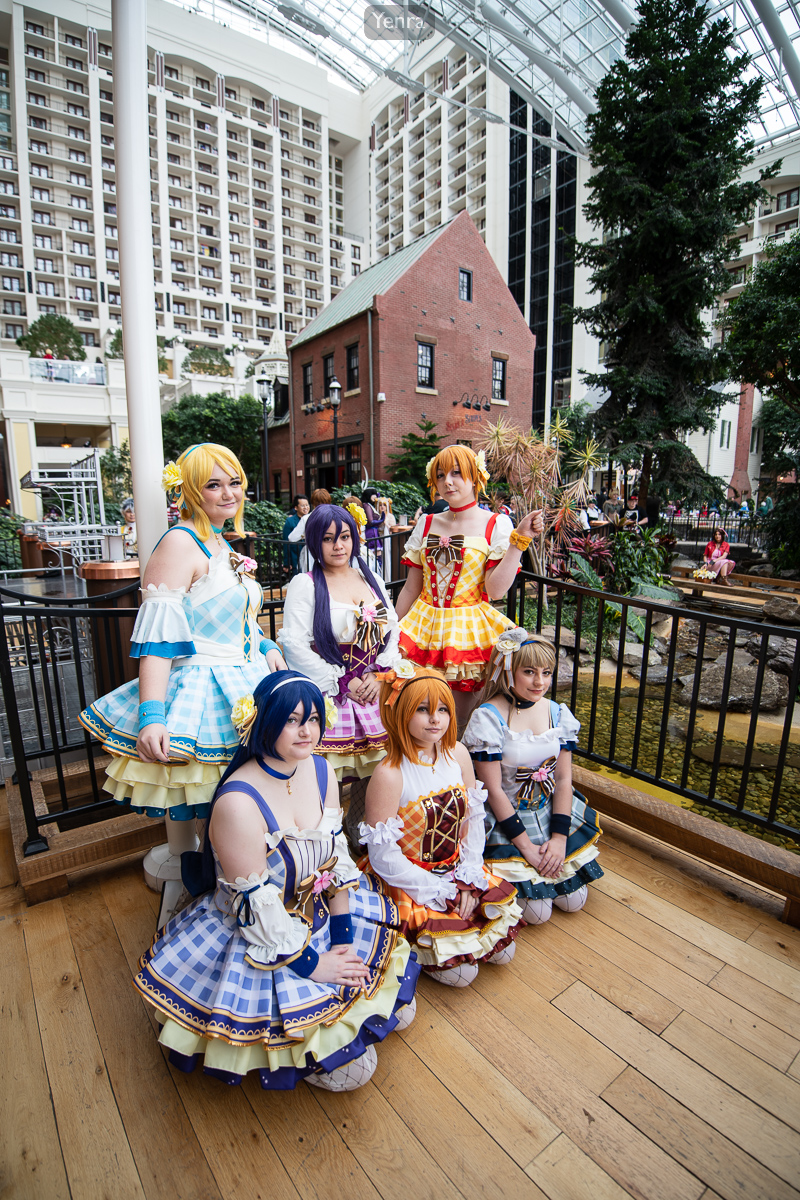
Flower Bouquet, Love Live · Photograph: Yenra · Archive tags: Flower Bouquet, Fuzznub, Gracerenjolras, Love Live, Makkumelon, Peachy Chuu, Smol Shorty, Usaeggi
Captured: 2019:02:16 10:52:15
The middle photograph includes six people, with some standing and others lower in the frame. Both people from the first pair appear in this group, along with both people in the final pair. Two additional participants and more of the atrium setting broaden the view.
Take time to move around the group. Find a familiar color from the opening picture, then notice the other costumes, the railing and the space above. The middle photograph can offer a moment of discovery before the sequence returns to a smaller grouping.
Try placing a group picture between two pair portraits in your own collection. Check that the connection is visible and useful. Keep a factual caption, preserving the credits supplied for that particular photograph. A wider picture can add context while remaining a photograph to enjoy in its own right.
Return to a different pair
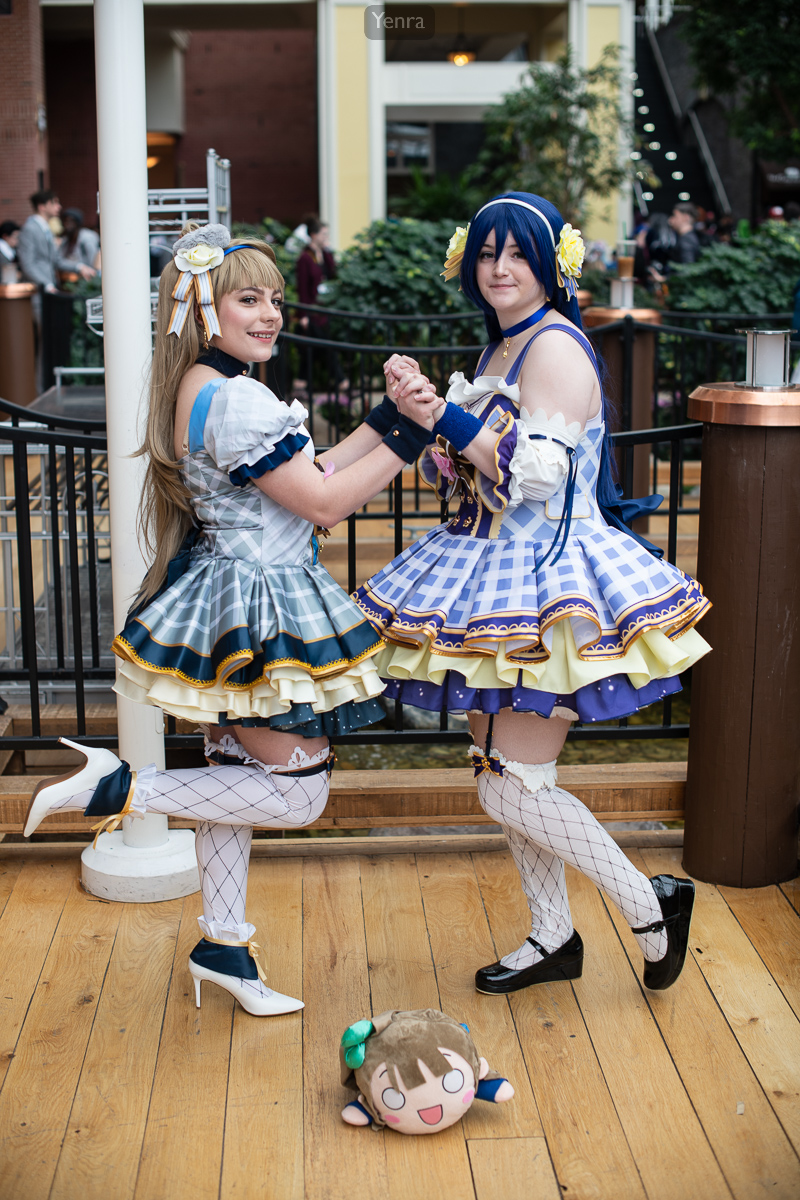
Kotori and Umi, Flower Bouquet, Love Live · Photograph: Yenra · Archive tags: Flower Bouquet, Gracerenjolras, Kotori Minami, Love Live, Umi Sonoda, Usaeggi
Captured: 2019:02:16 10:47:11
The closing pair wears blue and pale-blue costumes and holds hands beside the railing. Their bent-leg pose echoes the opening pair, while the people and costume details change. A small plush toy at the bottom adds another detail to discover.
Read the three pictures together: pair, larger group, different pair. Notice what stays familiar and what each photograph adds. This order offers one way through the photographs; it does not claim to follow the order in which they were made.
Now try swapping the first and last pictures while keeping the group in the middle. Compare what each opening draws attention to and how each ending feels to you. Keep the order you prefer for this small set, along with a brief note about your choice.
Two pairs, one connecting group
- Opening pair: begin with two people and a shared pose.
- Connecting group: find both pairs within the six-person portrait.
- Closing pair: return to a smaller group with familiar colors and another shared pose.
This is a new editorial sequence. Try swapping the two pairs while keeping the group in the middle, then compare what each opening and ending contributes.
Look back with curiosity.
- What helps you recognize each pair in the group?
- What does the wider middle photograph add?
- How does swapping the opening and closing pair change your reading?
Keep exploring
Connecting individual and group portraits · Sequencing playful group photographs · Trying two orders for a photo sequence
Browse the complete Katsucon 2019 gallery. Follow a photograph into its original neighbors and see what else catches your attention. A small pattern, a familiar prop or a connection between people may begin another discovery.