Field notes · Look · Try · Compare
Choosing depth of field for a costume portrait
Choose which eyes, costume details and props need useful sharpness in a portrait.
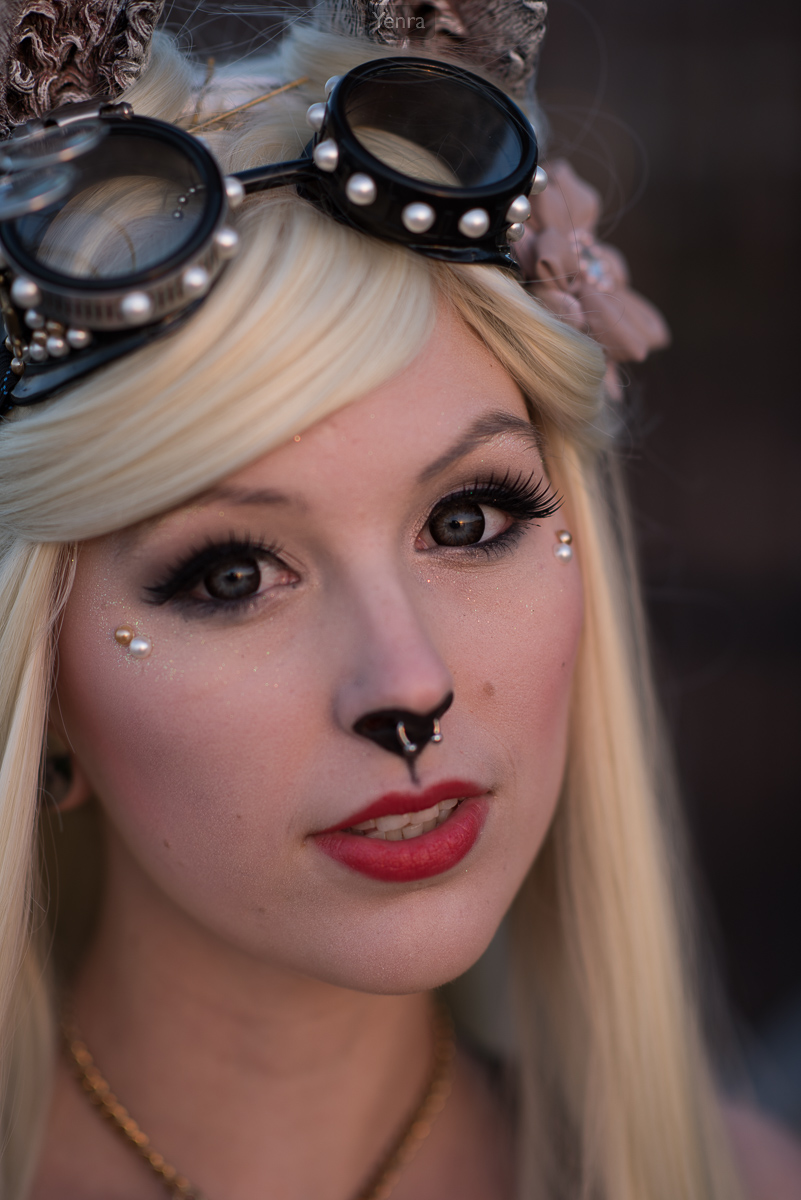
MAGFest 2016 photograph 8318 · Photograph: Yenra
Captured: 2016:02:20 17:48:48
A costume portrait may need to show more than one important detail: eyes, a headpiece, a hand holding a prop, or another person's face. Before choosing a setting, decide together what needs to be clearly readable. A soft background can be lovely, but it is only one possible goal.
These three MAGFest 2016 portraits are separate examples with different framing and arrangements. They are not a controlled aperture series. Their records give settings, but do not establish the autofocus target or exact camera and subject distances.
Choose the details that matter
The close portrait puts the face and headpiece together. Look at each at a useful viewing size, rather than judging everything from the thumbnail. The record gives 85 mm, f/2.2, 1/160 second and ISO 80. That aperture number alone does not tell us which eye was selected for focus or guarantee that every part of the headpiece will look equally sharp.
Depth of field is the range of distances that appears acceptably sharp for a particular viewing condition. It is not a hard wall between perfect and unusable. When reviewing a portrait, name the detail you need, and decide whether it reads well at the size in which you will use the picture.
Include the costume and the forward prop
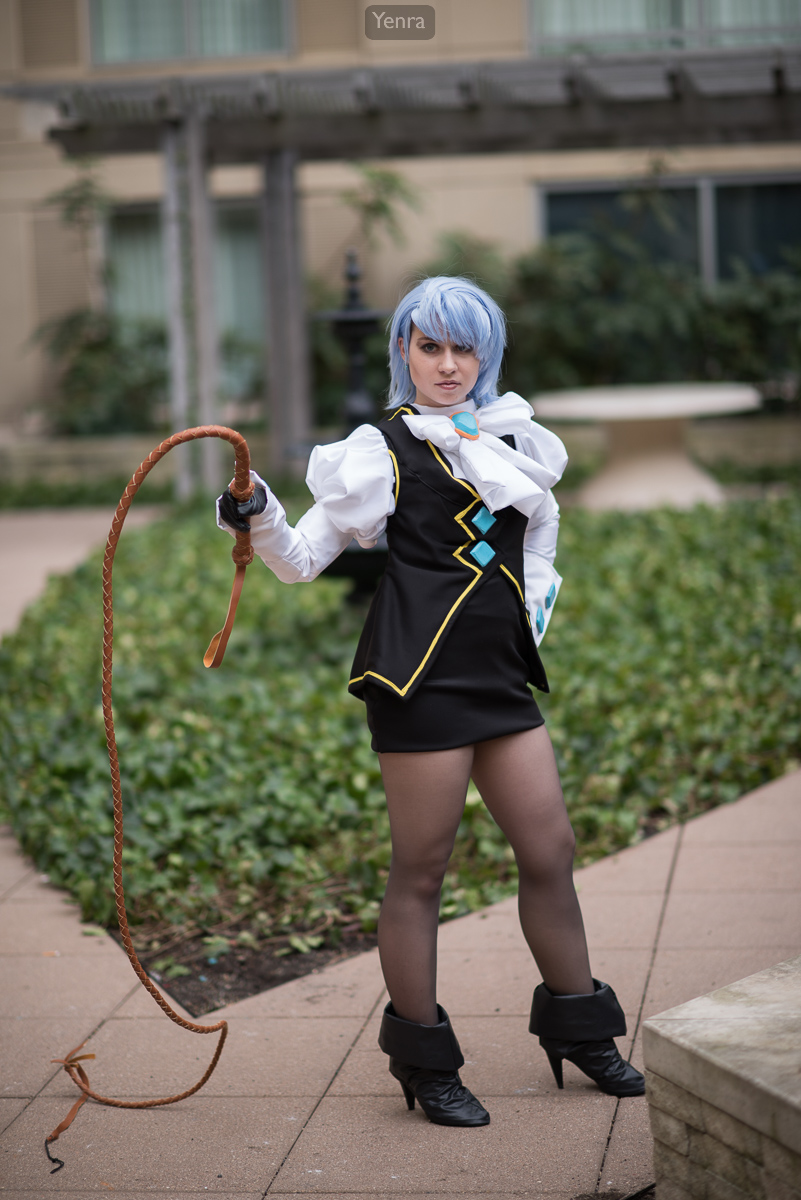
MAGFest 2016 photograph 6864 · Photograph: Yenra
Captured: 2016:02:20 15:12:50
The full costume and extended prop ask you to look beyond the face. If a prop reaches toward the camera, it can lie at a different distance from the eyes. The record lists 85 mm, f/1.4, 1/500 second and ISO 80. Do not treat f/1.4 as automatically right or wrong: begin by looking at what the picture communicates.
In your own trial, a smaller opening—a higher f-number—can extend useful depth of field when viewpoint, focal length and focus distance stay comparable. Camera distance and the relative depth of important details also matter. You might ask whether a prop can comfortably sit nearer the face's distance, without forcing a pose or concealing the costume feature your partner wants to show.
Give each face a separate check
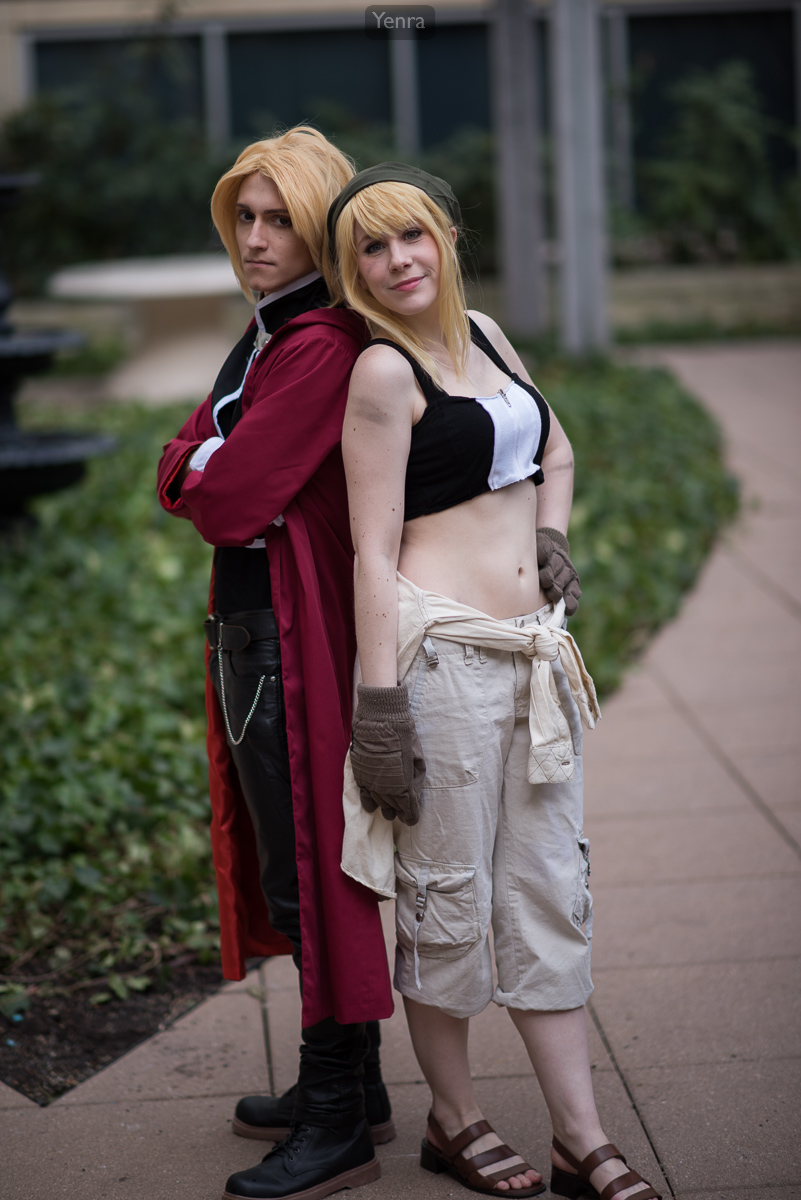
MAGFest 2016 photograph 7138 · Photograph: Yenra
Captured: 2016:02:20 15:26:35
Two faces share this portrait. Inspect each instead of assuming that a clear first face means the second will be equally clear. The record gives 85 mm, f/1.4, 1/400 second and ISO 80. Different people, distances and framing prevent these three pictures from isolating the effect of aperture.
For a comparison of your own, keep viewpoint and focal length steady, refocus deliberately on the agreed detail, and note every setting that changes. A smaller aperture admits less light. Aperture priority may lengthen the shutter time or raise Auto ISO; check for movement as well as focus. Softness can have several causes, so do not diagnose every blurred detail as insufficient depth of field.
A phone may have no adjustable optical aperture. You can still compare details in existing pictures or change the relative depth of a prop and face. Portrait-mode blur is a separate software treatment; do not present its simulated f-number as evidence of a changed lens opening.
Look back with curiosity.
- Which detail was easy to overlook at the smaller display size?
- Did a change in aperture or arrangement help the chosen details?
- What tradeoff in background, movement or exposure would you consider next?
Keep exploring
Reading exposure against a bright background · Using a zoom deliberately for portraits
Technical reading: Nikon: Aperture and depth of field and Nikon: Portrait focus and depth of field.
Explore the complete MAGFest 2016 gallery. Choose another portrait and ask which details you would want to keep readable.