Field notes · Look · Try · Compare
Noticing mixed patterns in a costume portrait
Explore how stripes, small motifs and broad areas of color share one costume.
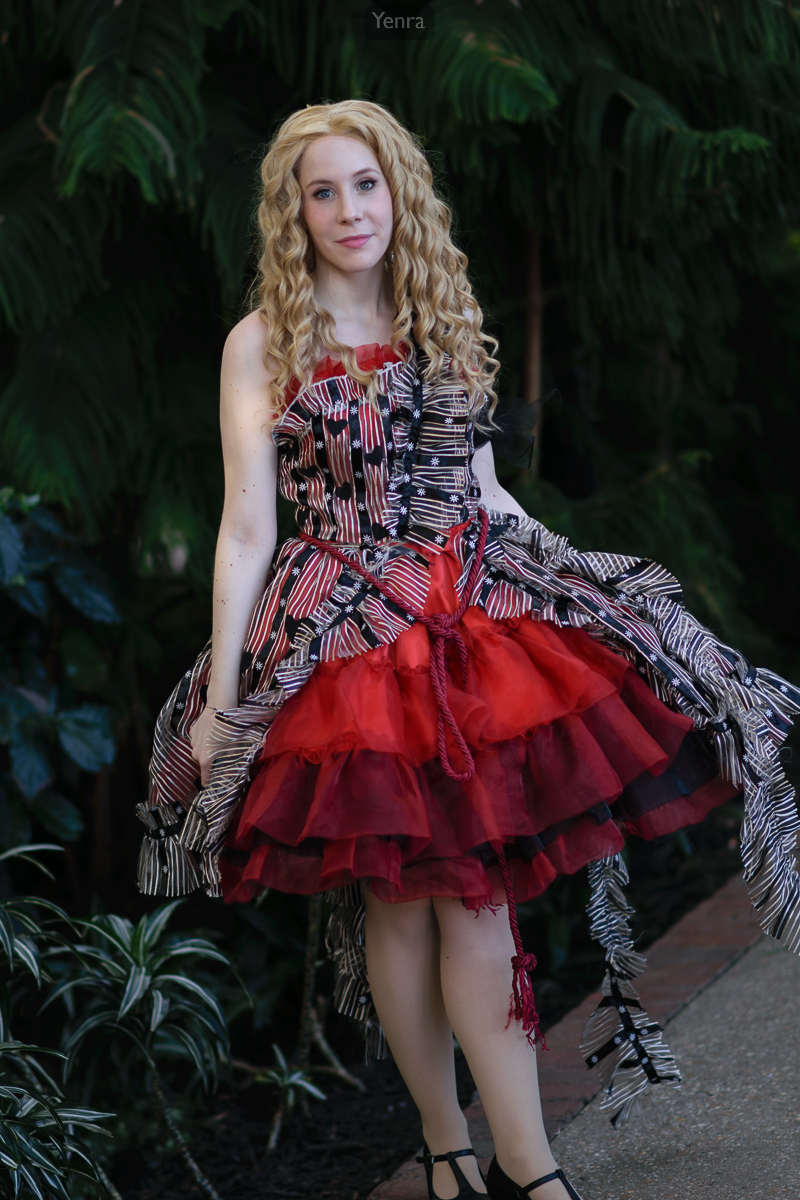
Alice, Um dress, Alice in Wonderland · Photograph: Yenra · Credit: Jenni Bon · Archive tags: Jenni Bon
Captured: 2016:02:14 15:13:21
A costume can hold several kinds of pattern at once. Fine lines, familiar shapes and broad areas of color each offer something different to follow. Looking at them together can help you notice how small details belong within a whole portrait.
These Katsucon 2016 Sunday photographs move from a whole view of the Alice costume to a closer portrait and a turning pose. The first two records credit Jenni Bon. This order is arranged for looking: begin with the larger relationships, then enjoy what the details and movement reveal.
Find the different scales of pattern
The opening portrait gives several patterns room to appear together. Fine stripes run through the bodice and skirt panels, black hearts interrupt some of those lines, and small pale motifs repeat elsewhere. Broad red ruffles offer larger shapes among the finer marks.
Begin by naming two things you can see, then compare their sizes. A heart has an outline you can follow; a group of fine stripes may first read as a textured area. Both ways of looking can contribute to your enjoyment of the picture.
Let your attention return to the face and the whole pose. The costume patterns are part of that larger portrait. Notice how the dark leafy background gives the busy surfaces space to stand out.
Look closer at where patterns meet
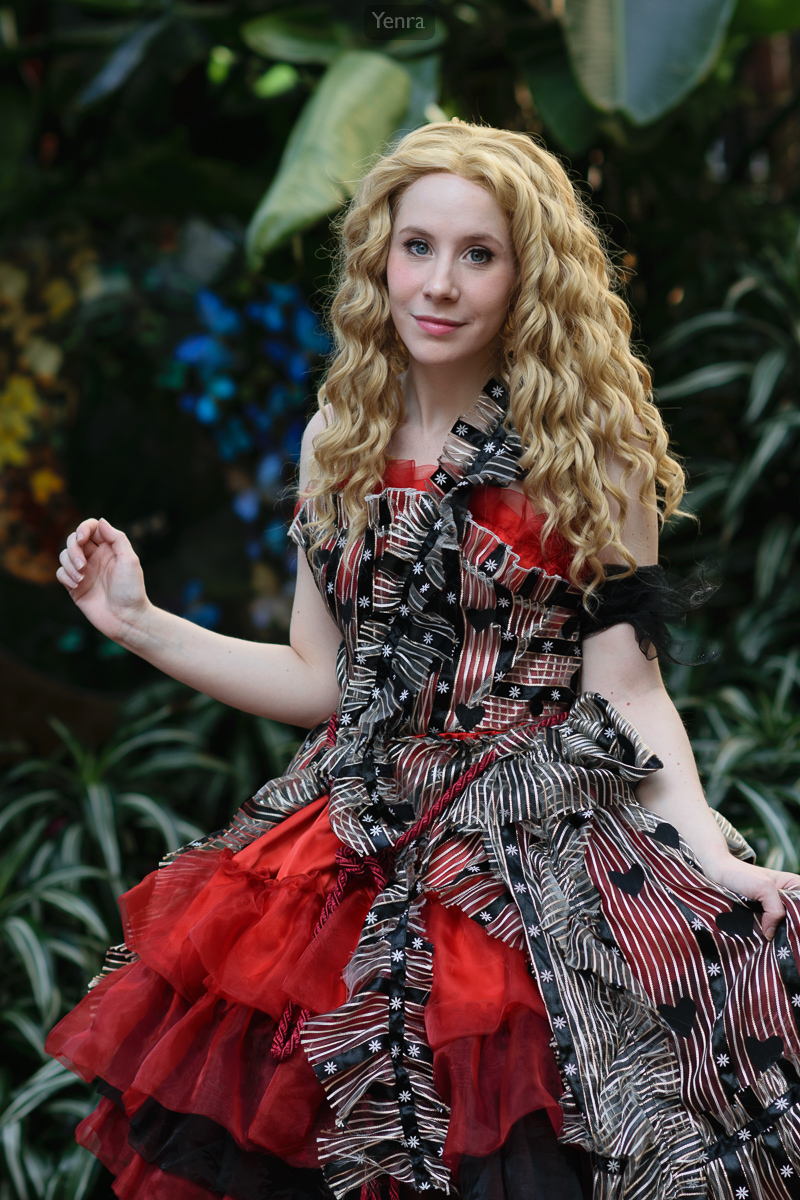
Alice, Um dress, Alice in Wonderland · Photograph: Yenra · Credit: Jenni Bon · Archive tags: Jenni Bon
Captured: 2016:02:14 14:44:50
The closer view makes the striped panels and small pale motifs easier to distinguish. The lines change direction where fabric folds and where the front trim crosses the bodice. Red fabric creates a different kind of shape beside them.
Choose a small meeting place between two patterns. Follow a stripe until it reaches a fold or another piece of trim. Then step back in your looking and see how that detail fits within the larger costume.
Try describing one relationship in a sentence: small marks beside a broad red area, or fine lines beside a heart. You can learn from the visible arrangement without needing to name every motif or material.
See how a turn redistributes the patterns
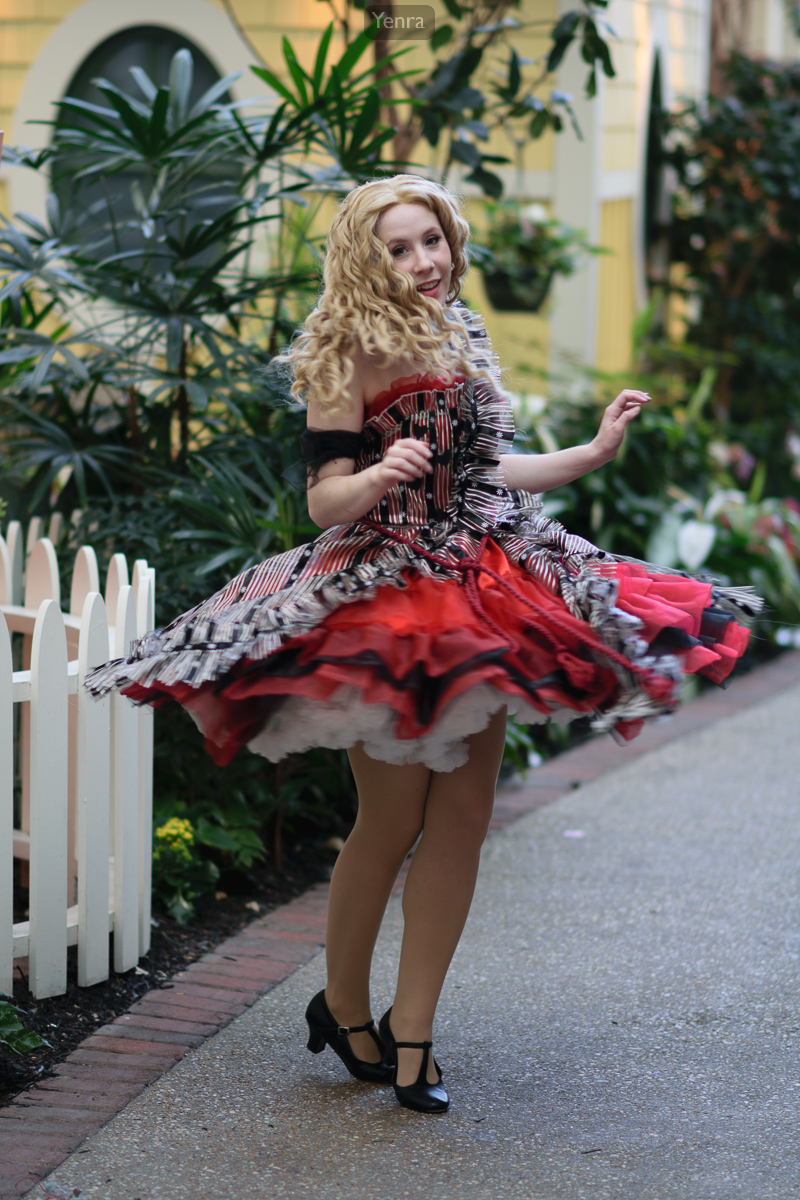
Katsucon 2016 Sunday photograph 2672 · Photograph: Yenra · Archive tags: Jenni Bon
Captured: 2016:02:14 16:07:29
In the turning portrait, the skirt spreads across the frame. Patterned panels and red areas make a broader sweep, with some edges softer than in the still portraits. The brighter setting contributes another change to compare.
Look for a familiar pattern from the first two photographs. Notice where it sits now and how much of it you can see. A pattern may remain recognizable even when movement changes its outline or makes its smallest marks less distinct.
Return to the whole view and keep the observation you enjoyed most. Your next photograph might show the pattern clearly, place it beside a quieter area, or explore how it changes in motion. Each can be a useful direction.
Look back with curiosity.
- Which pattern or color first catches your eye?
- Where do small motifs gather into a texture, and where can you distinguish them?
- What changes when the patterned skirt spreads across the frame?
Keep exploring
Noticing repeated motifs in a portrait · Noticing stripes in a photograph · Noticing busy and quiet areas in a photograph
Browse the complete Katsucon 2016 Sunday gallery. Follow a photograph into its original neighbors and see which pattern, pose or connection catches your attention next.