Field notes · Look · Try · Compare
Noticing heart shapes in a photograph
Find a familiar shape in a costume and an everyday object, and notice how visibility, scale and surroundings change the way it reads.
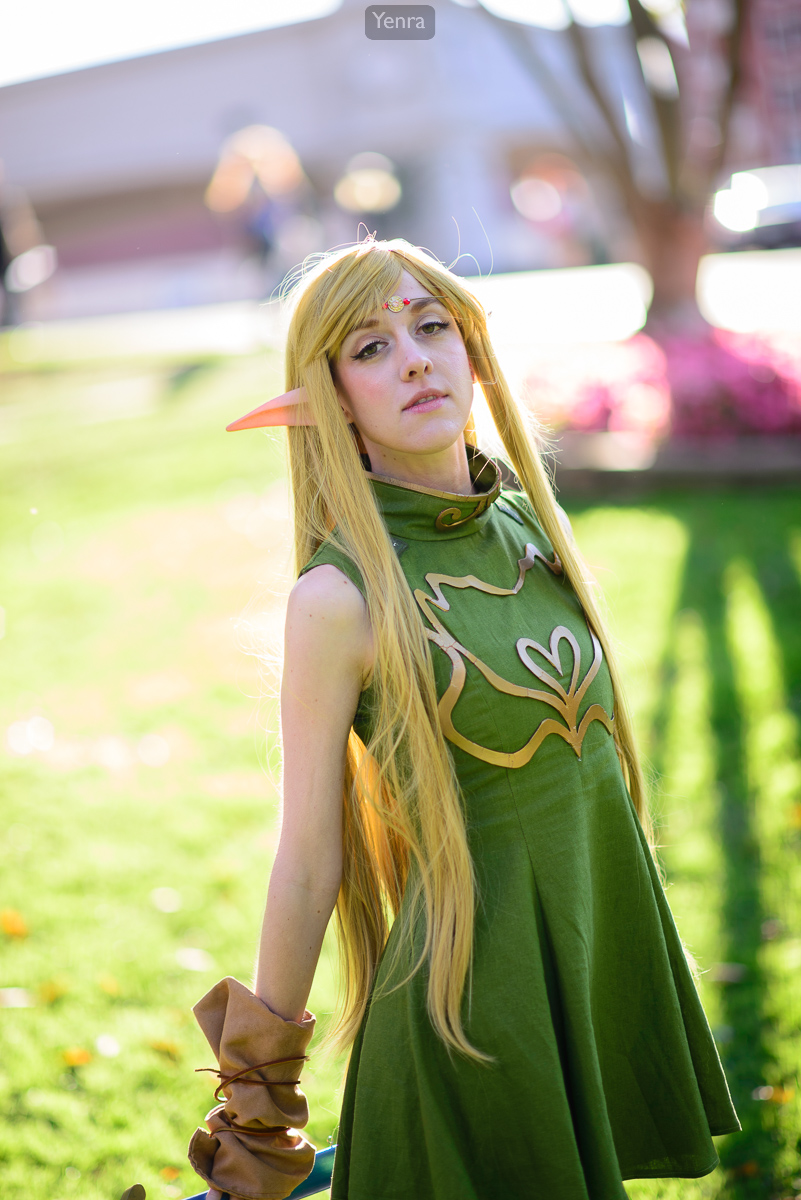
Deedlit from Record of Lodoss War · Photograph: Yenra · Credit: SunsetDragon
Captured: 2014:10:04 17:08:57
A familiar outline can become a small discovery within a photograph. Two rounded turns and a point may suggest a heart, whether they appear in a costume design or an ordinary object. Looking at the contour, its open center and its surroundings gives you a simple way to explore how a shape reads.
These Anime USA 2014 photographs offer three views to compare. Begin with what you can see, then notice how your recognition changes when the shape is partly hidden or appears somewhere new. You can describe that visual connection without deciding what the shape means to the person wearing it.
Find the small shape inside a larger design
The gold-colored design on SunsetDragon’s green Deedlit costume contains a narrow heart-shaped outline. The fabric remains visible inside it, so the open center contributes to the shape as much as the border does. Larger curves around it give the small outline a place within the whole portrait.
Follow the two upper curves toward their meeting point, then look at the surrounding design. Notice how much of the familiar shape you need to see before you recognize it. Its small size does not prevent it from becoming a detail you return to.
Try this with an existing photograph of your own. A decoration, a drawn outline or the opening in an object can offer a similar exercise. Begin by describing its contour and position in ordinary words.
Notice what remains recognizable
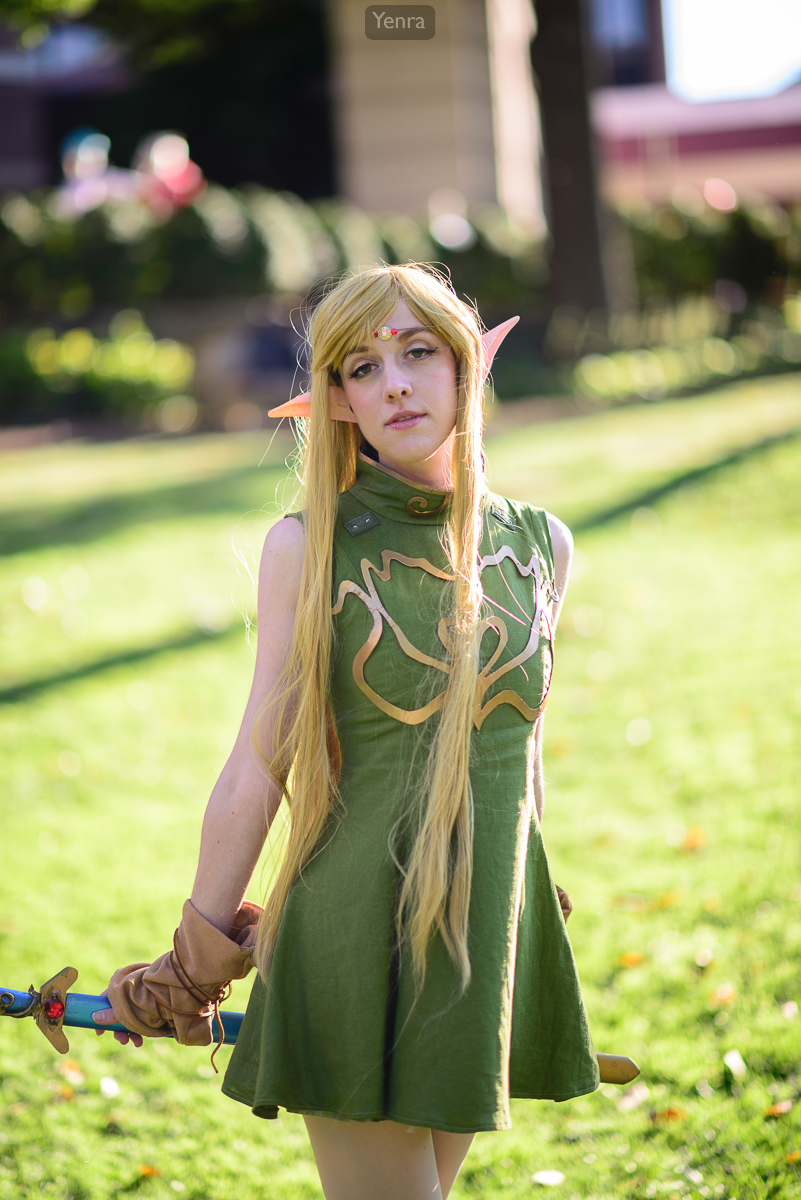
Deedlit from Record of Lodoss War · Photograph: Yenra · Credit: SunsetDragon
Captured: 2014:10:04 17:09:14
In the second portrait, long strands of hair cross part of the costume design. The outline is less fully visible, while the green fabric and gold-colored border still provide a connection with the preceding photograph.
Compare the visible edges in the two frames. Which parts help you recognize the shape, and which parts do you mentally complete? An overlap can offer another way of looking without making either photograph the correct version.
When making your own pictures, you could compare two comfortable positions with a willing partner. Review how hair, hands or clothing meet the detail, and keep the version whose relationships you enjoy. Small differences are enough to study.
Meet the shape in another setting

Cold Drink at Maid Cafe · Photograph: Yenra
Captured: 2014:10:04 15:36:52
Beside the glass, a red heart-shaped loop appears against a dark area. The glass and loop are tilted within the horizontal frame. The open space inside the loop lets the background become part of the contour, much as the green fabric did in the costume detail.
Look at the size of the loop relative to the glass, then at the brighter shapes elsewhere in the photograph. Its outline remains recognizable in this different setting. That connection comes from visible form; it does not establish an occasion or a personal meaning.
You can look for another appearance of a familiar shape in your own photographs. Put two pictures beside each other and describe one similarity and one difference. The comparison can stay small and playful.
Look back with curiosity.
- Which part of the outline do you notice first?
- What changes when part of the shape is hidden?
- Where else could you look for this shape?
Keep exploring
Noticing the spaces within a pose · Noticing overlap in a photograph · Noticing repeated motifs in a portrait
Browse the complete Anime USA 2014 gallery. Return to a photograph that interests you, follow its original neighbors, and see what else you notice. Your next useful experiment can begin with a small detail that catches your attention.