Field notes · Look · Try · Compare
Making a portrait with costume wings
Give the face and wing shapes room to work together.
Portrait with white and gold costume wings · Photograph: Yenra
Captured: 2010:07:31 12:21:20
Costume wings can bring broad outlines, repeated shapes, and small details into a portrait. The face and wings may share attention in a close view, while a wider photograph can show more of the costume's shape. Begin by asking the wearer what they would enjoy showing, then explore a framing that gives those details room.
Let the face and a wing share the frame
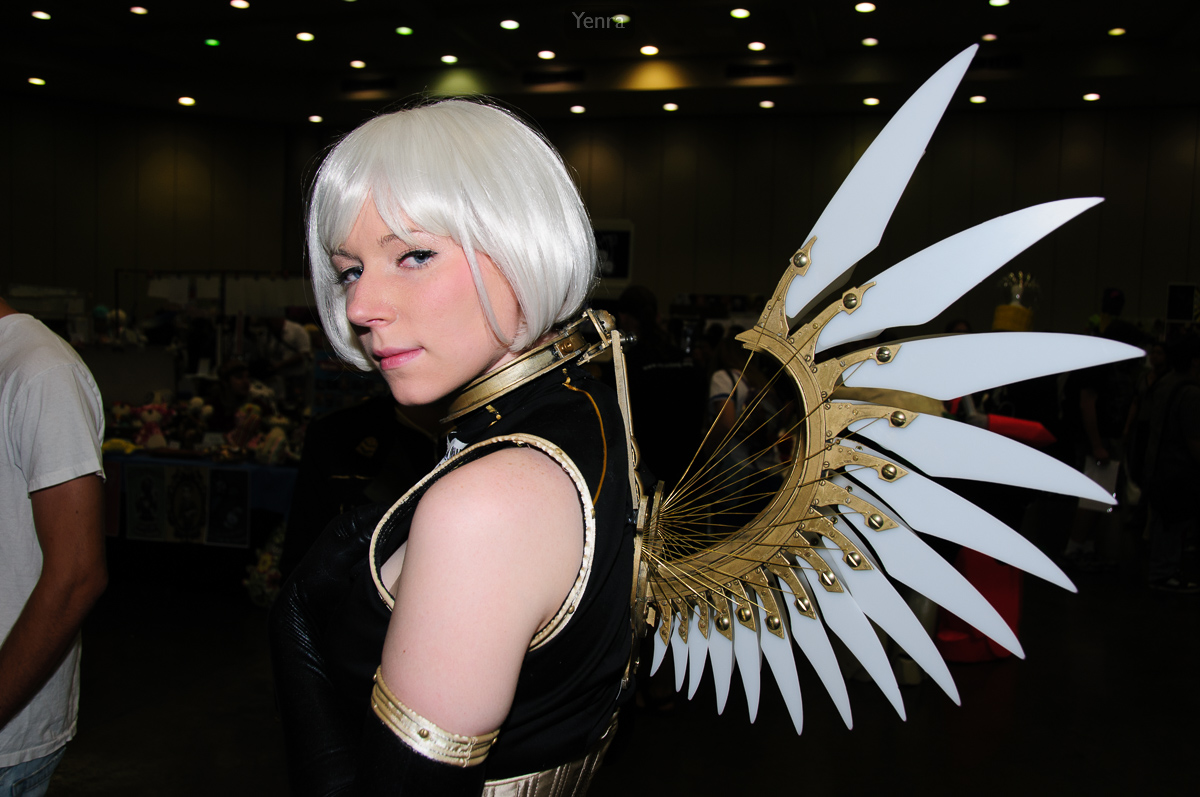
The person looks back beside a fan of white feather shapes and gold-colored framework. The face sits near the wing's inner area, while the pointed forms extend across the darker background. Follow the relationship between the face, the curved framework, and the tips near the right edge.
A portrait can show a recognizable part of a wing without including its entire outline. Here, the arrangement brings the face and costume detail close together. Notice what attracts your attention first, then look for the shape that carries your eye onward.
Invite your partner to choose a comfortable starting position. Find enough space for the costume, including room behind and beside the wings. Ask before touching any part of it, and let the wearer make adjustments. Their knowledge of how the costume moves can guide the experiment.
Choose how much of the wings to include
Two-person portrait with white costume wings · Photograph: Yenra
Captured: 2011:07:29 20:36:44
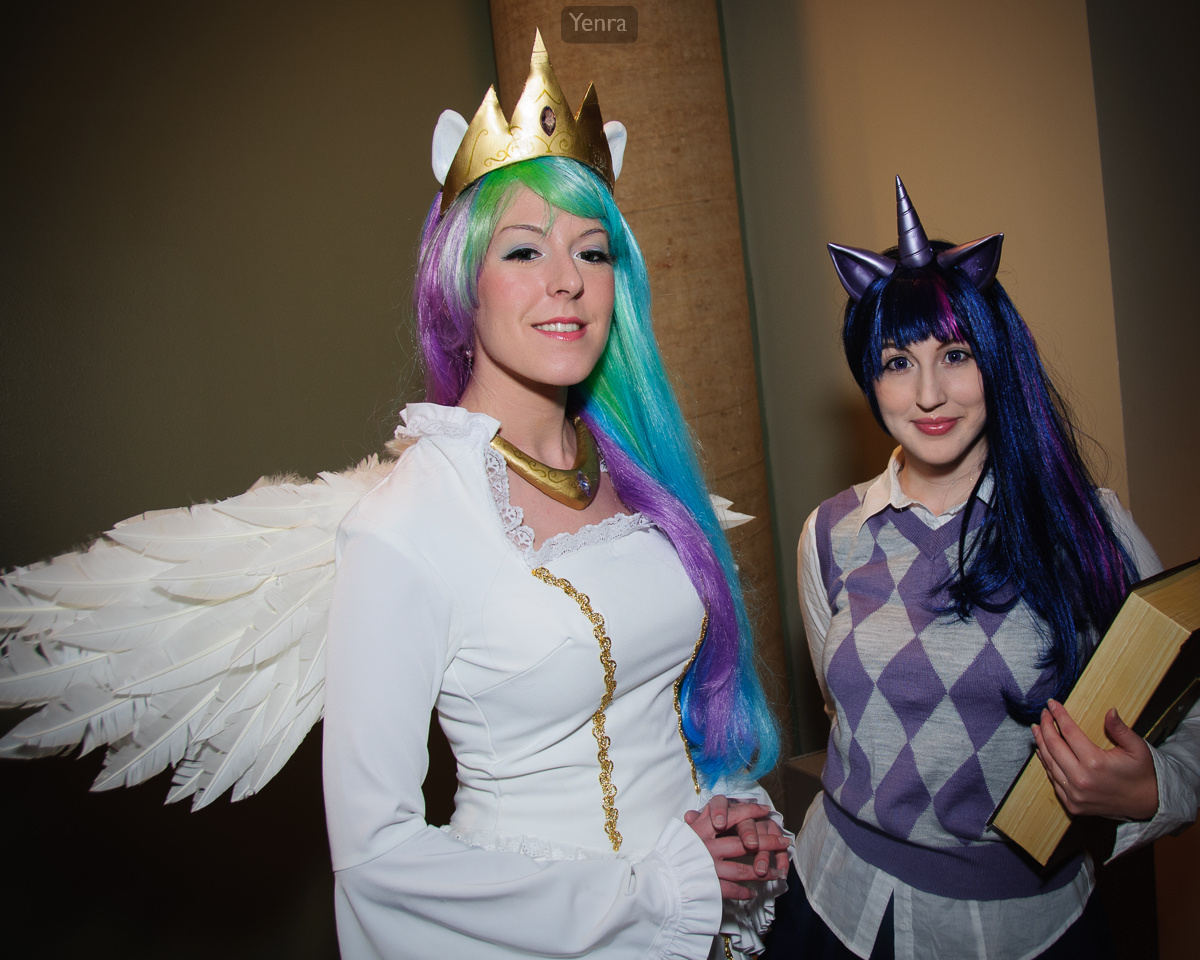
This two-person portrait brings white costume wings beside a gold-colored crown and multicolored hair. The person on the right wears a purple patterned outfit and holds a book. The close framing connects the faces, clothing, and a visible section of the wing, whose outer part continues beyond the left edge.
That edge gives you a useful question: what does this framing include? You can study the relationship between the people and their costume details without treating the wing extending beyond the frame as a mistake. A different purpose might call for a wider view.
When photographing your own partner, make a starting view that includes the face and a part of the wing they want to show. Review it together. If you both want more of the outline, try moving farther away or changing the framing while keeping enough room around the costume.
Give the whole outline room
Ezra Scarlet, Heaven's Wheel Armor, Fairy Tail · Photograph: Yenra
Captured: 2011:07:30 11:37:29
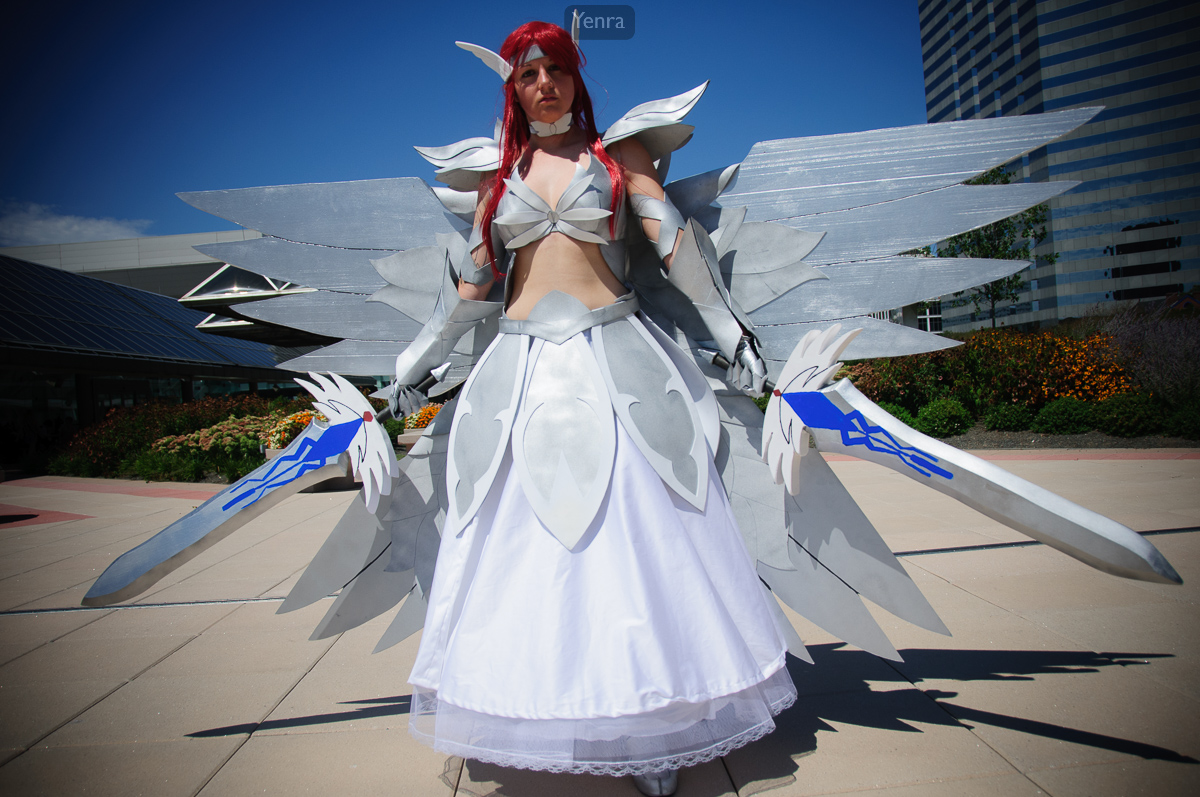
The wider photograph includes broad silver-colored wing panels, a white costume, red hair, and two large prop blades. Sky and buildings surround the figure. The additional space lets you follow more of the overall silhouette and the relationship between the costume and its setting.
These examples show separate people, costumes, and settings. They invite different ways of looking rather than reconstructing a single portrait session. Compare what a closer and wider view can offer: a face beside a particular detail, two people together, or the sweep of a larger outline.
Try a small turn only if it feels comfortable to your partner and the space allows it. Let them control the movement, then notice how the face and wing shapes meet from your viewpoint. A tiny variation may be enough to create another arrangement you both enjoy.
You can begin without having costume wings available. Study these existing photographs and write one sentence about what each framing includes. Later, use that observation to suggest a starting view to a willing portrait partner. Finish by keeping a photograph that suits what they want to show.
Look back with curiosity.
- How do the face and wing share your attention?
- What does the wider view add?
- Which framing does the costume wearer enjoy most?
Keep exploring
Exploring props in a portrait · Exploring a turn in a portrait · Exploring the edges of the frame
Browse the complete Otakon 2010 and Otakon 2011 galleries.