Field notes · Look · Try · Compare
Including a process photograph in a portrait collection
Pair a portrait with a wider view of its making, then decide what that context contributes to a small collection.
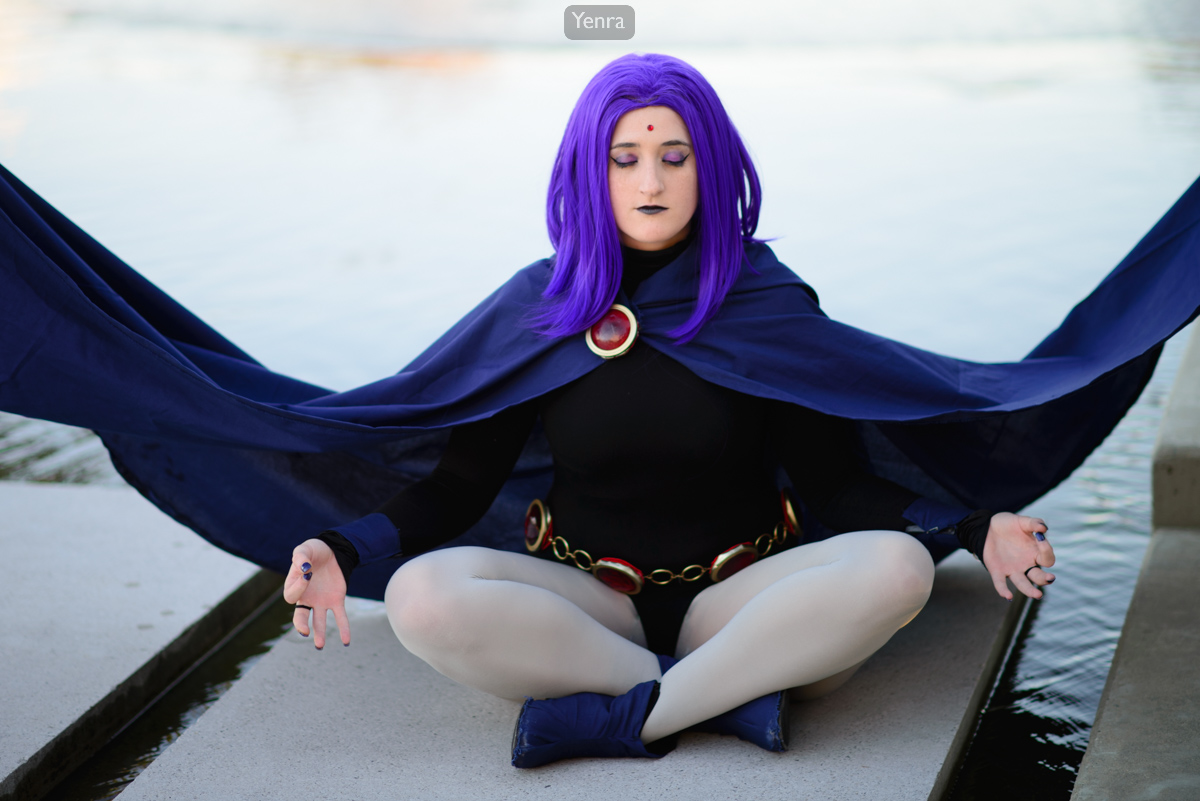
Raven from Teen Titans · Photograph: Yenra
Captured: 2016:11:05 17:34:21
A portrait collection can make room for the people and choices around its making. A process photograph gives a visible contribution its own space, helping a viewer appreciate something that a closer frame may leave outside its edges.
This is a new editorial selection from Nekocon 2016 Saturday: a portrait, a separate wider view, and a closer portrait. The suggested order invites a way of reading the photographs together. Their original files, captions and capture records remain available.
Begin with a portrait you want to share
A seated person with purple hair is surrounded by a blue cape extending toward both edges of this horizontal photograph. The cape's broad folds sit against pale water, while the crossed legs and open hands give the central figure a distinct arrangement.
Take a moment to enjoy the portrait on its own. You might notice the blue fabric, the red circular details or the space above the hair. A process photograph can add context while leaving that first experience intact.
When making your own selection, begin with a photograph you and the person pictured are happy to share. Name one quality you want the collection to retain. That gives you a useful starting point when deciding what another picture might contribute.
Give the visible contribution its own photograph
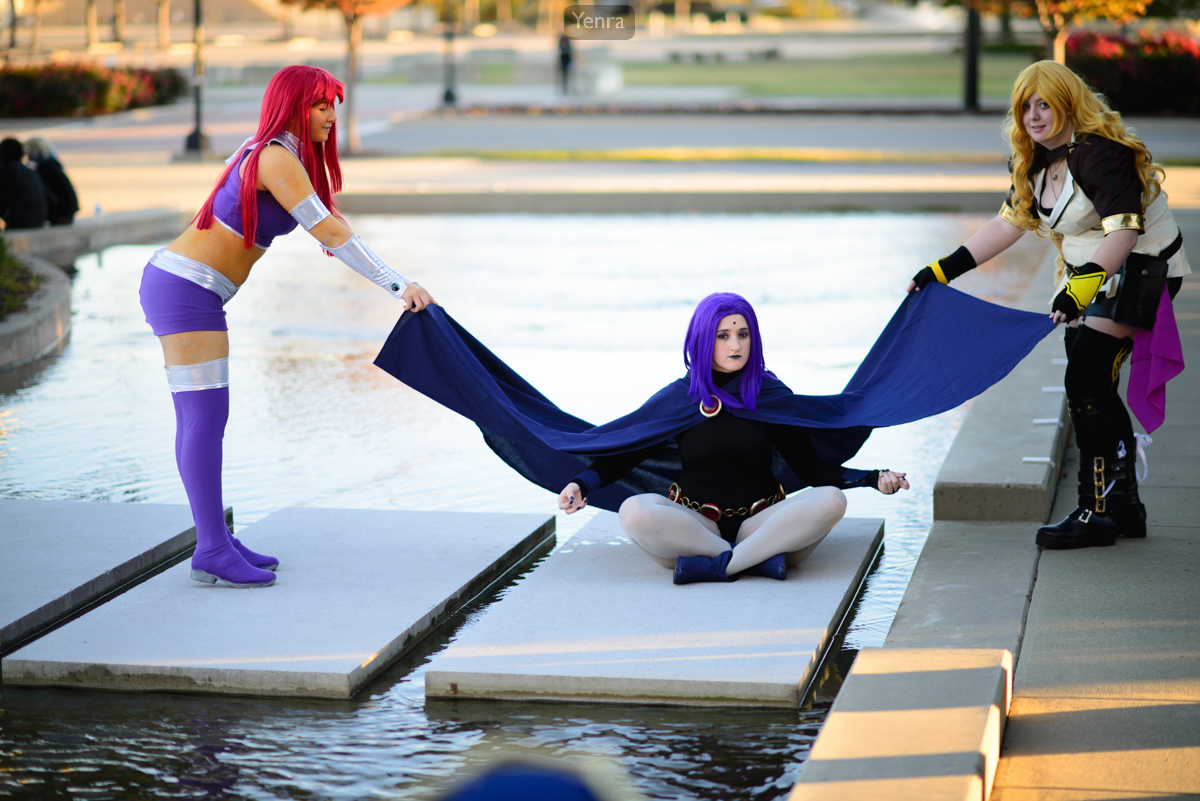
Raven from Teen Titans · Photograph: Yenra
Captured: 2016:11:05 17:34:07
The wider frame shows two people standing to either side and holding the cape edges. The seated figure, the extended fabric and more of the waterside setting appear together. The hands at the cape's corners make a visible contribution part of the picture.
Give this photograph room to be read in full. Both people at the edges matter to what it shows. A straightforward caption can begin, “Two people hold the cape edges in this wider view.” Names and agreed credits can add further context when they have been confirmed.
The source records place this wider exposure before the opening portrait: 17:34:07 and 17:34:21 respectively. Here, it follows the portrait as an editorial choice. We can describe the contribution visible in this moment while leaving the making of the other frame open to what the photographer can confirm.
In your own collection, a process photograph might show someone holding fabric, arranging an object or offering a hand with a backdrop. Ask which picture everyone is comfortable sharing and how they would like their contribution described. An everyday indoor setup offers plenty of possibilities.
Return to the person in another view
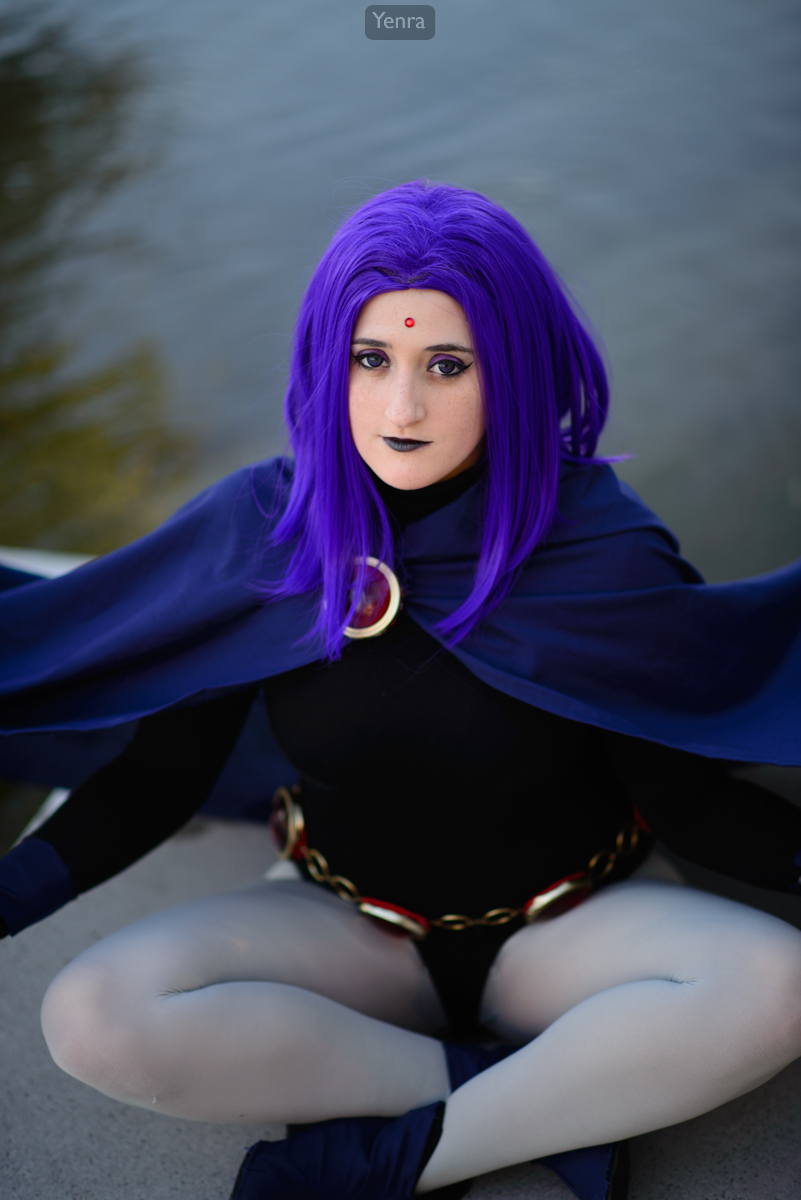
Raven from Teen Titans · Photograph: Yenra
Captured: 2016:11:05 17:34:52
A vertical portrait brings the face and upper body closer. Purple hair and the blue cape connect it to the preceding frames, while less of the surrounding place remains visible. The cape continues beyond the sides of the photograph.
Placed after the wider view, this picture returns attention to the portrait's details. That is one possible role for a third photograph. You could also finish with the process image, leaving the visible contribution as the collection's closing thought.
Try a third picture only if it adds something you value. A pair may already say what you want to share. Collection length is a choice you can make from the photographs you have.
Keep a small collection note
- Portrait: introduce the seated figure and the broad shape of the cape.
- Visible contribution: give the two people holding its edges their own place in the collection.
- Closer portrait: return to the face, hair and recurring blue fabric.
Choose the introduction and captions together
Try the process photograph first in your own selection. Does starting with the wider context invite a different reading of the portrait that follows? Then compare it with a portrait-first order. Keep the introduction that serves the collection you want to make.
Use captions to describe visible actions and add confirmed names or credits. Keep source links with every photograph. A useful result is a small collection that respects the people pictured and gives viewers another way to appreciate what went into making a picture.
Look back with curiosity.
- What does the process photograph contribute?
- Which visible contribution belongs in its caption?
- Which order would you like to share?
Keep exploring
Looking beyond the finished frame · Writing captions that invite a closer look · Making a credits page for a photo collection
Browse the complete Nekocon 2016 Saturday gallery.