Field notes · Look · Try · Compare
Following a turn through a photo sequence
Give a short movement a readable shape by choosing a sweeping frame, a changing view and a quieter closing gesture.
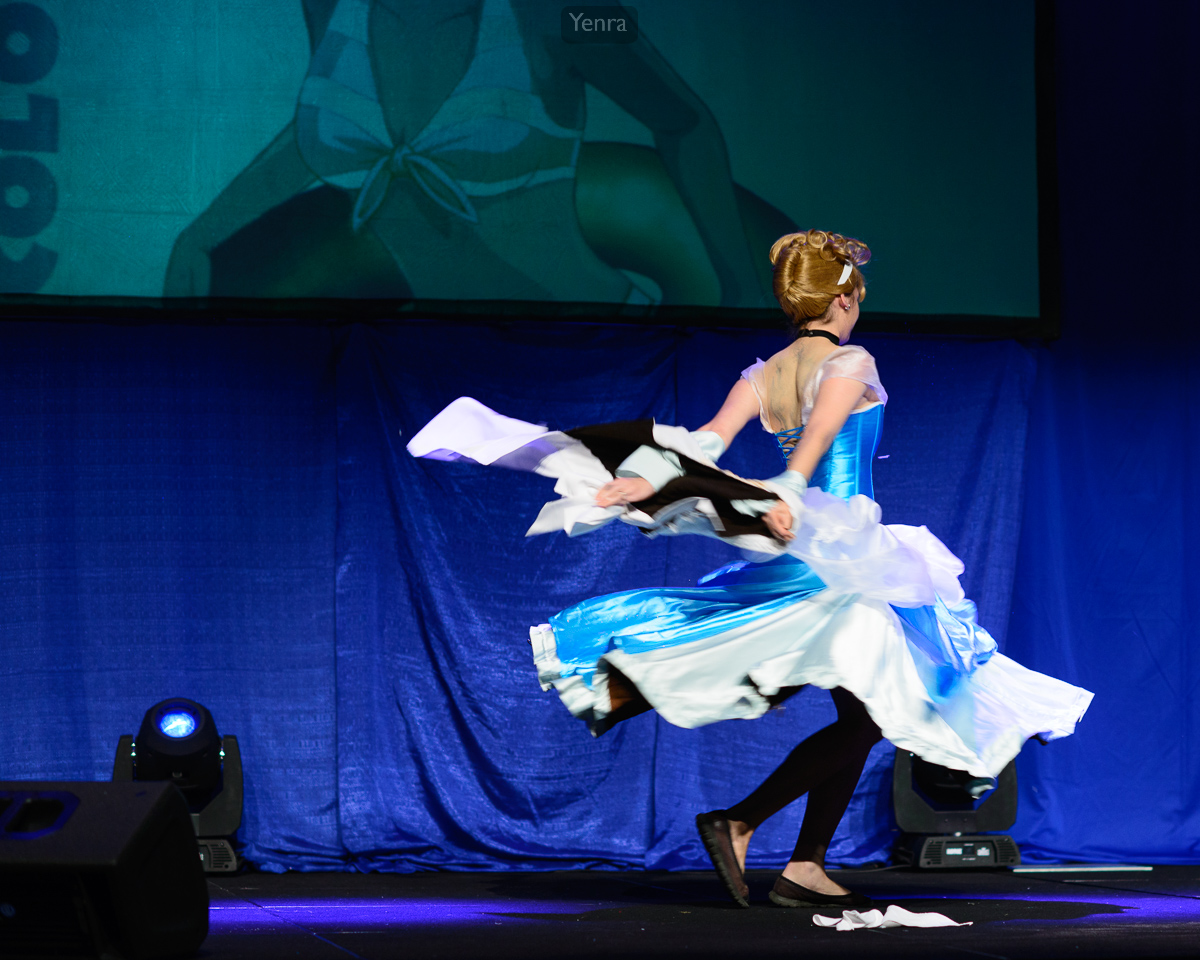
Transforming Cinderella · Photograph: Yenra · Credit: Rachel Meikle Cosplay · Archive tags: Cinderella
Captured: 2018:06:02 21:08:37
A few photographs can give a brief movement a beginning, a change and a place to rest. The useful question is what each frame adds: an expansive outline, a different view of the person, or a quieter gesture that gives the viewer time to look.
This new editorial sequence selects three Transforming Cinderella photographs credited to Rachel Meikle Cosplay. Their recorded times are 21:08:37, 21:08:39 and 21:08:40 on June 2, 2018. Intervening photographs remain in the original archive; these three give us a small selection in which to explore movement and pacing.
Open with the sweep
The opening frame catches the performer from a rear three-quarter view, with blue-and-white fabric sweeping outward. The wide outline gives the picture an immediate sense of movement. The stage, curtains and fabric within the original frame provide context for that gesture.
Look for the shape that carries the action. Here, the spreading skirt reaches away from the body and gives your eyes a broad path to follow. You might choose an opening frame for that clear outline even when another photograph shows the face more directly.
When selecting your own sequence, begin with a frame that makes the movement easy to read. A turning shoulder, an extended hand or a small step can be enough. You are choosing a useful starting point for this selection, rather than needing to include the earliest photograph you took.
Follow the changing outline
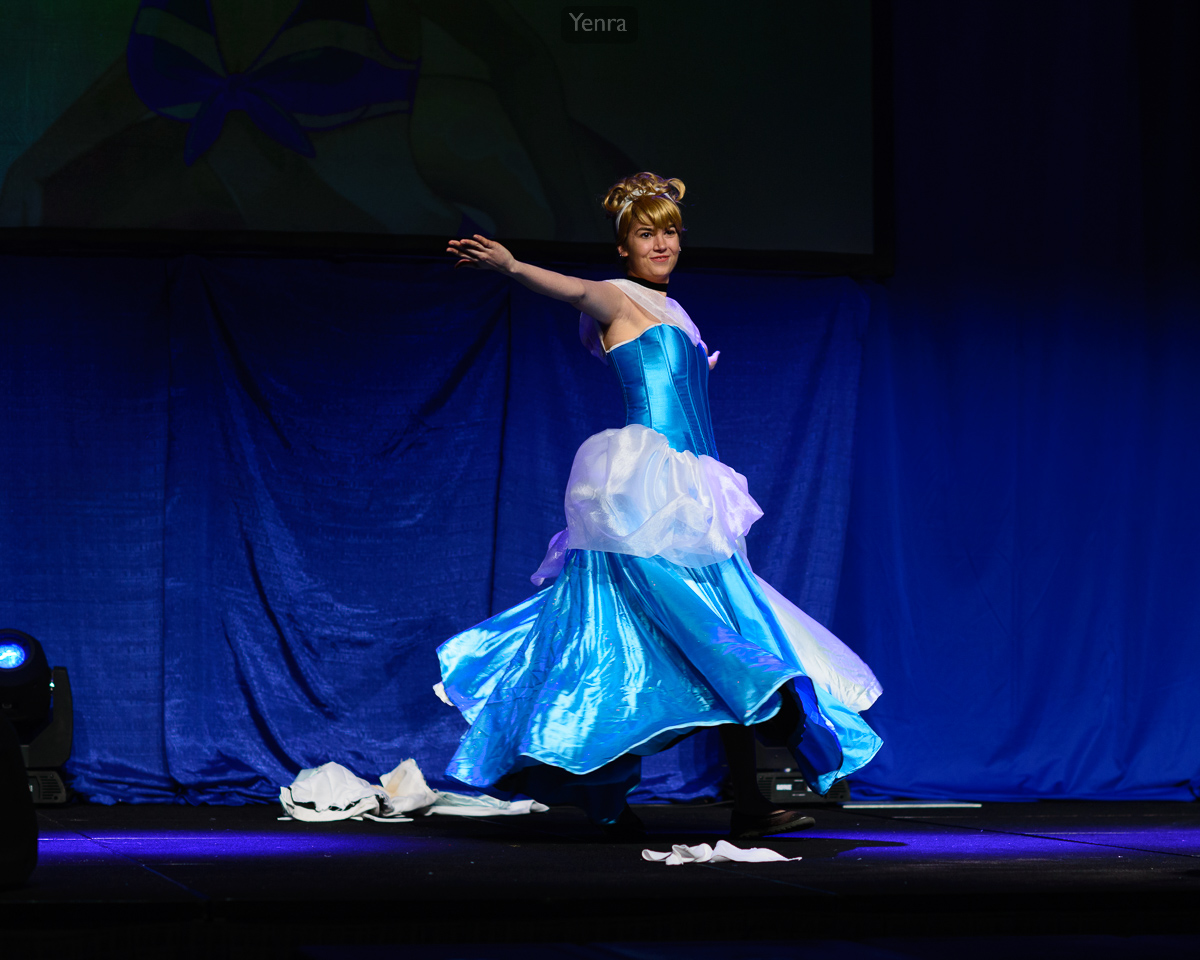
Transforming Cinderella · Photograph: Yenra · Credit: Rachel Meikle Cosplay · Archive tags: Cinderella, Rachel Meikle Cosplay
Captured: 2018:06:02 21:08:39
The second selected frame shows the performer more frontally, with one arm extended and the skirt still spreading. The face becomes visible while the outline continues to change. It adds information about both the person and the movement.
Place the first two photographs together and ask what you discover in the second. A strong middle frame can reveal a new direction, a different expression or a change in the shape of clothing. Its contribution gives the viewer a reason to move from one picture to the next.
Look through nearby frames in your own collection for a useful difference. Compare two possible middle photographs and keep the one that connects most clearly with your opening. The choice can remain provisional; a small sequence is easy to revisit with fresh eyes.
Close with a quieter gesture
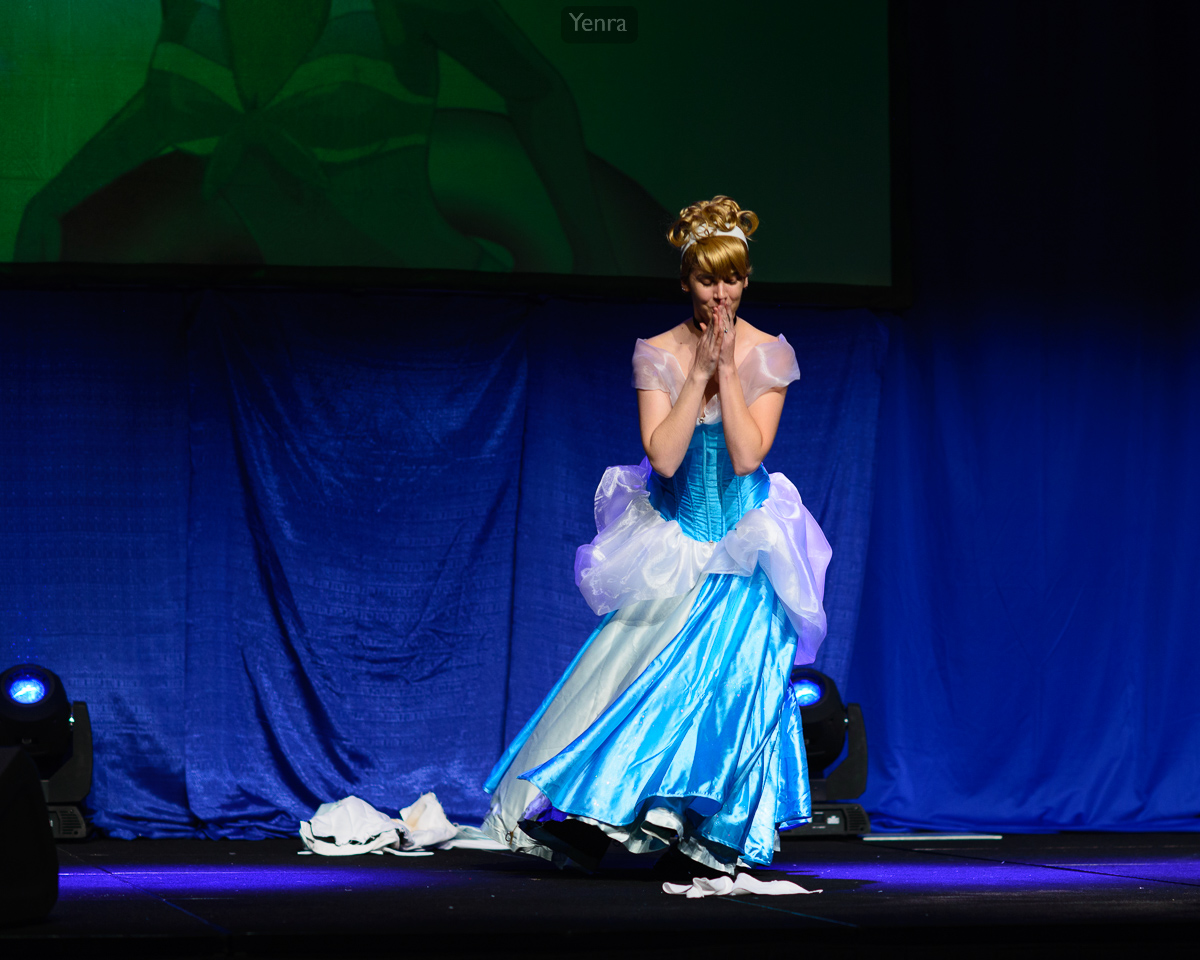
Transforming Cinderella · Photograph: Yenra · Credit: Rachel Meikle Cosplay · Archive tags: Cinderella, Rachel Meikle Cosplay
Captured: 2018:06:02 21:08:40
In the closing selection, the hands come together near the face and the skirt falls into a narrower outline. The broad spread of the first picture has given way to a more contained gesture. That change offers a quieter place to finish this three-picture reading.
Read all three in order: sweep, changing view, pause. Then look at the last frame on its own. A closing photograph can both complete the movement you have followed and reward another moment of attention. Here, the hand gesture supplies that smaller point of interest.
Keep each original frame, credit and capture time attached to your selection. Try a different ending and notice how the pace changes. Your aim is a sequence you enjoy sharing, with each photograph making a contribution that you can explain in a few clear words.
One turn, three contributions
- Catch the sweep: begin with a clear, expansive outline.
- Follow the turn: add a different view of the person and movement.
- End with a pause: let a smaller gesture bring the selection to rest.
This new editorial sequence follows increasing capture times with frames omitted between the examples. Compare another middle frame or ending, and keep the original dates with your selection.
Look back with curiosity.
- What makes the first frame feel active?
- What new information does the middle frame add?
- How does the closing gesture change the pace?
Keep exploring
Following a gesture across photographs · Combining stillness and movement in a portrait collection · Varying pace in a photo story
Browse the complete Colossalcon 2018 gallery. Follow a photograph into its original neighbors and see what else catches your attention. A small pattern, a familiar object or a changing gesture can become the beginning of your next experiment.