Field notes · Look · Try · Compare
Closing a photo sequence with a rear view
Try moving from a portrait that meets the camera to a wider view looking outward, and compare what that ending leaves you noticing.

Daughter and Mother, Melody and Ariel from the Little Mermaid 2: Return to the Sea · Photograph: Yenra · Archive tags: Jenni Bon, Melody Muse Cosplay
Captured: 2015:06:05 13:27:26
A closing photograph can invite a reader to look beyond the people in a collection and into their surroundings. A rear view is one way to try that shift: familiar figures remain, while faces give way to posture, gesture and the space ahead. Compare what that ending offers with a portrait that meets the camera.
This new editorial sequence uses three Colossalcon 2015 photographs recorded on June 5. They follow increasing capture times, with gaps between the examples. The arrangement explores an ending for a collection; the photographs themselves remain available in their original archive order.
Begin with faces turned toward the camera
The opening photograph brings two faces toward the camera, with red and turquoise costume tails crossing the foreground. Rocks and water describe the surroundings while the paired portrait gives the reader people and details to recognize in the next pictures.
As an opening, this image offers a direct point of connection. Notice which features you carry forward: hair colors, costume shapes, the relationship between the figures or the water beside them. A sequence can build from several small visual threads.
The supplied title names Ariel and Melody and their relationship as fictional characters. Keep that title and the archive tags with the photograph. The new lesson can discuss the visible pair without making claims about the cosplayers’ real-world relationship.
Let attention turn toward the setting
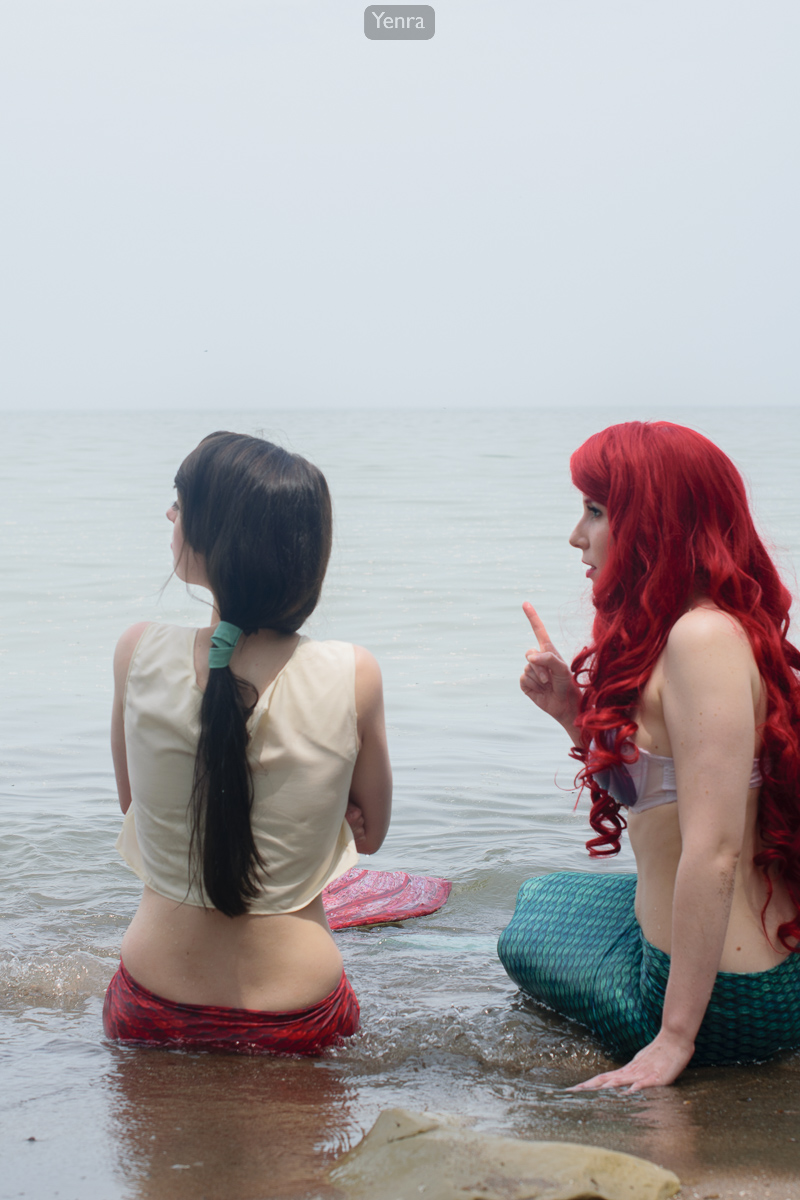
Daughter and Mother, Melody and Ariel from the Little Mermaid 2: Return to the Sea · Photograph: Yenra · Archive tags: Jenni Bon, Melody Muse Cosplay
Captured: 2015:06:05 13:29:41
The vertical middle photograph turns attention outward. One person appears from behind and the other in partial profile, with a raised finger and pale water beyond them. The faces are less central, while posture and the surrounding space become easier to notice.
Compare how much of the setting is available above the figures. The broad pale area gives the reader another place to look, and the gesture adds a small point of interest. Its meaning can remain open; the photograph does not need a reconstructed conversation to contribute to the sequence.
Look for a middle image that changes the balance between people and surroundings. It might show a side view, a different gesture or more space beyond the subject. Choose it for what is visible and for how it connects the pictures on either side.
Give the closing view more space
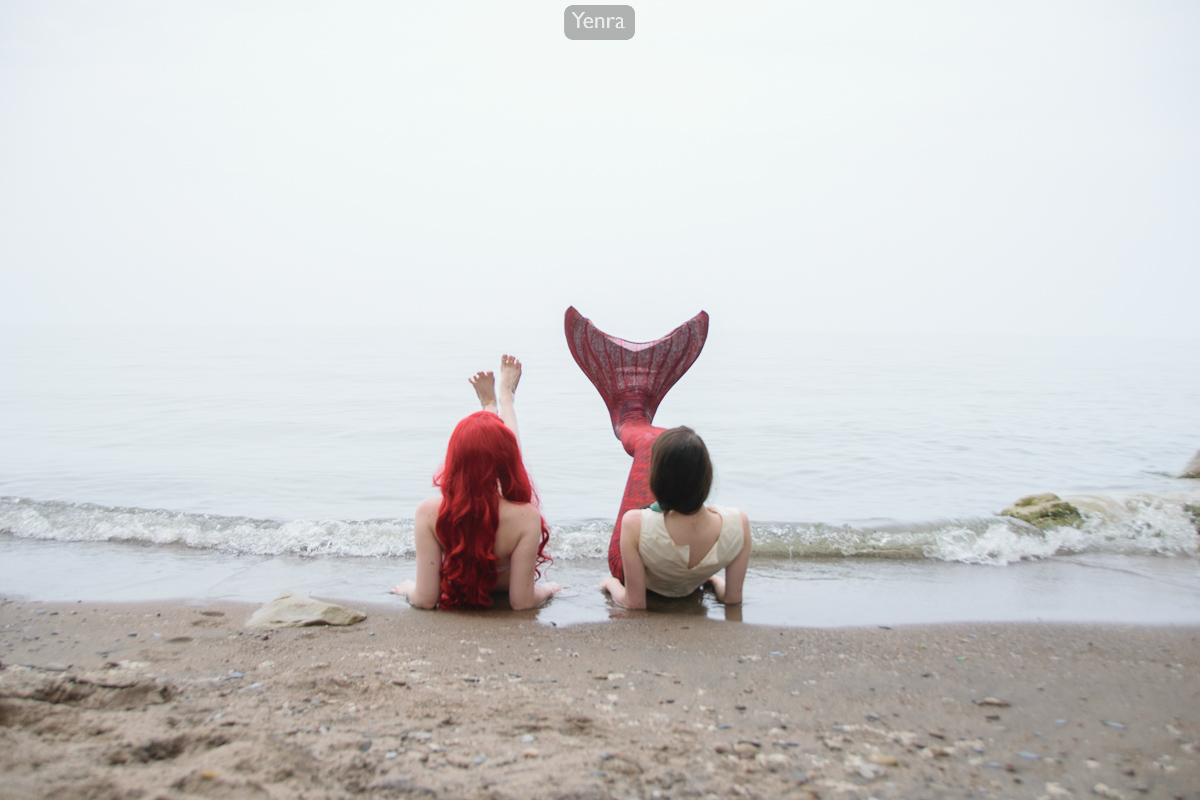
Melody and Ariel, The Little Mermaid 2 · Photograph: Yenra
Captured: 2015:06:05 14:19:37
The closing photograph places the two figures low in a wider frame, facing open water. A raised red costume fin and visible feet add a playful detail beneath a large pale expanse. Familiar colors remain while the available space changes substantially.
As an ending, this view may leave you thinking about the setting, the gesture or the people looking outward. Another reader may notice something else. A rear view offers a possibility to test rather than a fixed meaning or evidence that anyone was departing.
Try this picture first, then return it to the end. Compare an ending with a face as well. Keep the whole frames and exact dates, and write one sentence about what your chosen order contributes. A thoughtful ending can leave room for the viewer while remaining grounded in the photographs.
Faces, surroundings, an open ending
- Meet the faces: begin with a portrait that looks toward the camera.
- Turn toward the setting: let posture and surrounding space contribute.
- Leave room for the view: try a wider rear view as the ending.
This new editorial sequence follows increasing capture times with gaps between the examples. Compare another order and keep the recorded dates with each photograph.
Look back with curiosity.
- What does the rear view leave you noticing?
- How does the middle photograph connect faces and surroundings?
- Would you keep this ending or try another order?
Keep exploring
Choosing a closing photograph · Exploring gaze in a portrait · Pairing front and back views of a costume
Browse the complete Colossalcon 2015 gallery. Follow a photograph into its original neighbors and see what else catches your attention. A small detail, an enjoyable gesture or a different ending can become the beginning of another experiment.